
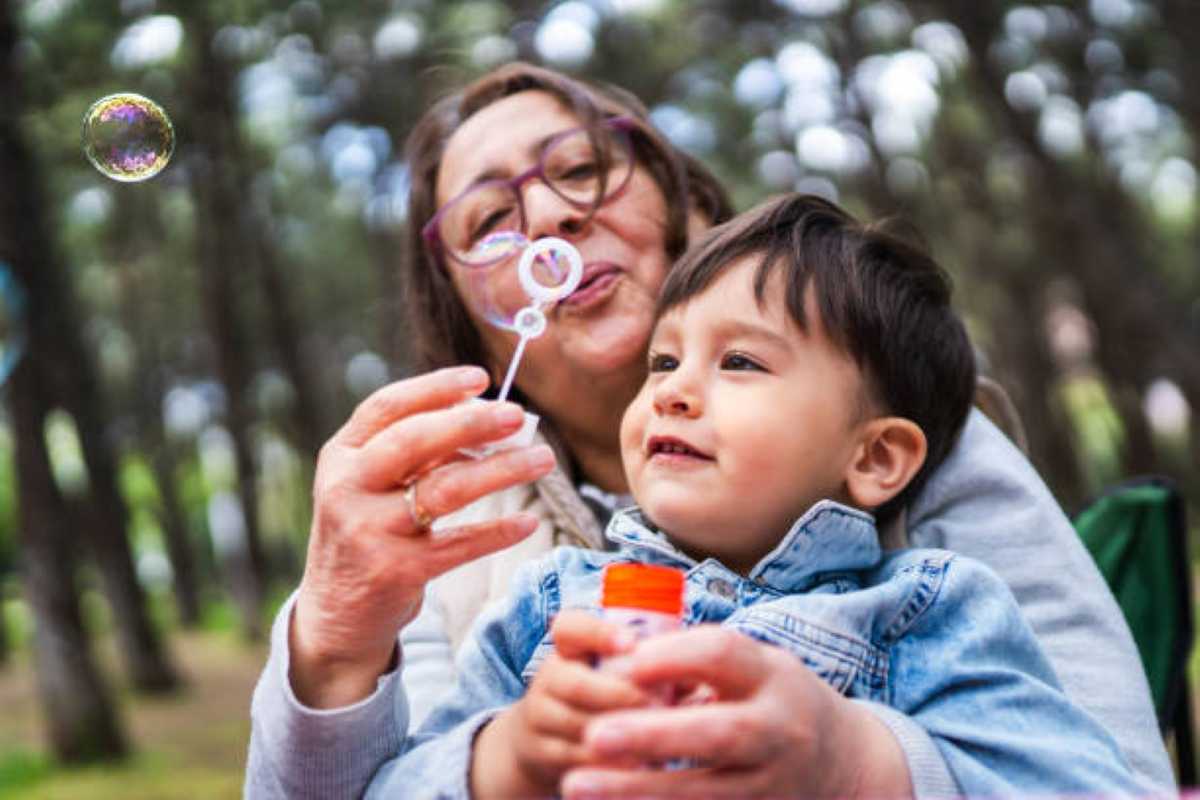

“Grandma, can we do the thing we always do?”
If you’ve heard those words, you know how good they feel. Maybe “the thing” is making pancakes shaped like Mickey Mouse. Maybe it’s a walk to the same park bench, or a silly song you sing in the car. Whatever it is, your grandkid remembered it, and they want it again.
Here’s something that might surprise you. When kids grow up, they usually don’t remember the most expensive gift you gave them or even the big trip to the beach. What sticks with them are the small things you did together over and over. The little habits that belonged only to the two of you.
There’s real science behind this, too. Psychologist Barbara Fiese has spent years studying family routines and traditions. Her work shows that when families share regular rituals, kids feel safer and more connected. A tradition tells a child, “This is who we are, and you belong here.” That’s a powerful message, and you don’t need much money or time to send it.
So let’s look at five simple traditions that loving grandmothers share with their grandkids. You can start any of them this week, whether your grandkids live five minutes away or five states away.
1. Telling Family Stories

You have something no one else in the world has: your stories. The time you got lost at the county fair. What your first job was like. The day your son (now somebody’s dad!) tried to give the cat a bath. These stories might feel ordinary to you, but to your grandkids, they’re treasure.
And they do more than entertain. Researchers Marshall Duke and Robyn Fivush at Emory University found that kids who know more about their family’s history tend to feel better about themselves. They also handle hard times better and bounce back more easily. Knowing where they come from gives kids a sense that they’re part of something bigger than themselves.
Here’s the part many people don’t expect. The best stories aren’t only the happy ones. Kids actually gain the most from hearing about the tough times, too. When you tell them about the year money was tight, or the move that felt scary, or the time Grandpa lost his job and the family pulled through, you’re teaching them an important lesson. Hard things happen, and our family gets through them together. That’s a lesson they’ll carry for life.
Getting started is easy. At bedtime, try a “when I was your age” story. Pull out an old photo album and let the pictures lead the way, since kids love asking “Who’s that?” If your grandkids live far away, tell a story over a video call, or record one on your phone and send it to them. One day, they may play it for their own kids.
2. Cooking a Signature Recipe Together

Every family has that one dish. Maybe it’s your apple pie, your Sunday spaghetti sauce, or the sugar cookies you only make at Christmas. Whatever yours is, it’s more than food. It’s a piece of family history, and teaching it to your grandkids is one of the sweetest traditions you can share.
Cooking together packs a lot of good stuff into one afternoon. First, it’s teamwork. You measure, they stir. You crack the eggs, they roll the dough. Working side by side gives you time to talk without the pressure of sitting face to face, which is why kids often open up in the kitchen.
Second, it makes kids feel capable. There’s real pride in pulling a tray out of the oven and announcing, “I helped make these!” That feeling of “I can do it” builds confidence that goes well beyond the kitchen.
Third, it creates memories that last a lifetime. Smell and taste are closely tied to the parts of the brain that handle memory and emotion. That’s why one whiff of cinnamon can suddenly take a grown adult right back to Grandma’s kitchen. Long after you’ve taught them the recipe, the smell of that pie baking will bring you right back to them.
Want to make it extra special? Write the recipe out by hand on a card and give it to your grandchild to keep. Your handwriting will mean more to them someday than you can imagine. And don’t be afraid to let them add their own touch, like sprinkles on the cookies or extra cheese in the sauce. When they make it their own, the tradition is more likely to live on.
3. A Regular One-on-One Date

If you have more than one grandchild, you know how busy family get-togethers can be. Everyone’s talking at once, someone’s crying, someone else wants a snack. It’s wonderful, but it’s hard for any one child to get your full attention.
That’s why a regular one-on-one date can mean so much. Pick something simple you do with just one grandchild at a time. Pancakes at the diner on Saturday morning. A trip to the library. A walk to the ice cream shop. A movie night on your couch with popcorn.
What makes this so powerful is your undivided attention. When it’s just the two of you, your grandchild doesn’t have to share you or compete to be heard. They get to talk about what’s on their mind and feel like the most important person in the room. For kids who have siblings, that feeling of being seen as their own person, and not just “one of the kids,” is a big deal.
Research backs this up. A study from Oxford University found that kids whose grandparents were closely involved in their lives had fewer emotional and behavior problems. Simply showing up, listening, and spending real time together makes a difference.
The best part? This doesn’t have to cost much at all. A $3 ice cream cone every other week will mean far more than a fancy outing once a year. What kids remember is that you kept showing up. So pick something easy, put it on the calendar, and stick with it. Before long, it won’t just be a date. It’ll be “our thing.”
Read Also: Science Says Grandchildren Feel Close to Grandparents Who Do These 5 Simple Things
4. Reading Together or Sharing Favorite Books

There’s something cozy about a grandkid curled up next to you with a good book. Maybe you do the voices for every character. Maybe they ask for the same story so many times you could recite it in your sleep. Either way, you’re doing something really good for them.
Reading aloud helps kids learn new words and get better at understanding language. It also helps them focus and use their imagination. But the benefits go beyond learning. Snuggling up with a book is a bonding moment. Kids connect the warm, safe feeling of being close to you with the joy of a good story. That’s a combination that can turn them into lifelong readers.
There are lots of ways to make books part of your tradition. Keep a running list of every book you’ve read together, and add to it each visit. Read the same bedtime story over video chat if you live far apart. Or pull out a book you loved as a girl, write a short note inside the front cover, and give it to your grandchild. Something as simple as “I read this when I was 10, and I hope you love it as much as I did” turns a regular book into a keepsake.
What about older grandkids who’d rather not be read to? Don’t give up on books. Just switch things up. Try reading the same novel at the same time and texting each other about it. (“Did you get to the part where…?”) You could even start a little two-person book club where you take turns picking the book and talk about it over hot chocolate or a phone call. Teens may act too cool for it at first, but most of them love having a grown-up who actually wants to hear what they think.
5. Celebrating Their Small Milestones

Big moments like birthdays and graduations get plenty of attention. But the little wins matter to kids, too. A lost tooth. A first hit in Little League. A good grade on a tough spelling test. Finally learning to ride a bike without training wheels.
When you notice and celebrate these small moments, you’re sending a clear message: “I see you, and I’m proud of you.” Hearing that from Mom and Dad is wonderful. But hearing it from Grandma means something extra. It shows kids that people outside their own house care about them and cheer them on. That helps them feel good about who they are and reminds them that they’re loved by a bigger circle of people than they might realize.
You don’t need anything fancy to make it special. A short card in the mail, a quick phone call, or a little ritual of your own will do the trick. Maybe every lost tooth gets a silly song over the phone. Maybe every good report card means a trip for frozen yogurt.
Here are a few ideas to get you started. Set up a “brag board” on your fridge where you hang their drawings, school awards, and newspaper clippings. Kids light up when they visit and see their stuff on display.
You could also write a letter every year on their birthday, telling them what you’ve loved watching them learn and grow into that year. Save copies, and someday they’ll have a stack of letters to treasure.
Or make it a tradition to call on the first day of school every year, no matter what. It’s a small thing, but your grandkids will start to expect it, and they’ll remember that you never missed one.
Love Being a Grandma?

Join 33,762+ grandmas who wake up to a cheerful, uplifting email made just for you. It’s full of heart, sprinkled with fun, and always free. Start your mornings with a smile—sign up below! ❤️
6. Teaching a Hands-On Skill
You know how to do things your grandkids have never even tried. Maybe you can knit a scarf, bait a fishing hook, sew on a button, or grow tomatoes that taste better than anything at the store. Maybe you’re the reigning champ at rummy. Whatever your skills are, they’re worth passing down.
When you teach a grandchild something new, you give them more than a skill. You give them confidence. There’s a special kind of pride that comes from finishing a wobbly first row of knitting or catching a fish all by yourself. Kids learn that they can stick with something hard and get better at it. And because you’re right there cheering them on, the mistakes don’t feel so scary.
This tradition is good for you, too. Psychologist Erik Erikson believed that later in life, people feel a deep sense of meaning when they pass something important on to the next generation. He called it “generativity,” but you don’t need the fancy word to know the feeling. It’s that warm sense that something you love will keep going long after you’ve taught it.
Gardening is a great place to start. It gets kids outside, off their screens, and teaches them patience as they wait for seeds to sprout. Plus, few things beat the look on a child’s face when they pull up their very first carrot.
Start small and keep it fun. Teach one simple stitch, play one hand of cards, or plant one pot of herbs on the windowsill. Then pick it back up every time you’re together. Before you know it, your grandkid will be the one showing you a thing or two.
7. Writing Letters or Cards by Mail
When was the last time you got a handwritten letter in the mail? It probably made your whole day. Now picture how a child feels when they open the mailbox and find an envelope with their very own name on it.
For kids who are used to texts and video calls, a real letter feels exciting and special. It shows them you took the time to sit down and think about them. And unlike a text that gets lost in a phone, a letter is something they can hold, reread, and tuck away in a drawer for years.
This tradition is perfect for grandmothers who live far away. A letter can travel where you can’t, and it gives your grandkids something to look forward to between visits. You don’t have to write a lot. A few lines about your week, a joke, a question about their soccer game, or a little drawing is plenty. Toss in a sticker or a pressed flower, and you’ve made their day.
To make it a two-way tradition, become pen pals. Include a stamped envelope with your address already on it so writing back is easy. Little ones can send a drawing, while older kids can write about what’s going on in their lives. Writing letters helps kids practice their writing skills and put their feelings into words, which isn’t always easy for them to do out loud.
Save the letters they send you, too. Someday, you can bundle them up and give them back. It’ll be a sweet look at how much they’ve grown, all in their own handwriting.
Read Also: 10 Unexpected Things to Write in a Letter to Your Grandchild That’ll Make Them Want to Write Back
8. A Special Goodbye or “Secret” Ritual
Goodbyes can be tough, especially for little ones. One minute they’re having the best time at Grandma’s house, and the next minute they’re buckled into the car seat with a wobbly lip. A special goodbye ritual can make those moments a whole lot easier.
It doesn’t have to be anything big. Maybe it’s a secret handshake only the two of you know. Maybe it’s a phrase you always say, like “love you to the moon and back” or “see you later, alligator.” Or maybe you always stand on the porch and wave until the car turns the corner, and they wave back the whole way.
These little rituals work because kids feel safer when they know what’s coming next. Changes, like leaving Grandma’s house, can feel unsettling. But when the goodbye always happens the same way, it becomes something comforting instead of sad. It also sends a quiet message: “This isn’t the end. We’ll do this again next time.”
The secret part makes it even more fun. Kids love having something that belongs only to them and you. A made-up handshake or a silly code word makes them feel special and chosen, like they’re part of a two-person club.
This might be the easiest tradition of all. It takes about ten seconds and costs nothing. Long-distance grandmas can use it too, ending every phone or video call the same way. And don’t be surprised if your grandkid is still doing that handshake with you when they’re taller than you are.
9. Holiday Traditions That Belong to Just You Two
Holidays are already full of family traditions. But having one that’s just between you and your grandchild makes the season feel extra special for them.
One of the sweetest ideas is giving a new Christmas ornament every year. Pick one that matches something about that year, like a little soccer ball the year they joined a team or a tiny puppy the year the family got a dog. Write the year on the back. By the time they move out on their own, they’ll have a whole box of ornaments to hang on their very first tree, and every one will remind them of you.
There are plenty of other holidays to work with, too. You could dye Easter eggs together every spring, carve pumpkins in October, or make it a Fourth of July tradition to light sparklers in the backyard after dark (with a grown-up close by, of course). It doesn’t matter which holiday you choose. What matters is that it’s yours, and it happens year after year.
Researchers who study families have found that traditions like these help kids understand who they are and where they belong. Holiday rituals become the glue that holds family memories together. Kids start counting down to them, talking about them, and expecting them.
And here’s the best part. Over time, these holiday traditions turn into a record of your grandchild’s childhood. Every ornament, every photo of a lopsided pumpkin, every sparkler picture shows how much they’ve grown. One day, they’ll look back on all of it and see you right there in every single year.
10. Giving Back Together
Some of the best lessons you can teach your grandkids don’t come from books or classrooms. They come from watching you be kind to other people, and then joining in.
Giving back together can be as simple as baking a batch of cookies for the new neighbor down the street. You could fill a bag with canned goods and drop it off at the local food pantry, or visit a friend from church who lives alone and doesn’t get many visitors. Little ones can draw pictures for people in a nursing home, while older kids can help rake leaves for an elderly neighbor or pick up trash at the park.
Kids learn a lot just by watching the grown-ups they love. When they see Grandma carry a warm casserole to someone who’s sick, or take the time to chat with someone who’s lonely, they soak it up. They start to understand that caring for others is just what our family does. That lesson tends to stick with them far longer than any lecture about being nice.
Doing good also helps kids learn empathy, which simply means understanding how someone else feels. When a child hands a bag of groceries to a family in need or sees an older person smile at their drawing, they start to see the world through someone else’s eyes. That’s a big step in growing into a kind, thoughtful person.
There’s a bonus, too. Studies have found that when kids do kind things for others, they tend to feel happier themselves. And the same goes for grandmothers. Helping others together gives you both that warm, good feeling, and you get to share it side by side.
To make it a tradition, pick a regular time to do it. Maybe you bake cookies for a neighbor every December, or fill a food pantry bag every Thanksgiving. Let your grandkid help choose who to help and how. When they have a say, they’ll care even more about it, and they may just carry the tradition into their own families someday.
Read Also: The 5 Silent Superpowers Grandchildren Love Most About Their Grandmothers, According to Research
Final Thoughts

If you’re reading this and thinking, “I haven’t really done any of these,” don’t worry. It’s never too late to start a tradition. Your grandkids don’t need you to be perfect. They just need you to show up, again and again, in small ways they can count on.
And remember, the simplest traditions are often the ones kids love most. You don’t need a big budget, a lot of free time, or a fancy plan. A story at bedtime, a batch of cookies, a walk for ice cream, a book you both love, or a phone call on the first day of school can mean the world to a child.
So here’s a little challenge. Pick just one tradition from this list and try it this week. Call your granddaughter and tell her a story about her dad when he was little. Invite your grandson over to help with your famous pie. Start small, keep it going, and see where it leads.
Who knows? Years from now, your grandkids might be standing in their own kitchens, teaching your recipe to their grandchildren. And when those little ones ask where the tradition came from, they’ll get to hear all about you.
Love Being a Grandma?
Join 33,762+ grandmas who wake up to a cheerful, uplifting email made just for you. It’s full of heart, sprinkled with fun, and always free. Start your mornings with a smile—sign up below! ❤️