
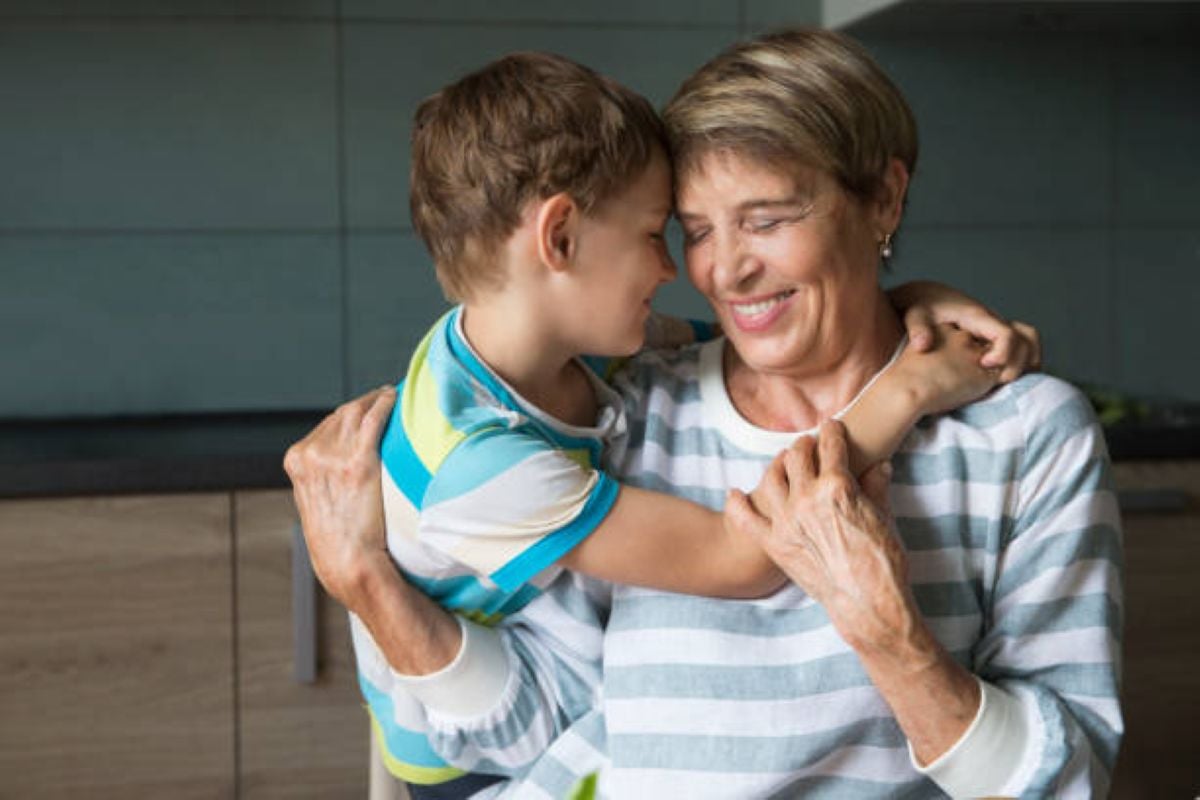

Picture a 30-year-old sitting in the parking lot before a big job interview. Her hands are shaky. Her mind is racing. And then, out of nowhere, she hears her grandma’s voice in her head: “You can do hard things, sweetheart.” She takes a deep breath, walks in, and nails it.
Or think of a young dad tucking his kids into bed and telling the same corny joke his grandpa told him every night. The kids groan. He grins. Some things just get passed down.
Here’s the truth: grandkids rarely remember the fancy toys or the expensive gifts. What they remember are words. Little things you said at just the right moment, often over and over again.
And grandparents are in a special spot to say them. You’re not the one fighting about bedtime or nagging about homework every day, so your words often land as love, not pressure. You also hold family stories nobody else knows.
So here are 12 simple things you can start saying this week, why each one matters, and how to make them feel natural, not forced.
1. “I’m so glad you’re here.”
Think about what kids hear all day. “Did you finish your homework?” “Put your shoes away.” “Great game!” Most of it is about what they did or didn’t do.
“I’m so glad you’re here” is different. It’s not about grades or chores or how well they played. It just says: you matter to me. Not because you earned it. Just because you’re you.
That’s a big deal to a kid, even if they don’t show it.
The trick is to say it every time. When they walk through your front door, before anything else, let it be the first thing they hear. Do it enough, and it becomes part of coming to Grandma’s or Grandpa’s house, like the smell of your kitchen or the creak in your porch steps. Years from now, they’ll still remember how it felt to be welcomed like that.
What if your grandkids are older? Teens can get a little stiff about big hugs at the door, and that’s okay. Catch them later, maybe while they’re grabbing a snack, and say it quietly. “Hey, I’m really glad you came.” No fuss. They’ll hear it.
2. “Tell me more about that.”
Here’s something most kids don’t get enough of: someone who really listens.
Parents love their kids, but they’re busy. They’re cooking dinner, answering emails, and getting everyone to practice on time. So when a kid starts a long story about a video game or who said what at lunch, it’s easy for a tired parent to nod and say “Uh-huh.”
You have something special to give here: time. And “Tell me more about that” tells them you’re not just being polite. You actually want to know.
Will you understand everything about Minecraft or the latest YouTube star? Probably not. That’s fine. You don’t have to be an expert. You just have to be curious. Ask questions. Let them teach you. Kids light up when they get to be the one who knows something.
Now here’s the part that really sticks: remember what they told you. Next visit or phone call, bring it up. “So what happened with Maddie? Did you two make up?” When they see you held onto their story, they learn that what they say is important. And kids who feel heard keep talking to you, even as they get older.
3. “You come from strong people.”
Every kid hits rough patches. Maybe their family is moving to a new town. Maybe their parents are splitting up. Maybe school just feels hard and lonely this year.
In those moments, “You come from strong people” can mean a lot. It tells them they’re not alone. They’re part of a family that has faced hard things before and made it through. And that same strength lives in them, too.
But don’t stop at just the words. Kids remember stories way more than speeches. So tell them one.
Maybe it’s about their great-grandfather who came to America with almost nothing. Maybe it’s the aunt who worked two jobs to keep the lights on. Maybe it’s the year the family farm almost didn’t make it, or the time you were scared and did the hard thing anyway.
Keep it real and keep it short. You’re not giving a history lesson. You’re handing them proof that tough times don’t last forever, and that people just like them found a way through.
Then say it again: “You come from strong people. You’ve got this.”
That’s the kind of thing they’ll carry with them for a long time.
4. “I was proud of you before you ever did a thing.”
Kids today feel a lot of pressure. Good grades, sports trophies, likes on a post. It’s easy for them to start thinking they’re only as good as their last win.
That’s why this one hits so hard. It tells them your love was there from day one. Before the first A, before the first goal, before they did anything at all. Nothing they do can earn it, and nothing they do can lose it.
The best time to say it? Right after things go wrong. They didn’t make the team. Their report card came home full of C’s. They struck out with the game on the line. Those are the moments when kids wonder if they’ve let everyone down.
Look them in the eye and say it: “I was proud of you before you ever did a thing.” Then stop talking.
That last part matters. Don’t follow it with “but next time you should study harder” or “maybe if you practiced more.” That turns a gift into a lecture, and they’ll only remember the lecture. Let the words sit there on their own. Maybe add a hug or a bowl of ice cream. That’s plenty.
Read Also: Instead of Saying “You’ve Gotten So Big!” to Your Grandkids Try These 10 Sweet Greetings
5. “Let’s figure it out together.”
When a kid gets stuck, it can feel huge to them. The bike chain fell off. The math problem makes no sense. The cookies came out flat as pancakes. Frustration builds fast, and sometimes tears aren’t far behind.
“Let’s figure it out together” calms things down. It says: you’re not alone, and this isn’t the end of the world. We’ll work on it, side by side.
Here’s the hard part for most grandparents: don’t just fix it. You probably could have that bike chain back on in thirty seconds. But if you do it for them, they learn that someone else will always handle it. If you do it with them, they learn they can handle it.
So hand them the screwdriver. Ask, “What do you think we should try first?” Let them make a wrong guess and try again. Yes, it takes longer. Yes, you might have to bite your tongue a few times. That’s okay.
Years from now, they might not remember the math problem. But they’ll remember the person who sat at the table with them, patient and calm, until they got it. And they’ll know how to stick with something hard, because you showed them how.
6. “When I was your age…” (said the right way)
Let’s be honest. This phrase has a bad reputation. Most of us heard plenty of “When I was your age, I walked to school uphill both ways in the snow.” Kids roll their eyes at that, and for good reason. It sounds like a complaint, not a story.
But said the right way, “When I was your age…” can be pure gold. Kids are curious about who you were before you were Grandma or Grandpa. They just don’t want a lecture.
So skip the “kids these days” stuff and tell them the real, fun, messy stuff. What did you do on summer afternoons? What songs did you blast on the radio? Who was your best friend, and what kind of trouble did you two get into?
And don’t just share the proud moments. Share the goofy ones. The time you got grounded for sneaking out. The haircut you gave yourself that went horribly wrong. The test you totally bombed. Kids love hearing that you weren’t perfect. It makes you feel real, and it makes their own mistakes feel a little less scary.
Good times for these stories are car rides, doing the dishes, or flipping through old photo albums. No pressure, no eye contact needed, just easy talk. Those are the stories they’ll tell their own kids someday.
Love Being a Grandma?

Join 29,000+ grandmas who wake up to a cheerful, uplifting email made just for you. It’s full of heart, sprinkled with fun, and always free. Start your mornings with a smile—sign up below! ❤️
7. “Everybody makes mistakes. What matters is what you do next.”
When kids mess up, they often feel awful about it. Sometimes they hide it. Sometimes they lie to cover it up. Sometimes they just shut down. That’s because, to a kid, a mistake can feel like proof that they’re bad.
This saying helps clear that up. It tells them a mistake is just something that happened. It’s not who they are. And it gently points them toward the next step: fixing it.
You can use it for little things and big things. A glass of milk spilled across the table? “Everybody makes mistakes. Grab a towel and let’s clean it up.” Got caught in a fib? Same words, just a more serious talk about telling the truth. Said something mean to their brother? Same idea. What can you do now to make it right?
Here’s what makes it really stick: tell them about one of your own mistakes. Maybe you dented the family car as a teenager. Maybe you said something hurtful to a friend and had to apologize. Tell them what you did wrong, and then tell them how you made it right.
When kids hear that Grandma or Grandpa messed up too and got through it, they stop being so scared of their own mistakes. And kids who aren’t scared are much more likely to own up and do better.
8. “You can always call me.”
Every kid needs a few grown-ups in their corner. Their parents come first, of course. But there are times when a kid, especially a teen, needs someone else to talk to. Someone who loves them, who they trust, and who isn’t the one setting their curfew.
That can be you.
“You can always call me” gives them a safety net. It means if they’re scared, stuck, sad, or just need someone to listen, they know who to call. Say it when they’re young, and keep saying it as they grow. Put your number in their phone. Remind them now and then.
And mean it. If your phone rings at 11:30 at night, answer it.
One important thing: talk to their parents first. You want to be part of the team, not someone who goes behind Mom and Dad’s back. Most parents are thrilled to know their kid has another safe adult to turn to. Some families even set up a code word. If a teen texts that word, it means “Please come get me, no questions right now.” It gives kids an easy way out of a bad situation, like a party that’s gotten out of hand. You and the parents can decide together how that works in your family.
Read Also: 25 Adorable Pen Pal Ideas Your Grandkids Will Actually Get Excited About
9. “Be kind. It costs nothing.”
You don’t need a long speech to teach kids good values. In fact, long speeches usually go in one ear and out the other. Short, simple sayings are what stick. “Be kind. It costs nothing” is one of the best.
It’s easy to remember. It’s easy to understand. And it reminds them that being kind doesn’t take money, talent, or special skills. Anyone can do it, any time.
Good moments to say it come up all the time. Maybe you’re at the park and see a kid sitting alone. Maybe your grandkid is about to leave a cousin out of a game. Maybe someone at the store was rude, and you want to show there’s a better way. A quick “Be kind. It costs nothing” says a lot in just a few words.
But here’s the real secret: catch them being kind, and say so out loud. “That was really nice, the way you shared your snack with your cousin.” “I saw you hold the door for that lady. That was kind.”
Kids love being noticed for doing good things. When you point it out, they feel proud, and they want to do it again. Over time, being kind stops being something you remind them to do. It just becomes who they are.
10. “I love watching you do that.”
“Good job!” is probably the most common thing grown-ups say to kids. There’s nothing wrong with it. But kids hear it so often that it starts to lose its meaning. And it’s really about the result: did you win, did you get it right, was it good enough?
“I love watching you do that” is different. It’s not grading them. It’s telling them that seeing them happy and trying their best makes you happy too. Many parenting experts like this kind of praise because it focuses on the fun and the effort, not just the final score.
You can say it almost anywhere. At a piano recital, even if they hit a wrong note. At a Little League game, even if they struck out. At the kitchen table while they’re drawing, or on the living room floor while they build a giant Lego tower. Win or lose, messy or perfect, it still fits.
Of course, the words mean the most when you’re actually there. So show up when you can. Sit in those squeaky bleachers. Clap the loudest at the school play.
If you live far away or just can’t make it, ask their parents to send a video. Then call your grandkid afterward and talk about it. “I watched your game three times! I love watching you play.” Trust me, they’ll be grinning ear to ear.
11. A family saying, motto, or silly catchphrase
Some of the things kids remember most aren’t deep or wise at all. They’re silly.
“See you later, alligator.” “Sleep tight, don’t let the bedbugs bite.” A goofy nickname only you use. A funny handshake at the door. A special way you always say goodbye on the phone.
These little sayings feel small, but they mean a lot. They’re like a secret code between you and your grandkid. They say, “This is our thing. This is what makes our family us.” And here’s the sweet part: kids who grow up with these sayings often pass them on to their own children one day. Your silly goodbye could still be getting used fifty years from now.
The best times to use them are moments that happen over and over. Bedtime. Hanging up the phone. The end of a FaceTime call. Waving from the driveway as they pull away. The more you repeat it, the more it sticks.
Don’t have one yet? No problem. Start one! Make up a nickname. Invent a silly rhyme. Pick a funny phrase and say it every single time you say goodbye. It might feel a little awkward at first, but before long, they’ll be saying it right back to you.
Do you have a family saying or catchphrase? We’d love to hear it. Share it in the comments below!
12. “I love you.” (Out loud. Often.)
This one seems obvious, right? Of course you love your grandkids. They know that.
But here’s the thing. A lot of today’s grandparents grew up in homes where love was shown, not said. Parents worked hard, put food on the table, and showed up when it counted. But the actual words “I love you”? Those didn’t come up much. Maybe you can count on one hand the times you heard them growing up.
If that sounds familiar, you have a chance to do something different. Say it out loud. Say it often. Don’t just assume they know.
Say it at the end of every visit. Say it before you hang up the phone. Put it in a text, even a quick one. “Love you, kiddo!” takes two seconds to type, but it can make their whole day.
And here’s a tip that really lasts: write it down. Put it in birthday cards. Slip a little note into their backpack or suitcase. Mail them a letter just because.
Kids often keep these notes for years. Many adults still have a card from Grandma tucked in a drawer, or a note from Grandpa saved in a box. Long after you’re gone, they can pull it out, see your handwriting, and read those words again: I love you.
That might be the most lasting gift of all.
Read Also: 8 Things Grandchildren Secretly Love Hearing From Their Grandparents, According to Psychologists
Final Thoughts
Remember that young woman in the parking lot, hearing her grandma say, “You can do hard things”? Her grandma probably never knew how much those words would matter. She just said them, again and again, because she meant them.
That’s really all it takes. You don’t need a big speech or a perfect moment. You just need to say the good stuff, say it often, and mean it every time. Kids notice. And they remember.
So here’s a little challenge: pick just one saying from this list. Use it at your next visit or the next time you call. Then watch what happens. You might be planting words your grandkid will carry for the rest of their life.
Now we’d love to hear from you. What did your own grandparents say that you still remember? Share it in the comments below!
Love Being a Grandma?
Join 29,000+ grandmas who wake up to a cheerful, uplifting email made just for you. It’s full of heart, sprinkled with fun, and always free. Start your mornings with a smile—sign up below! ❤️