
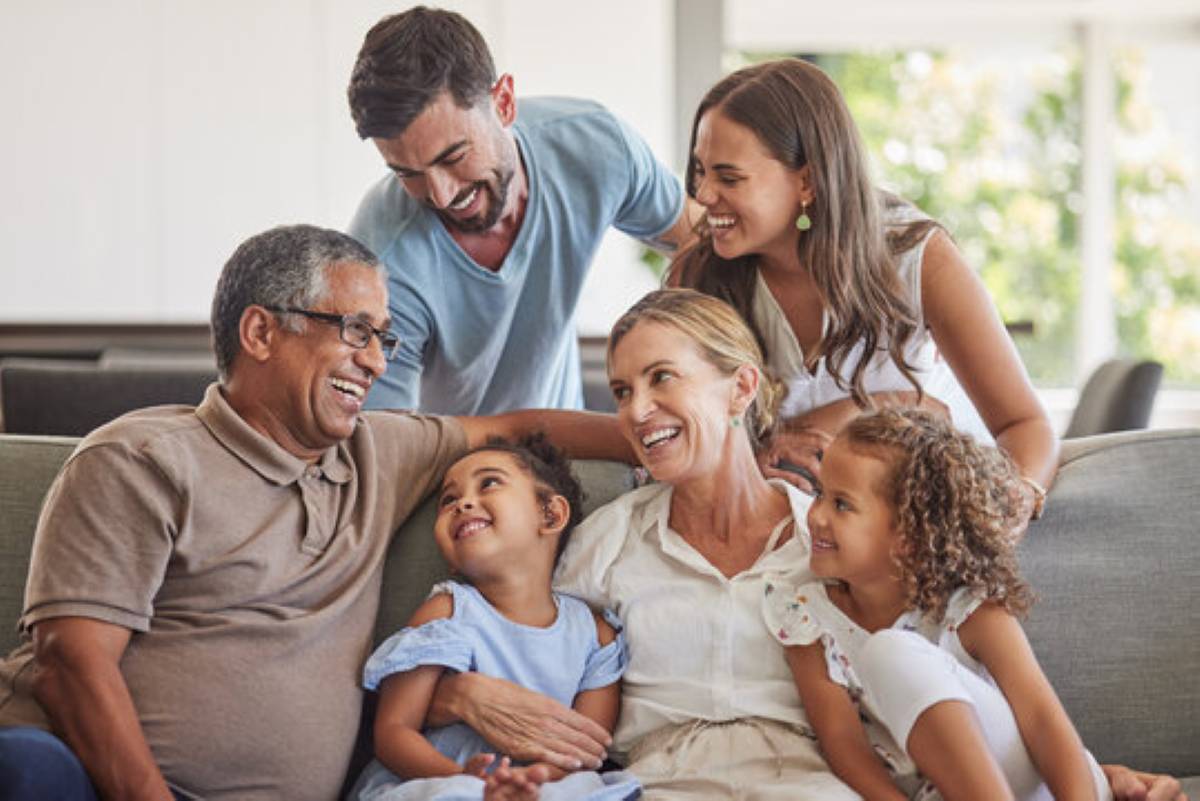

You know the difference the second you walk into two different houses. At one grandparent’s place, the kids are polite but checked out — phones out, eyes on the clock, waiting for the “okay, let’s go” from mom or dad. At the other, they don’t want to leave. They’re already asking when they can come back before they’ve even left the driveway.
That gap isn’t luck, and it’s not really about who’s the “fun” grandparent or who buys the best presents. Psychologists who study attachment and family relationships have found something pretty consistent: the grandparent-grandchild bond is shaped by specific, repeatable behaviors — not personality, not proximity, not even how much time you have together. A grandparent who sees their grandkids once a year can be adored. One who sees them every week can be tolerated at best. The difference comes down to what happens during that time.
The good news is that none of this requires a personality transplant. These are habits — things you can start doing this week — not fixed traits you either have or don’t. Here are seven of them, backed by what psychology actually says about what makes kids feel closest to their grandparents.
1. They Give Undivided, Unconditional Attention
Here’s a phrase from psychology that explains a lot of this: unconditional positive regard. It’s a term coined by psychologist Carl Rogers, and it basically means accepting someone fully, without conditions attached — no “I’ll be warm toward you if you behave a certain way.” For a kid, feeling that from an adult is rare and incredibly powerful. Parents are juggling homework, schedules, and discipline. A grandparent who offers pure, no-strings attention gives a kid something they don’t get anywhere else.
And it’s not really about the big gestures. It’s the boring, tiny stuff — putting the phone face-down on the counter when they walk in, remembering that they’re weirdly obsessed with sharks right now, actually asking follow-up questions instead of half-listening while doing dishes. Kids clock this instantly. They know the difference between an adult who’s present and one who’s just physically in the room.
Compare that to the distracted version: the grandparent who’s scrolling during the visit, who asks “how’s school?” without waiting for the real answer, who treats the visit as something to get through rather than something to be in. Kids don’t articulate it this way, but they feel the difference between “I am important to this person right now” and “I am one more thing happening today.” That feeling — of mattering, fully and without having to perform for it — is the foundation everything else on this list gets built on.
2. They Create Predictable Rituals and Traditions
Attachment theory has this core idea that predictability equals safety. When a kid knows what’s coming, their nervous system relaxes. They’re not on alert, they’re not guessing — they can just be present and enjoy it. That’s exactly why the grandparents kids adore tend to have “a thing” they always do.
Maybe it’s Grandpa’s specific pancake recipe, made the exact same slightly-too-eggy way every single Saturday morning. Maybe it’s the bedtime story routine where Grandma does the same silly voice for the same character every time, and heaven help her if she forgets it. Maybe it’s an annual trip to the lake house that happens every August like clockwork. None of these things are impressive on paper. They’re not Disneyland. But they become sacred because they repeat.
Here’s the part that surprises people: novelty isn’t actually what kids remember fondly. We assume the big, expensive, one-time experiences are what stick — but ask most adults about their favorite grandparent memories, and they’ll usually tell you about the small recurring stuff. The specific way Grandma made grilled cheese. The walk to get ice cream every single visit. The tradition means something because it happened again and again, which quietly tells a kid: this person is a constant in my life. That’s a much bigger deal to a kid’s brain than any one-off theme park trip.
3. They Listen More Than They Lecture
If there’s one skill that separates adored grandparents from merely-tolerated ones, it’s this: they ask questions and actually wait for the answers, instead of turning every conversation into a life lesson.
Psychologists talk about active listening and validation as ways to lower someone’s defenses — and this matters especially across generations, where values and slang and entire worldviews can feel like they’re from different planets. A grandkid talking about some game, some friend drama, some new obsession, doesn’t need a grandparent to have an opinion on it. They need someone who seems genuinely curious. “Wait, how does that game even work?” lands completely differently than “Back in my day, we played outside.”
Think of it as the difference between the “curious question” habit and the “unsolicited advice” habit. One says tell me more, I want to understand your world. The other says let me tell you how your world should be. Kids, even pretty young ones, can feel which one they’re getting.
This is actually a spot where grandparents have a real advantage over parents. Parents have to correct, discipline, and steer — that’s the job. But a grandparent can be a lower-stakes confidant, someone a kid can vent to or tell something to without immediately worrying about a consequence or a rule getting enforced. That’s not a lesser role than parenting — it’s a genuinely different and valuable one, and the grandparents who lean into it (rather than trying to parent from the sidelines) tend to be the ones grandkids trust with the real stuff.
Read Also: 12 Simple Things You Can Do to Unlock Your Grandchild’s Emotional Intelligence
4. They Respect Parenting Boundaries (Without Losing Their Own Identity)
This one trips up a surprising number of grandparents, usually with good intentions. There’s a classic move where a grandparent sneaks the kid extra dessert, lets them skip the bath, or says “well I won’t tell your mom” — and it feels harmless, even fun, in the moment. But family systems theory has a term for what’s actually happening: triangulation. That’s when someone gets pulled between two other people’s dynamics, and it quietly erodes trust across the whole system, not just between the two people directly involved.
Here’s the part that’s counterintuitive: undermining the parents doesn’t actually make a grandparent more loved. It can win a laugh in the short term, but it puts the kid in an awkward spot — now they’re keeping secrets, or they’ve learned that rules are negotiable if they just go around mom or dad. Long-term, this creates weird tension in the family, and the grandparent often gets less trusted, not more, because the parents pull back access to protect their own authority. Nobody wins.
The grandparents who get this right walk a specific line: they can absolutely still be the fun one — the one with the messier art projects, the later bedtime by fifteen minutes, the “let’s go get ice cream for no reason” energy — without actively working against what the parents have asked for. Being fun and being respectful of the rules aren’t opposites. In fact, a grandparent who backs up the parents and brings their own flavor of joy tends to earn more trust from everyone, kid included, than one who tries to win points by breaking rank.
Love Being a Grandma?

Join 29,000+ grandmas who wake up to a cheerful, uplifting email made just for you. It’s full of heart, sprinkled with fun, and always free. Start your mornings with a smile—sign up below! ❤️
5. They Show Physical and Verbal Affection Freely
This one’s pretty simple, but it’s easy to underestimate: hugs, hand squeezes, “I love you, I’m so glad you’re here” — these aren’t just nice extras. Psychologically, touch and affirming words act as attachment reinforcers, meaning they’re literally part of how a kid’s brain files someone away as “safe person, come back to this person.”
And it doesn’t need to be a huge production. It’s not about a dramatic bear hug once a year at Thanksgiving. It’s the small, consistent stuff — a hug at the door every single time, an arm around the shoulder while watching TV together, actually saying “I love you” out loud instead of assuming they know. Consistency does more work here than intensity. A little warmth every visit beats one big gesture every so often.
Worth saying too: affection looks different across families and cultures, and that’s completely fine. Some families are huggers and criers. Others show love through cooking a favorite meal, sitting quietly together, or a dry joke that’s really just a way of saying “I see you, I’m glad you’re mine.” The specific style doesn’t matter nearly as much as whether the warmth is actually getting through. The common thread across every version that works is that the kid walks away feeling loved, not just told they are.
Read Also: 8 Desirable Grandmother Behaviors That Can Positively Mold Her Grandchild’s Perspective of Life
6. They Share Their Own Stories and History
There’s a well-known line of research out of Emory University where psychologists asked kids a set of questions like “do you know where your grandparents grew up?” or “do you know a funny story about when your parents were young?” The kids who knew more of these family stories tended to show more resilience — better able to handle stress, more confident, more secure in who they were. The theory is that knowing your family’s history gives you a sense of belonging to something bigger than just your own immediate problems. You’re not just a kid having a rough week; you’re part of a longer story that’s had ups and downs and kept going.
Grandparents are basically sitting on a goldmine here, and a lot of them don’t realize it. You lived through stuff. You have actual stories — the time you got in trouble as a teenager, how you met your spouse, what the world looked like before smartphones, the family member nobody talks about anymore. Sharing that isn’t just entertainment, it’s identity-building for the kid listening.
One practical thing worth knowing: specific stories land way better than general wisdom. “Work hard and things will pay off” goes in one ear and out the other. But “let me tell you about the time I got fired from my first job and thought my life was over” — that sticks. Kids remember characters and moments, not morals. Give them the messy, specific, real version of your life, and they’ll hang onto it a lot longer than any advice.
7. They Treat Each Grandchild as an Individual
Kids have a finely tuned radar for fairness, and favoritism — even the accidental, unspoken kind — gets noticed fast. Psychology backs this up pretty clearly: perceived favoritism among siblings or cousins is linked to real, lasting effects on self-esteem and on the sibling relationships themselves. It doesn’t even have to be dramatic, like a grandparent openly preferring one kid. Sometimes it’s as subtle as always asking one grandchild about their grades and the other about their soccer game, and never swapping it around. Kids pick up on these patterns even when the adults involved have no idea they’re doing it.
The fix isn’t complicated, though: comparisons are the thing to watch for. “Why can’t you focus like your sister” or “your cousin never acted this way” — even said lightly — teaches a kid they’re being measured against someone else instead of just being seen for who they are. Adored grandparents tend to avoid this instinctively. They’re not ranking the grandkids against each other, even in their own heads.
What they do instead is actually learn each kid individually — one grandchild might be all about dinosaurs, another couldn’t care less about dinosaurs but will talk your ear off about basketball, and a third just wants to sit and bake cookies in silence. The grandparents who get remembered fondly by all their grandkids are usually the ones who show up differently for each one, based on who that specific kid actually is, rather than running the same script for everybody. It takes more effort than treating them all the same — but it’s also exactly what makes each kid feel individually known, not just included.
Read Also: 8 Detrimental Grandmother Behaviors That Can Negatively Mold Her Grandchild’s Perspective of Life
Final Thoughts
If you zoom out on all seven of these, a pretty clear pattern shows up: none of it is about money, and none of it is about grand gestures. It’s not the expensive gifts, the big trips, or the “wow” moments that make a kid adore their grandparent. It’s consistency. It’s actually showing up present instead of distracted. It’s respecting the kid as their own person — with their own boundaries, their own interests, their own story worth knowing. Every single habit on this list boils down to the same basic thing: making a kid feel seen, safe, and genuinely important, over and over again, in small ordinary moments.
That’s honestly good news. It means you don’t need a bigger budget or more free time to be the grandparent your grandkids adore. You just need to be a little more intentional with the time you already have.
So here’s the real takeaway: don’t try to overhaul everything at once. Pick one habit from this list — maybe it’s putting your phone away during visits, maybe it’s starting a small tradition, maybe it’s just asking one more curious question instead of jumping to advice — and start there this week. Small, repeated things are exactly what build the kind of bond that lasts. Your grandkids won’t remember that you tried to do everything perfectly. They’ll remember that you kept showing up for them, the same way, every time.
Love Being a Grandma?
Join 29,000+ grandmas who wake up to a cheerful, uplifting email made just for you. It’s full of heart, sprinkled with fun, and always free. Start your mornings with a smile—sign up below! ❤️