
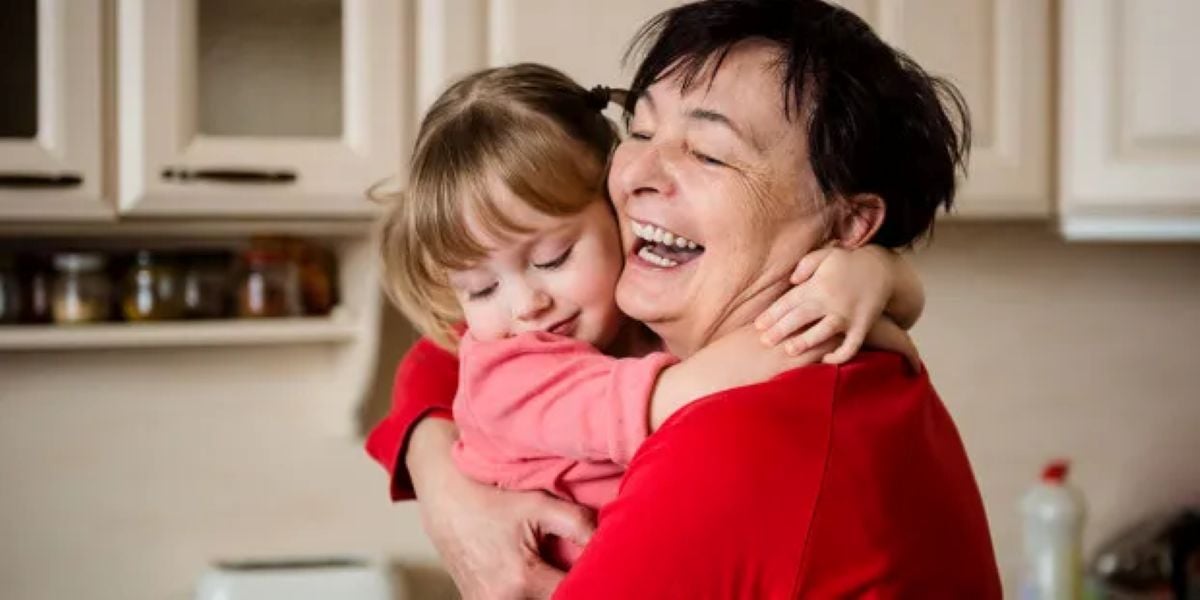

Think about the grandmothers you’ve known — your own, a friend’s, maybe even yourself. Chances are, you don’t remember every single day you spent with her. What you do remember is how she made you feel. Safe. Interesting. Loved without having to earn it. That feeling doesn’t just fade into a nice memory — it actually shapes how a kid sees the world, long after they’ve forgotten the specific afternoons that built it.
Here’s the thing about grandmothers: you get to play a different role than parents do. You’re not the one enforcing bedtime or nagging about homework (most of the time, anyway). That gives you room to be a soft place to land — someone who offers steady love and a little extra perspective without the daily pressure parents carry. It’s a real advantage, and it’s worth using well.
So let’s get into it: eight things grandmothers can do — on purpose, not by accident — that leave a real mark on how their grandkids move through life.
1. Offering Unconditional Love and Acceptance
This one sounds simple, but it’s actually the foundation everything else sits on.
Unconditional love isn’t about grand declarations — it’s in the small, everyday stuff. It’s not lighting up more when your grandkid brings home straight A’s than when they bring home a C. It’s not saving the extra warmth for the “easy” grandchild and going quieter around the one who’s harder to connect with. It’s showing up the same way whether they just won the spelling bee or just had a meltdown in the cereal aisle.
Kids are surprisingly good at picking up on conditions, even ones we never say out loud. If your affection seems to shift based on behavior, grades, or how “good” they were that day, they notice. And over time, they start to believe love is something they have to perform for.
When you love a grandchild exactly as they are — quirks, bad moods, weird obsessions with dinosaurs or whatever it is this month — you’re teaching them something huge: that their worth isn’t up for negotiation. That lesson sticks. Kids who grow up knowing they’re loved no matter what tend to carry that security into how they see themselves as adults — they’re less likely to chase approval or tie their value to achievement, because somebody already showed them they mattered just for existing.
You don’t need a big speech to do this. Sometimes it’s just saying “I love you” after a bad day, same as you would after a great one. Sometimes it’s not flinching when they tell you something embarrassing. Small, consistent, no strings attached — that’s the whole formula.
2. Sharing Family Stories and Heritage
Every family has stories — the ones that get retold at holidays, the ones about how great-grandpa came over on a boat with nothing but a suitcase, the ones about the recipe that’s been passed down so many times nobody remembers who started it. Those stories matter more than they seem to.
When you sit a grandkid down and tell them where they come from — the traditions, the culture, the faith, even the family quirks and inside jokes — you’re handing them something they can’t get anywhere else. Parents are busy living the day-to-day. Grandmothers often hold the bigger picture: the stuff that happened before the grandkid was even born, the stuff that explains why the family does what it does.
This doesn’t have to be formal history-lesson stuff. It can be as simple as telling them why you make a certain dish every Christmas, or what your own grandmother was like, or the story behind that old photo on the wall. Kids soak this up more than you’d think — and it gives them something really valuable: a sense that they’re part of something bigger than themselves. That they didn’t just show up out of nowhere. That there’s a whole line of people before them who struggled, laughed, and made it through, and now they get to carry a piece of that forward.
Kids with a strong sense of where they come from tend to have a steadier sense of who they are. It’s like giving them roots before they even realize they need them.
3. Practicing Patience and Active Listening
Here’s a quiet superpower a lot of grandmothers have that parents sometimes struggle to find time for: patience.
Parents are often in problem-solving mode — fix it, correct it, move on to the next thing on the list. That’s not a knock on parents, it’s just the reality of raising kids day in and day out. But grandmothers often get to slow down. And that’s a gift.
Active listening means actually stopping what you’re doing when your grandkid is talking to you — not half-listening while you finish loading the dishwasher, not jumping in to correct them the second they say something “wrong,” not rushing to solve their problem before they’ve even finished explaining it. It’s letting them ramble about their favorite video game for ten minutes even though you don’t understand half of it. It’s asking a follow-up question instead of changing the subject.
When you really listen — full attention, no interrupting, no fixing — you’re sending a message that goes way beyond the conversation itself: what you have to say matters to me. That’s a big deal for a kid. It tells them their thoughts and feelings are worth someone’s time, and that builds real confidence in speaking up.
It also quietly teaches them how to treat other people. Kids learn communication by watching it modeled, not by being told to “be a good listener.” If they experience what it feels like to be truly heard by you, they’re far more likely to offer that same patience to others later on.
Read Also: 6 Sweet-Sounding Compliments Child Psychologists Say Grandkids Don’t Need
4. Modeling Resilience and a Positive Outlook
You’ve lived through things. Maybe it was losing someone you loved, a hard marriage, money troubles, health scares, or just the ordinary grind of raising kids during a tough decade. However it showed up, chances are you’ve weathered some real storms — and that’s actually something worth sharing, not hiding.
A lot of grandmothers instinctively want to shield their grandkids from anything heavy. That instinct comes from love, but a little honesty (kept age-appropriate, of course) does more good than constant sunshine. You don’t need to unload every hard detail on a seven-year-old.
But there’s real value in saying something like, “You know, when I was your age, things were really hard for a while, and I didn’t think I’d get through it — but I did.” That’s not oversharing. That’s showing them proof that hard times don’t last forever.
The key is balance. You’re not dramatizing it — no need to make it sound like a tragic movie. And you’re not brushing it off either, like it was nothing. Just tell it straight: this was hard, here’s what I learned, here’s how I got through to the other side.
Kids who hear these stories start to understand something most adults spend years figuring out: setbacks are part of life, not proof that something’s gone wrong. They learn that the goal isn’t a life with no hard days — it’s knowing you can get through the hard days when they come. That’s resilience, and there’s no better way to teach it than showing them it’s possible, because you did it yourself.
Love Being a Grandma?

Join 33,762+ grandmas who wake up to a cheerful, uplifting email made just for you. It’s full of heart, sprinkled with fun, and always free. Start your mornings with a smile—sign up below! ❤️
5. Encouraging Curiosity and Lifelong Learning
Kids ask a lot of questions. Like, a lot. It can be exhausting, honestly. But how you respond to that curiosity says more than you might realize.
Instead of quick, closed-off answers, try leaning into it. When your grandkid asks why the sky is blue or how a bird knows where to fly, resist the urge to just Google it and move on. Ask them what they think first. Wonder out loud with them. “Huh, I don’t know — what do you think is happening?” That one small shift turns a random question into a little adventure, and it tells them curiosity is something to be excited about, not something to shut down.
The same goes for hobbies. Doesn’t matter if it’s baking, gardening, painting, birdwatching, or building something out of cardboard — doing it together, and letting them see you try (and sometimes mess up), teaches them that learning isn’t just a school thing. It’s a life thing.
And here’s a part that’s easy to forget: let them see you learning too. Maybe you’re figuring out a new phone app, picking up a new recipe, or finally learning to knit properly at 68. Talk about it. Let them see that you don’t have it all figured out either, and that’s completely fine.
When a grandkid sees an adult who’s still curious, still trying new things, still willing to be a beginner at something — that plants a powerful idea in their head: learning doesn’t stop when you grow up. It’s a lifelong thing, and it’s actually kind of fun.
Read Also: 7 Things to Remember When You Feel Jealous of Your Grandchild’s Other Grandparents
6. Demonstrating Generosity and Gratitude
Generosity is one of those things kids learn way more from watching than from being told. You can say “share with your brother” a hundred times, but if they watch you actually live it — that’s what sticks.
It doesn’t need to be big. Maybe it’s letting your grandkid see you drop off extra vegetables from your garden to a neighbor. Maybe it’s bringing them along when you volunteer at a food pantry or visit someone who’s sick. Maybe it’s as simple as saying “thank you” out loud and meaning it — to the waiter, to the mail carrier, to them, for something small they did without being asked. Kids notice this stuff even when we think they’re not paying attention.
And gratitude works the same way. If you make a habit of pointing out the good things — even small ones, like a nice sunset or a good meal — grandkids start to pick up that same lens. They learn to look for what’s good instead of only what’s missing.
The real win here is that giving and thankfulness stop being “special occasion” behaviors — the stuff you only do at Thanksgiving or when someone’s collecting for charity. They become just… normal. Part of how you move through a regular Tuesday. That’s a genuinely valuable habit to hand down, because a kid who grows up generous and grateful tends to be a more content, more connected adult later on.
7. Respecting Parental Boundaries While Offering Wisdom
This one can be tricky, so let’s just say it plainly: your role is to support the parents, not compete with them.
It’s tempting, especially when you’ve got decades of experience, to think you know better — and sometimes you might! But grandkids need consistency more than they need a second opinion. If mom and dad have a rule about screen time or bedtime or what counts as an acceptable snack, undermining that rule (even with good intentions, even just once, even as a “special grandma treat”) puts the kid in a confusing spot. They start learning that rules are negotiable if you just go around the person who made them. That’s not a great lesson, even if it feels harmless in the moment.
The sweet spot is being a steady, supportive presence who backs up the parents’ calls while still offering your own perspective — just through the right channel. If you disagree with something, that’s a conversation to have with your kid (the parent), not a workaround to run through your grandchild. And when your grandkid comes to you with something on their mind, you can absolutely be a trusted extra voice — someone with a little more distance and a little more life experience — without stepping on what the parents are trying to build at home.
When grandkids see parents and grandparents on the same team, it gives them something really valuable: a stable, predictable world. They know where the boundaries are, and they know the adults around them are working together, not against each other. That kind of consistency builds trust — not just in you, but in the whole family structure around them.
8. Prioritizing Presence Over Presents
It’s easy to fall into the habit of showing love through gifts. A new toy, some money slipped into a birthday card, a little something every time you visit — it feels good to give, and honestly, it’s a quick way to see a kid light up. But here’s the truth: the toys get forgotten. The time doesn’t.
Think back to your own childhood memories with grandparents. Odds are, you’re not remembering a specific present. You’re remembering baking together, a road trip, a silly tradition nobody outside the family would understand, someone teaching you how to fish or play cards or braid hair. Those are the things that actually stay with a kid.
That doesn’t mean you can never buy a gift again — nobody’s saying that. It just means the default way you connect shouldn’t be through stuff. Build a tradition that’s just yours — a Sunday phone call, a summer visit, a specific recipe you make together every time. Show up for their school play. Sit on the floor and play whatever game they’re into, even if you don’t totally get it.
When a kid grows up getting more of your time than your money, they absorb something important: that being with people matters more than having things. That’s a lesson that’ll serve them a lot better in life than any toy ever could.
Read Also: 8 Detrimental Grandmother Behaviors That Can Negatively Mold Her Grandchild’s Perspective of Life
Final Thoughts
Here’s the thing about all eight of these — none of them are one-time events. You don’t “do” unconditional love once and check it off the list. It’s in the small stuff, repeated over and over, visit after visit, phone call after phone call. That’s actually how it works best. Kids don’t build their worldview from one big, dramatic moment. They build it from a thousand small ones — the way you listened, the way you hugged them after a bad day, the story you told for the tenth time because they asked to hear it again.
And if you’re reading this thinking about all the things you wish you’d started doing sooner — don’t stress about that. It’s genuinely never too late. Grandkids don’t need perfection or a flawless track record. They just need you, showing up in ways that make them feel loved, heard, and grounded. Even picking up just one or two of these habits starting today can leave a real mark.
So maybe take a minute and think about it: out of these eight, which one feels like it’d make the biggest difference if you leaned into it a little more? That’s probably a good place to start.
Love Being a Grandma?
Join 33,762+ grandmas who wake up to a cheerful, uplifting email made just for you. It’s full of heart, sprinkled with fun, and always free. Start your mornings with a smile—sign up below! ❤️