
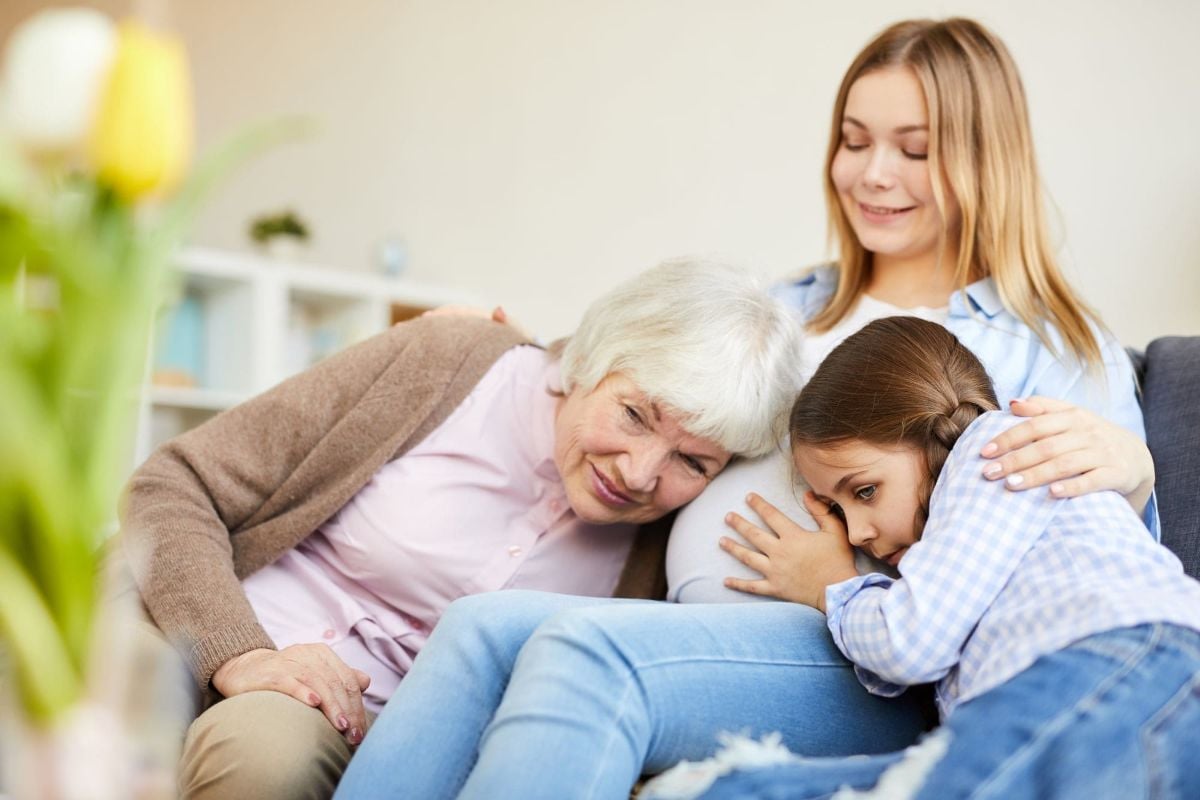

Have you ever quietly noticed this in your own family—or someone else’s? The kids seem to naturally drift toward Mom’s side. They talk about “going to Grandma’s house” and, more often than not, they mean her mom. It’s not always intentional. It just… happens.
Now, before this stings a little, let’s be really clear about something. This isn’t about one set of grandparents loving more, trying harder, or being “better.” Not even close. What we’re talking about here is a pattern—something researchers have seen over and over again across different families, cultures, and generations.
And honestly, once you understand why it happens, it starts to make so much sense. It’s not one big reason. It’s a mix of small things that add up over time—how families stay connected, who organizes visits, who’s there in those early years, even a little bit of human nature working quietly in the background. The good news? Once you see the pattern, you can absolutely work with it—not against it.
The “Matrilineal Advantage” Is Real (And Widely Observed)
There’s actually a name researchers use for this pattern: the “matrilineal advantage.” It sounds a bit formal, but all it really means is this—grandchildren tend to feel closer to their grandparents on their mother’s side.
And here’s the interesting part… this isn’t just one study or one country. It shows up again and again, all over the world. Different cultures, different lifestyles, same general outcome. That tells us something important: this isn’t random—it’s something deeply rooted in how families tend to function.
Now, here’s where it gets practical for you. Studies show maternal grandparents are often more involved in the day-to-day parts of a child’s life. That could mean helping with childcare, being the go-to for babysitting, showing up more often, or just being part of the little everyday moments. And as you already know, it’s those small, consistent moments that build the strongest bonds.
But—and this matters—this isn’t about effort alone. It’s not that one side cares more. It’s that family dynamics naturally make it easier for one side to stay involved. Think of it like this: closeness grows where there’s more opportunity for connection.
And here’s the part I want you to really hold onto… this “advantage” isn’t fixed. It’s not a rule you’re stuck with. It’s just a starting point. Because at the end of the day, the grandparents who show up, stay consistent, and build those little everyday connections? Those are the ones who become unforgettable—no matter which side they’re on.
Moms Are the “Bridge” Between Generations
If you really stop and think about it, this one makes a lot of sense.
In most families, moms tend to stay closer to their own parents. They’re the ones who call more often, share updates, send photos, plan visits, and remember birthdays. It’s not always intentional—it’s just how many family relationships naturally work. And because of that, kids end up having more regular contact with Mom’s side of the family.
You might hear this described as “maternal gatekeeping,” but don’t let the term sound negative. It simply means moms often act as the bridge—they’re the ones keeping everyone connected. They’re the ones saying, “Let’s go visit Grandma this weekend,” or “Call your grandparents and say thank you.”
And here’s the honest truth most people don’t say out loud:
Closeness often comes down to who keeps the connection alive.
Now here’s the practical part—this is where you have more influence than you think.
If you’re on the paternal side, one of the most powerful things you can do is build a strong, warm relationship with your daughter-in-law. Not forced, not overbearing—just supportive, respectful, and easy to be around. When she feels comfortable with you, she’s naturally more likely to include you, update you, and keep that bridge open.
Simple things go a long way:
- Send a kind message just to check in (not just about the kids)
- Respect her routines and parenting style
- Appreciate her efforts instead of questioning them
Because at the end of the day, the person who manages the connection… often shapes the closeness.
Read Also: 5 High-Value Skills Every Grandparent Should Pass On to Their Grandchildren
Early Bonding Starts Stronger on the Maternal Side
Here’s something that quietly shapes everything later on—those very early days.
Think about pregnancy, birth, and those first exhausting months with a newborn. Who is usually right there in the middle of it all? Most of the time, it’s the maternal grandparents—especially the grandmother. She’s helping out, offering support, maybe even staying over, holding the baby while mom gets a little rest.
And that’s not just anecdotal—research shows maternal grandparents tend to be more involved during pregnancy, birth, and early childcare, which naturally gives them more time to bond from the very beginning.
When you’re there from the very beginning, you’re not a “visitor”—you become part of the child’s world right away. Your voice, your presence, your touch… it all becomes familiar. And that familiarity turns into comfort. Then comfort turns into trust.
By the time that child is a toddler or teenager, that bond doesn’t feel new—it feels like it’s always been there.
But here’s the encouraging part—you’re never “too late.”
If you didn’t get that early window, you can still build a deep connection. You just have to be a little more intentional now. Think of it as creating your own “early moments,” even if they come later.
Here are a few simple ways to do that:
- Create a small tradition (even something as simple as a weekly call or a special snack they only have with you)
- Be fully present when you’re together—put the phone down, really listen
- Learn what they love (their shows, hobbies, little interests) and meet them there
Because while early bonding gives a head start…
it’s consistency over time that really makes a grandchild feel close to you.
So yes, it’s easier to stay close when you’ve been there from the very beginning. But closeness isn’t locked in during those early months. It’s built and rebuilt over time, through presence, warmth, and the feeling that you’re someone they can always come back to.
Biology Plays a Quiet (But Powerful) Role
This one can feel a little surprising at first, but stay with me—it’s actually fascinating once you see it clearly.
There’s a small, quiet influence happening in the background that most families never think about, and it comes down to basic human nature. From a biological standpoint, there’s never any doubt that a mother is connected to her child. That same certainty naturally extends to her parents as well. But on the father’s side, historically speaking, that certainty hasn’t always been quite as clear.
Now, no one is sitting there consciously thinking about this. No grandparent is saying, “I’ll invest more here because of biology.” It doesn’t work like that. This is all happening beneath the surface, shaped by thousands of years of human behavior. It’s subtle, but it can influence how people show up, how they bond, and how much they naturally lean in.
What matters most here is understanding that this isn’t about favoritism or intention. It’s not about one grandparent loving more than another. It’s simply one of those deeply wired tendencies that can gently nudge relationships in a certain direction.
And here’s the part that really matters for you. Biology might create a slight starting difference, but it doesn’t decide the outcome. Real closeness isn’t built on instinct—it’s built on moments. It’s built on showing up, listening, being present, and creating a sense of safety and warmth. That’s something every grandparent has full control over, no matter which side of the family they’re on.
But Here’s the Truth: Any Grandparent Can Be “The Favorite”
Now this is the part I really want you to take to heart.
Yes, there are patterns. Yes, research shows certain trends. But when it comes down to real life, real families, and real relationships… those patterns don’t decide who a grandchild feels closest to.
What actually makes the difference is something much simpler—and much more powerful.
It’s how you show up.
You don’t need to compete with anyone. You don’t need to try to “win” your grandchild over. What children respond to, more than anything, is consistency. They notice who shows up again and again. They feel who listens without rushing them. They remember who makes them feel safe, understood, and accepted exactly as they are.
And here’s something that doesn’t get talked about enough—respecting the parents plays a huge role in this too. When you support your adult child (and their partner) instead of pushing against them, it creates a sense of ease. And that ease naturally opens the door for more time, more trust, and more connection with your grandchild.
It’s not about being perfect. It’s about being steady.
A grandchild might not remember every gift or every visit, but they absolutely remember how you made them feel. If they feel calm around you, if they feel heard, if they feel like they can just be themselves without pressure… that’s what builds a bond that lasts.
So no, it’s not about which “side” you’re on.
It’s about the kind of presence you bring into their life.
Read Also: Highly Respected Grandparents Share These 6 Habits, According to a Family Psychologist
Love Being a Grandma?

Join 29,000+ grandmas who wake up to a cheerful, uplifting email made just for you. It’s full of heart, sprinkled with fun, and always free. Start your mornings with a smile—sign up below! ❤️
Great information!
I am the paternal Grammy. The one who is always there since her birthday. My best gift ever, being with my Granddaughter!❤️
Thank you! ❤️