
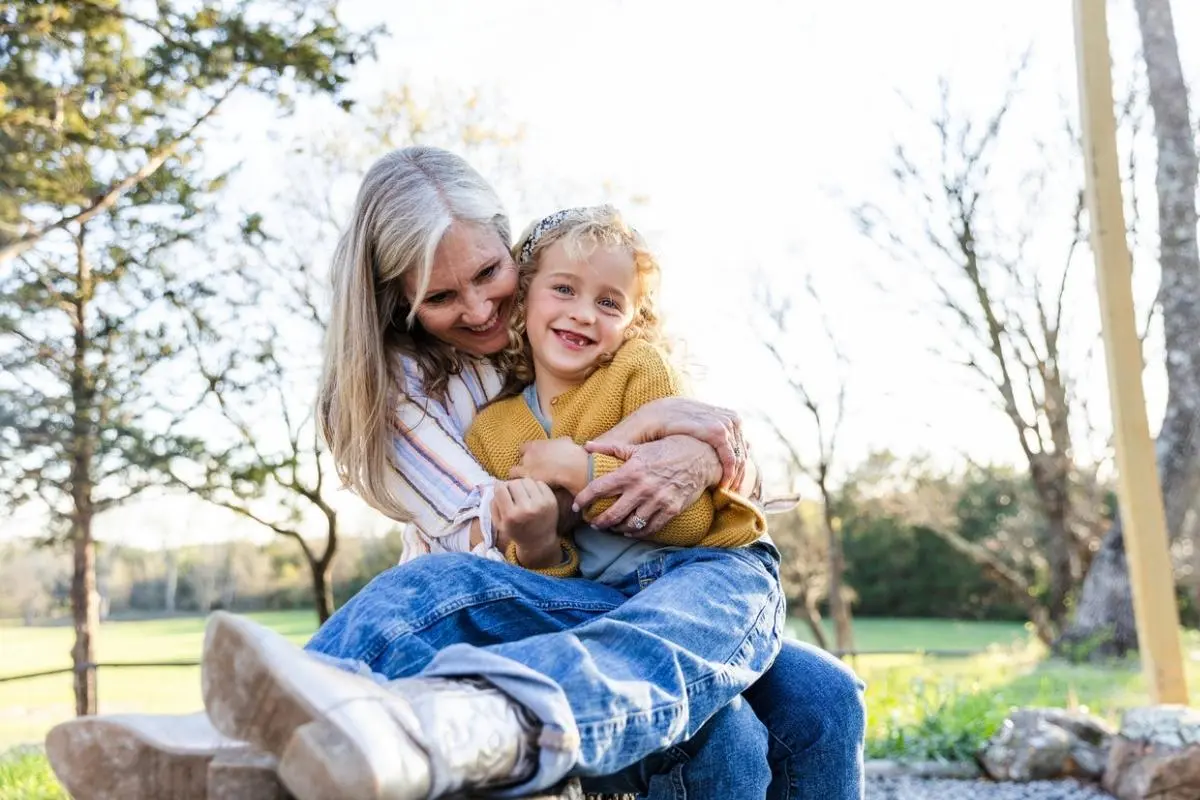

Most grandmas already love their grandkids like crazy. That part’s never in question. The real question is whether that love actually feels like closeness to your grandkids. Because loving someone and connecting with someone aren’t always the same thing.
And here’s the good news — this has nothing to do with being the “fun grandma” with the newest gadgets, the biggest toy stash, or a candy jar that never runs empty. Kids don’t remember you for what you gave them. They remember you for how you made them feel.
So here are five simple questions to ask yourself. Not to make you feel bad if the answer is “not really” — just to help you see where you might be able to lean in a little more.
Question 1: Am I Curious About Their World?
Think back to the adults you loved most as a kid. Chances are, it wasn’t the one who talked at you about their own stuff. It was the one who asked about your stuff — your friends, your favorite show, whatever weird thing you were obsessed with that week.
Kids and teens today work the same way. If you want your grandkids to light up when they see you, get curious about what they’re into. Ask about their favorite video game. Ask who their favorite YouTuber is. Ask about the show they can’t stop watching, or that one phrase they keep saying that makes zero sense to you.
Here’s the shift that makes all the difference: instead of always inviting them into your world, step into theirs.
A few easy ways to do this:
- Ask them to show you their favorite game or show — actually sit and watch
- Let them “teach” you something. Kids love being the expert for once
- Don’t roll your eyes or call their interests silly, even if you don’t get it
One thing to keep in mind — this looks different depending on their age. A toddler’s whole world might be dinosaurs and a favorite blanket. A teenager’s world might be a group chat and a hobby you’ve never even heard of. The details change, but the move stays the same: show up curious, not judgmental.
Read Also: 8 Ways to Intentionally Create Meaningful Memories Your Grandchildren Will Cherish Forever
Question 2: Do I Make Them Feel Safe to Be Themselves?
Here’s something most people don’t think about: kids naturally gravitate toward the adults who don’t make them feel judged. Not the strictest adult. Not the one with the most rules. The one who lets them just… be.
That’s what emotional safety really means. It’s that feeling of “I can say the weird thing, admit the mistake, or show up in a bad mood, and this person still loves me the same.” That feeling is what turns “grandma” into “the person I actually want to talk to.”
On the flip side, constant correcting — even small stuff, even when you mean well — sends a different message. It teaches kids to watch what they say around you instead of just talking to you.
So how do you build that kind of safety? A few things help:
- Bite your tongue in the moment. If they say something a little off or make a choice you wouldn’t make, you don’t have to fix it right then and there.
- Save the teaching moments for later. If something really does need addressing, wait for a calm, one-on-one moment — not in front of others, not mid-story.
- Listen way more than you advise. Most of the time, kids don’t want a lesson. They want someone to actually hear them out.
None of this means you drop your values or stop guiding them. It just means you pick your moments, and you lead with acceptance first.
Question 3: Am I a Team Player With Their Parents?
This one’s a big one, and it trips up even the most loving grandmas: undermining the parents.
Maybe it’s letting them stay up past bedtime “just this once.” Maybe it’s an extra dessert after you were told no sweets before dinner. Maybe it’s a comment like, “Well, when I raised your mom, we did it differently.” Each of these feels small in the moment. But add them up, and they do real damage — not just to your relationship with your adult child, but to your closeness with the grandkids too.
Here’s why: kids are way more perceptive than we give them credit for. When they sense tension between you and their parents, it doesn’t feel exciting to them — it feels stressful. Instead of enjoying time with you, part of them is busy managing the awkwardness of two adults not being on the same page.
Being close with your grandkids and respecting their parents’ rules aren’t in competition. In fact, one supports the other. A few ways to stay a team player:
- Ask the parents directly what the current rules are — screen time, food, discipline, whatever it is. Rules change, and it’s better to ask than assume.
- Take any disagreements to your adult child privately. Never hash it out in front of the kids.
- Don’t criticize a parent in front of their child. Even a joke can land harder than you mean it to.
When grandkids see you and their parents as a united front, they relax. And that relaxed, secure feeling? That’s exactly what makes them want to be around you more.
Love Being a Grandma?

Join 33,762+ grandmas who wake up to a cheerful, uplifting email made just for you. It’s full of heart, sprinkled with fun, and always free. Start your mornings with a smile—sign up below! ❤️
Question 4: Am I Really There When I’m With Them?
Let’s clear up a myth right away: gifts don’t buy affection. Sure, kids love getting presents — what kid doesn’t? But the toys and treats fade fast. What actually sticks with them is much simpler: did grandma really pay attention to me?
Twenty minutes of your full attention beats an entire day where you’re half-checked out. Kids can tell the difference between someone who’s physically there and someone who’s actually there. If you’re scrolling your phone while they’re trying to tell you about their day, they notice. And over time, that adds up to “grandma’s busy” instead of “grandma’s all mine.”
The fix isn’t complicated. It just takes a little intention:
- Put the phone down during visits. Even just for the time you’re together, let it go.
- Go for one-on-one outings when you can. No siblings, no cousins, no parents — just the two of you. Kids open up differently when it’s just them.
- Create simple standing rituals. A baking day. A weekly phone call. A regular walk together. It doesn’t need to be fancy — it just needs to be consistent.
- Let them pick the activity sometimes. Even something small, like choosing the game or the snack, makes them feel like their voice matters.
Presence is free. It doesn’t cost a thing except your attention — and that’s exactly why it means so much.
Question 5: Am I Giving Them a Sense of Where They Come From?
Grandmothers hold something really special: the family story. You remember things the parents have forgotten, or maybe never even knew. You’re the keeper of the old photos, the funny family sayings, the stories about what your adult child was like as a kid — stories that make your grandkids howl with laughter, or sit there wide-eyed like they just found out their mom or dad used to be a person too.
This matters more than people realize. When kids know where they come from, they feel like they belong to something bigger than just themselves. It gives them a sense of roots — and that sense of roots is something no toy or gadget can give them.
A few easy ways to pass this along:
- Tell stories about their parent as a kid. The embarrassing ones, the funny ones, the sweet ones — kids love all of it.
- Pull out old photos. Even a few minutes flipping through pictures together can spark a great conversation.
- Pass down a family recipe or tradition. Cooking grandma’s recipe together turns into a memory of its own.
- Invite their questions about “the old days.” Let them ask what life was like when you were their age. You might be surprised how curious they really are.
You don’t need a big family history book or some perfectly organized scrapbook. Just a few stories, told with love, go a long way.
Read Also: 12 Things Grandparents Do That Should Never Be Taken for Granted
Bringing It All Together
So here’s the truth: being the grandma your grandkids adore was never about the toys, the treats, or being the “fun one.” It’s built through smaller, quieter things — being curious about their world, making them feel safe to be themselves, respecting their parents, actually being present when you’re together, and giving them a sense of where they come from.
None of these five questions require you to change who you are. They’re not about being perfect either. They’re just little check-ins — small nudges to help you show up in the way that matters most to the kids in your life.
And here’s the best part: this stuff adds up. You don’t need one big, perfect moment to build a close relationship with your grandkids. You need a bunch of small ones, done over and over, year after year. A phone call here. A story there. A moment of really listening instead of correcting. Over time, those small moments turn into the kind of bond that lasts a lifetime.
So don’t try to tackle all five questions at once. Just pick one that stood out to you the most, and focus on that this week. That’s it. That’s the whole plan. Small steps, done consistently, are what real closeness is made of.
Love Being a Grandma?
Join 33,762+ grandmas who wake up to a cheerful, uplifting email made just for you. It’s full of heart, sprinkled with fun, and always free. Start your mornings with a smile—sign up below! ❤️