
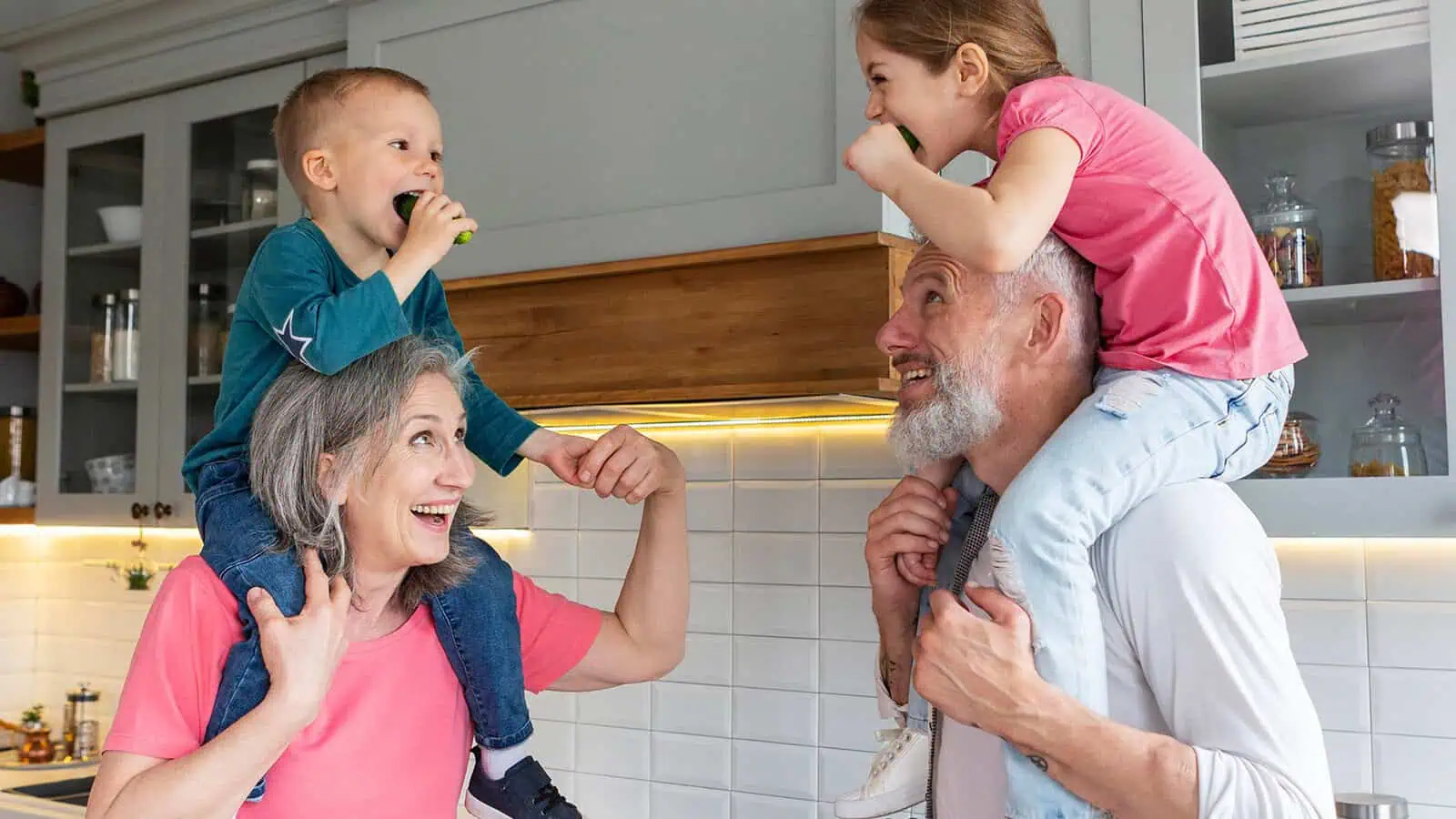

Picture two grandmas. Both see their grandkids about the same amount — Sunday dinners, holidays, the occasional weekend sleepover. Both love those kids like crazy. Both would do anything for them.
But one of them gets the real stuff. The grandkid calls her when something good happens, before they even tell their friends. They tell her secrets. They actually want to sit next to her at dinner, not because they have to, but because they like being near her.
The other grandma? She gets the polite version. Quick hugs. Short answers. “Fine” when she asks how school’s going. The grandkids love her too — but there’s a wall there. Something’s just a little closed off, and she can’t quite figure out why.
Here’s the thing most people get wrong: closeness isn’t really about how often you see your grandkids, or how many gifts you give them. Plenty of grandmas who see their grandkids all the time still feel like strangers to them. And plenty of grandmas who live far away and only visit twice a year are somehow the person that grandkid trusts most in the world.
The real difference comes down to something way simpler — and honestly, way more fixable. It’s the words. The specific little things some grandmas say without even thinking about it, that make a kid feel safe, respected, and truly known. And on the flip side, there are things well-meaning grandmas say all the time that quietly push kids away, without ever meaning to.
The good news? These aren’t personality traits you’re stuck with. They’re just phrases. And once you know them, you can start using them today. Here are the 6 that make all the difference.
1. “Tell me more about that.”
You know that feeling when you’re talking to someone and you can just tell they’re waiting for their turn to speak? Kids feel that too. Even little kids. Even teenagers who act like they don’t care what you think.
When your grandkid starts telling you about their weird dream, or the drama with their friend, or some game you’ve never heard of — the easiest thing in the world is to nod along for ten seconds and then steer the conversation back to something you understand. “Oh that reminds me of when I was your age…” And boom, now it’s your story, not theirs.
The grandmas who stay close do something small but kind of magic. They just say: “Tell me more about that.” That’s it. No big lecture, no advice, no turning it into their own story. Just four words that say I actually want to know.
And here’s the thing — you don’t even have to understand what they’re talking about. You don’t need to know what a “sigma” is or why a video game is exciting. You just have to be curious about it because they’re excited about it. Kids remember who made them feel interesting. That’s the whole secret.
2. “I’m proud of you, no matter what.”
Most of us say “I’m proud of you” — but if you really listen, it’s often attached to something. “I’m proud of you, you got an A.” “I’m proud of you, you scored a goal.” Which sounds nice! But kids are smart. They pick up on the pattern real fast: love shows up when I perform well.
So what happens when they get a C? Or sit the bench all season? Or gain some weight, or quit the piano, or dye their hair some color you don’t love? If your pride only showed up for the wins, they start to wonder if it disappears during the losses too.
The grandmas who stay close say the version with no strings attached: “I’m proud of you, no matter what.” Not “no matter what… as long as you.” Just — no matter what. Good grade, bad grade, doesn’t matter. Made the team, didn’t make the team, doesn’t matter.
It sounds like a small difference. It’s not. That one little phrase tells a kid: you don’t have to earn my love, you already have it. And that’s the kind of thing they carry with them their whole life — long after they’ve forgotten the actual report card.
3. “What do you think about that?”
Grandmas have lived a long time. That means you’ve got a lot of wisdom to share — and honestly, that’s part of the fun of being a grandma. But there’s a difference between sharing wisdom and dumping it on someone who didn’t ask.
Here’s what happens a lot without anyone meaning it to: grandkid brings up something — a problem at school, a decision they’re wrestling with, even just an opinion about something in the news — and grandma jumps straight into “well what you should do is…” before the kid even finishes talking. It comes from a good place. You want to help! But what the kid hears is: my thoughts don’t really matter here, I’m just waiting for the real answer.
The grandmas who stay close ask a different question first: “What do you think about that?” And then — this is the important part — they actually wait and listen to the answer. Not planning their response while the kid talks. Actually listening.
It doesn’t mean you never share your opinion. It just means you ask for theirs first. That one little habit tells a kid, “I think you’re smart enough to figure things out.” And kids who feel smart around you will keep coming back to you — because talking to you feels good, not like a lecture waiting to happen.
Read Also: 31 Priceless Memories to Make With Your Grandchildren Before They Grow Up
4. “Your mom and dad get to decide that — I’ve got your back either way.”
This one’s tough, because it means biting your tongue sometimes. And look, every grandma has an opinion about how the grandkids are being raised. Screen time, bedtime, what they’re allowed to eat, how they’re being disciplined — you’ve probably got thoughts. That’s normal.
But here’s where it gets risky: when a grandkid comes to you upset about a rule, and you say something like “well when I raised your mom, we never…” or “I don’t know why they won’t just let you…” — it feels harmless in the moment. Almost like you’re being on their side. But really, you’re putting that kid in a really unfair spot. Now they feel like they have to pick a team. Grandma’s team or mom and dad’s team. And that’s a heavy thing to carry, especially for a kid.
The grandmas who stay close handle it differently. They say something like: “That’s your mom and dad’s call to make — but I’ve still got your back, no matter what.” That way the kid still feels comforted. They still feel like you’re in their corner emotionally. But you’re not undermining the people actually raising them.
And here’s the bonus nobody talks about: parents notice when you do this. When you respect their rules instead of quietly working around them, they trust you more — and trust means more time with the grandkids, not less.
Love Being a Grandma?

Join 29,000+ grandmas who wake up to a cheerful, uplifting email made just for you. It’s full of heart, sprinkled with fun, and always free. Start your mornings with a smile—sign up below! ❤️
5. “I was wrong, I’m sorry.”
A lot of us grew up thinking grownups don’t apologize to kids. Adults are the ones in charge, kids are the ones who listen — that’s just how it worked, right? So even now, saying “I’m sorry” to a grandkid can feel a little strange, almost like it gives away your authority.
But it’s actually the opposite. When you snap at a grandkid because you’re tired, or you get a fact wrong and argue about it anyway, or you say something you didn’t really mean — and then you just move on like it never happened — kids notice. They don’t forget it, they just stop bringing things up. Slowly, without even realizing it, they learn: grandma doesn’t admit when she’s wrong, so there’s no point saying anything.
The grandmas who stay close do something brave instead. They say: “I was wrong, I’m sorry.” Plain and simple. No excuses tacked on, no “but you also…” Just owning it.
And here’s the surprising part — it doesn’t make you look weak. It makes you look safe. It tells the kid, “Grandma’s human, and if she can admit when she messes up, maybe I can too.” That’s the kind of trust that makes a kid want to keep talking to you, even when things get hard.
6. “You can always tell me the truth.”
Kids — especially as they get older — are constantly testing the waters. Can I tell this person something real? Or will they freak out, tell everyone, or make me feel small for it? They’re always watching for clues.
And a lot of times, without meaning to, grandmas send the wrong signal. A kid admits something a little messy — a bad grade they hid, a fight with a friend, something they’re scared about — and grandma gasps, or lectures, or worse, brings it up later at Thanksgiving in front of everyone. Even if it comes from love and worry, the kid learns a hard lesson fast: don’t tell grandma the real stuff. And once that door closes, it’s really hard to open back up.
The grandmas who stay close — really close, even through the teenage years — say something simple early and often: “You can always tell me the truth.” And then, when the truth actually comes, they follow through. They stay calm. They don’t punish honesty. They don’t gossip it to the family group chat.
That doesn’t mean you can’t be worried, or even disappointed sometimes. You’re allowed to feel things. It just means the kid never has to wonder if telling you the truth is going to blow up in their face. And that’s rare. That’s the kind of grandma a kid will call first — even as a grown adult — when something big happens in their life.
The Common Denominator in “Shut-Out” Grandparents
Here’s something important: the grandmas who end up a little shut out aren’t bad grandmas. Almost none of them are doing this on purpose. Nobody wakes up thinking, “Today I’m going to push my grandkids away.” It’s just… they don’t realize it’s happening.
If you look closely, there’s usually one pattern behind it. The conversations tend to circle back to the same few things — grandma’s own stories, grandma’s own opinions, how things used to be “back in the day.” All of that stuff is nice, and honestly, kids do enjoy hearing it sometimes.
But if that’s most of what the conversation is, the kid slowly stops bringing their own life to the table. Why would they talk about their new favorite show or their friend drama if the conversation’s just going to swing back to grandma anyway?
So really, it’s not about love. It’s not about trying hard enough, either. It’s about curiosity — asking about their world instead of only talking about yours.
And that’s actually really good news. Because you don’t need to fix your whole personality. You just need a little more awareness. That’s it.
Final Thoughts…
Here’s the best part of all this: it’s never too late. It doesn’t matter if your grandkids are 3 or 30 — these phrases work at any age, and it only takes one conversation to start shifting things.
You don’t have to change everything overnight either. Just pick one phrase from this list. Maybe it’s “tell me more about that.” Maybe it’s the apology one, if that’s been hard for you. Try it this week. See how it feels — and watch how they respond.
Because at the end of the day, the grandma who gets the real stuff, the late-night calls, the secrets, the “can I talk to you about something” — she’s not the one who gave the most gifts or hosted the most holidays. She’s the one who made her grandkids feel safe enough to be themselves. And that’s something any grandma can start doing, starting today.
Love Being a Grandma?
Join 29,000+ grandmas who wake up to a cheerful, uplifting email made just for you. It’s full of heart, sprinkled with fun, and always free. Start your mornings with a smile—sign up below! ❤️