
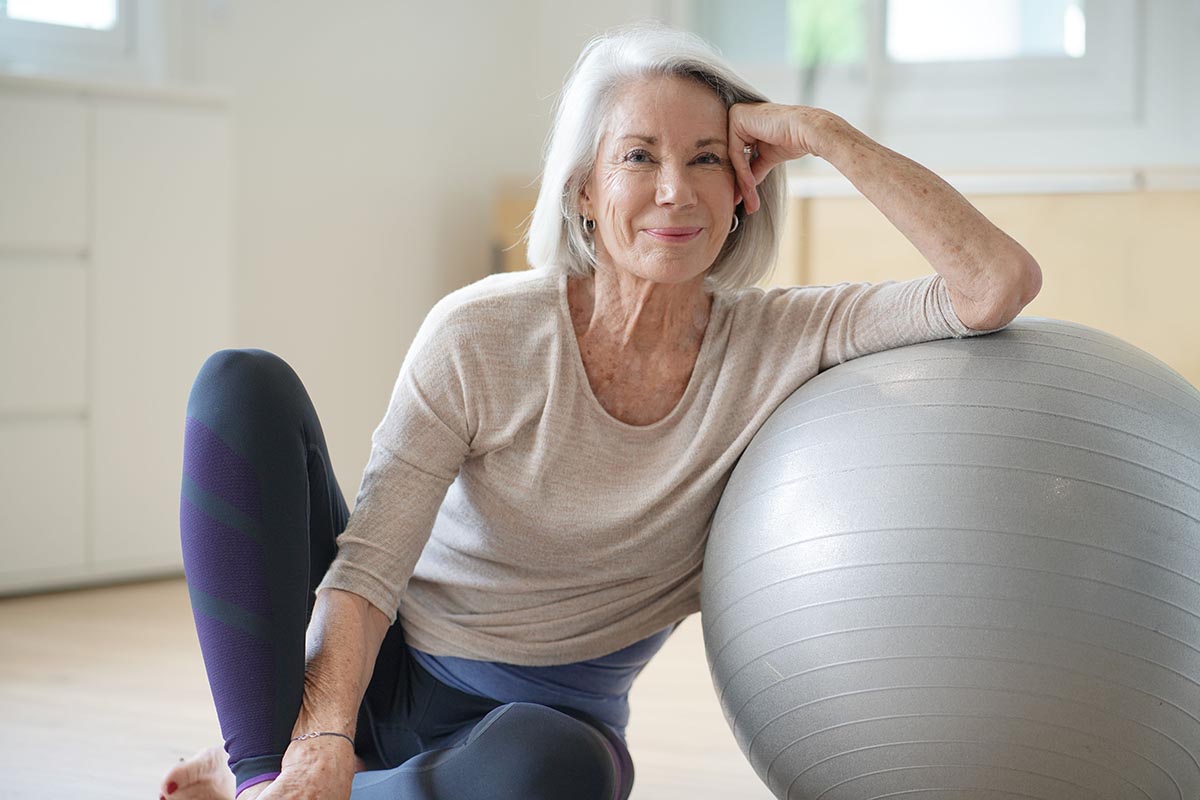

Have you ever run into someone you haven’t seen in years — maybe an old college friend or a former coworker — and you’re standing there thinking, wait, how are they this good-looking? They’re in their 60s. They should look like they’re in their 60s. But somehow… they don’t.
It’s not just good lighting. And before you write it off as “great genes,” here’s the thing: genetics only accounts for about 20–30% of how we age visibly. The rest? That’s lifestyle. That’s the daily choices piling up, quietly, over decades.
Science has a word for this: epigenetics. It’s basically the study of how your behaviors and environment influence how your genes express themselves. In plain English — you have way more control over how you age than you probably think. Stuff like what you eat, how you sleep, whether you slather on sunscreen or just squint and hope for the best… it all adds up.
The people who still look fresh and vibrant in their 60s and 70s aren’t doing anything wildly exotic. No $500 serums (well, mostly). No cryotherapy chambers. What they’re doing is actually pretty simple — they’ve just been doing it consistently for a long time.
So here are the 8 daily habits that tend to show up again and again in people who seem to have found the pause button on aging. Some of these you probably already know. Others might surprise you.
Habit 1: They protect their skin from the sun — every single day
If there’s one habit that dermatologists, longevity researchers, and basically every skincare expert on the planet agrees on, it’s this one. Sun protection is the single most impactful thing you can do for how your skin ages. Full stop.
Here’s what’s happening under the surface. The sun emits two types of UV radiation that affect your skin: UVA and UVB rays. UVB rays are the ones that burn you — the classic “I forgot sunscreen at the beach” situation. But UVA rays are sneakier. They penetrate deeper into the skin, and they’re out there doing damage even on cloudy days, even through car windows, even in winter. UVA rays break down collagen and elastin — the proteins that keep your skin firm and bouncy. Over time, that breakdown shows up as wrinkles, sagging, and that kind of leathery texture that nobody’s going for.
There’s actually a famous photo that circulates in dermatology circles — a truck driver who spent 28 years with the left side of his face exposed to the sun through his window. The difference between the two sides of his face is genuinely shocking. Same person, same age, same genetics. Just one side got sun exposure and the other didn’t. If that doesn’t sell you on SPF, nothing will.
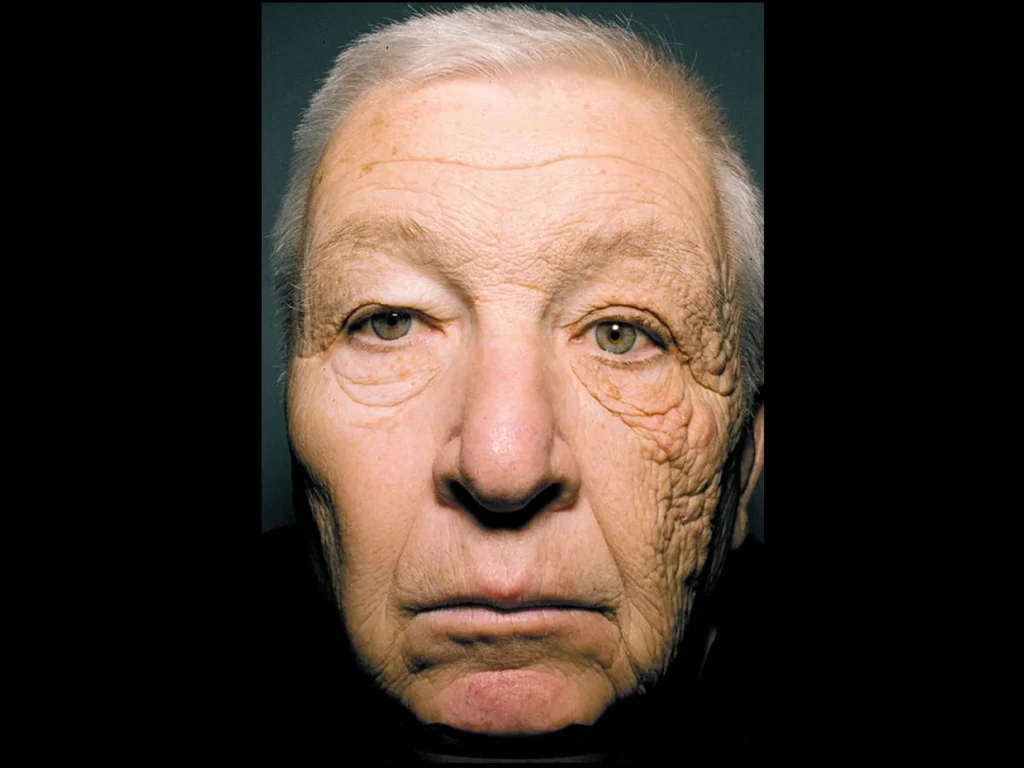
People who age well have made sunscreen a non-negotiable part of their morning routine — not a “beach day” thing, not a “it looks sunny today” thing. Every. Single. Day. SPF 30 is the minimum you want, SPF 50 if you can swing it. And yes, that means reapplying if you’re outside for a stretch.
But it doesn’t stop at sunscreen. The people who really protect their skin tend to layer their habits — a wide-brimmed hat when they’re gardening or walking, sunglasses to protect the delicate skin around their eyes (and reduce all that squinting that causes crow’s feet), and seeking out shade during peak hours, roughly 10am to 4pm when UV rays are strongest.
The best part about this habit? It’s genuinely easy and cheap. A decent SPF moisturizer costs a few dollars and takes about 10 seconds to apply. The results, compounded over 20 or 30 years, are genuinely staggering. This is the low-hanging fruit of aging well — and the people who look great in their 60s grabbed it early.
Habit 2: They prioritize deep, consistent sleep
Okay, real talk — how many times have you heard someone brag about running on five hours of sleep like it’s a badge of honor? “I’ll sleep when I’m dead,” they say. And meanwhile, their skin is quietly aging at double speed. Not a great trade.
Sleep isn’t laziness. It’s literally when your body goes into repair mode. While you’re lying there dreaming about whatever weird stuff your brain conjures up, your body is working overtime — rebuilding tissues, clearing out cellular waste, and releasing human growth hormone, which plays a big role in repairing and regenerating skin cells. Skimp on sleep and you’re basically cutting your body’s maintenance crew short before they’ve finished the job.
And it shows. Literally. Poor sleep spikes your cortisol levels — that’s your stress hormone — and chronically elevated cortisol breaks down collagen. It also triggers inflammation, which accelerates aging at a cellular level. You know that puffy, dull, slightly grey look your face gets after a bad night? That’s not just tiredness. That’s your skin telling you it didn’t get what it needed.
The people who age well tend to treat sleep like an appointment they don’t cancel. They aim for seven to nine hours — not as an occasional luxury, but as a daily baseline. And just as important as the hours is the consistency. Going to bed and waking up at roughly the same time every day keeps your circadian rhythm stable, which makes the sleep you do get significantly more restorative.
A few small things that make a surprisingly big difference: keeping your bedroom cool and dark, ditching screens for the last hour before bed (yes, the phone too), and avoiding alcohol close to bedtime. Alcohol might help you fall asleep, but it absolutely wrecks sleep quality in the second half of the night. You wake up at 3am for “no reason” — that’s the reason.
It sounds almost too simple. Sleep more, sleep better, look younger. But the research is genuinely stacking up, and the people who’ve figured this out don’t take it for granted.
Read Also: 8 things the happiest people over 65 do every single day that keep them feeling young
Habit 3: They stay consistently hydrated
This one sounds so basic that it almost feels like a cop-out. Drink water. That’s the habit? Really?
Yes, really. Hear it out.
Your skin is an organ, and like every other organ in your body, it needs water to function properly. When you’re well-hydrated, skin cells are plumper and more elastic — fine lines look less pronounced, your complexion looks more even, and there’s a certain glow that’s genuinely hard to fake with products. When you’re chronically dehydrated — even mildly — your skin looks dull, feels tight, and any lines or wrinkles you have become a lot more noticeable.
Here’s the thing most people get wrong: they wait until they’re thirsty to drink water. But by the time you actually feel thirsty, you’re already behind. People who age well sip water consistently throughout the day — it’s not a dramatic wellness ritual, it’s just a glass here, a glass there, all day long.
And it’s not only about what you drink — it’s also about what you eat. Foods with high water content genuinely contribute to your hydration levels. Cucumbers, watermelon, celery, strawberries, leafy greens — these all pull double duty as hydrating foods that also happen to be loaded with skin-friendly nutrients. People who look great in their 60s tend to eat a lot of this stuff, not because they’re martyrs, but because they’ve figured out that food can taste good and work for you at the same time.
On the flip side, there are a few things that quietly dehydrate you without you realizing it. Alcohol is a big one — it’s a diuretic, meaning it makes you lose water faster than you take it in. Excess caffeine can do the same thing in high amounts. That doesn’t mean you have to give up coffee or the occasional glass of wine, but it does mean you might need to be a bit more intentional about compensating with water when you do.
How much water is enough? The old “eight glasses a day” rule is a reasonable starting point, but the truth is it varies by body size, activity level, and climate. A practical shortcut: if your urine is pale yellow, you’re doing fine. If it’s darker, drink up.
Again — wildly unsexy habit. But the people who glow in their 60s? They’ve been drinking their water for decades.
Love Being a Grandma?

Join 33,762+ grandmas who wake up to a cheerful, uplifting email made just for you. It’s full of heart, sprinkled with fun, and always free. Start your mornings with a smile—sign up below! ❤️
Habit 4: They eat an anti-inflammatory diet
Nobody wants to hear that the food they love is aging them. But before you brace yourself for a lecture about kale, here’s the good news: eating for youthful aging isn’t about deprivation. It’s about pattern. And the pattern is actually pretty enjoyable once you get into it.
Here’s the core idea. Inflammation is your body’s natural response to threats — a cut, an infection, a splinter. That kind of inflammation is useful. But when your diet is consistently full of ultra-processed foods, refined sugar, and low-quality oils, your body stays in a low-grade state of chronic inflammation. And chronic inflammation, over time, breaks down collagen, damages skin cells, and speeds up the aging process from the inside out. You can’t moisturize your way out of a bad diet.
On the flip side, certain foods actively work against inflammation. Berries are a great example — blueberries, strawberries, raspberries are packed with antioxidants that neutralize the free radicals that damage your cells. Leafy greens like spinach and kale are loaded with vitamins C and E, which your skin uses to repair itself and build collagen. Nuts, especially walnuts and almonds, give you healthy fats and vitamin E in one go. These aren’t superfoods in the magic pill sense — they’re just foods that consistently show up as protective in the research.
Then there are omega-3 fatty acids, which deserve a special mention. Found in fatty fish like salmon and sardines, as well as in flaxseeds and walnuts, omega-3s help maintain the skin’s lipid barrier — basically the layer that keeps moisture in and irritants out. People with diets rich in omega-3s tend to have more supple, elastic skin. People who don’t often have skin that looks dry and dull no matter how much moisturizer they apply, because the problem is coming from inside.
The eating pattern that consistently comes up in longevity research is the Mediterranean diet — lots of vegetables, fruit, whole grains, fish, olive oil, and legumes, with red meat and processed food kept to a minimum. You don’t have to move to Greece to pull this off. Even just swapping a few meals a week makes a difference over time.
And look — nobody’s saying you can never have a burger or a slice of cake. The people who age well aren’t joyless monks. They just don’t eat that stuff as the foundation of their diet. It’s the day-to-day baseline that matters, not the occasional treat.
Habit 5: They move their body daily — especially with resistance training

Let’s clear something up right away: this habit isn’t just about being slim or fitting into smaller jeans. Exercise affects how you age in ways that go way beyond weight, and some of them will genuinely surprise you.
Starting in your 30s — and accelerating through your 50s and 60s — your body naturally starts losing muscle mass. This process is called sarcopenia, and it’s one of the most underappreciated contributors to looking older. When muscle mass decreases, the body starts to look softer and less defined, posture tends to decline, and that overall sense of vitality — the way someone carries themselves — starts to fade. The people who still look sharp and energetic in their 60s are, almost without exception, people who’ve held onto their muscle.
And the way you hold onto muscle is resistance training. Lifting weights, bodyweight exercises, resistance bands — anything that challenges your muscles and forces them to adapt. You don’t need to become a gym rat. Two or three sessions a week, done consistently, is genuinely enough to make a significant difference. The key word there is consistently — it’s a habit, not a phase.
But resistance training isn’t the whole picture. Daily movement matters just as much. People who age well aren’t just hitting the gym twice a week and then sitting at a desk for the other 23 hours. They walk. They take the stairs. They do yoga, they garden, they pace around while they’re on the phone.
This kind of low-level, consistent movement keeps circulation healthy, which directly benefits your skin — better blood flow means more oxygen and nutrients reaching your skin cells, and a more efficient removal of waste products. That’s part of what gives active people that natural flush and glow that’s hard to replicate.
There’s also something fascinating happening at a cellular level. Exercise has been shown to influence gene expression in ways that slow cellular aging. It helps preserve telomere length — the little caps on your chromosomes that get shorter as you age. Longer telomeres are associated with slower aging. People who exercise regularly have been shown to have telomeres more similar to people a decade younger. That’s not a small thing.
You don’t have to love exercise to do it consistently. You just have to find a version of it you don’t hate. A daily walk you actually enjoy beats an intense gym routine you dread and skip. Start there, build from there, and keep going. The people who look amazing in their 60s didn’t get there in a month — but they did get there.
Habit 6: They manage stress actively and deliberately
We all know stress is bad for us. That’s not exactly breaking news. But most people think of stress as a mental and emotional problem — anxiety, burnout, that constant low-level feeling that you’re forgetting something important. What’s less obvious is that chronic stress has very real, very visible physical consequences. And your face is one of the first places it shows up.
Here’s the biology in plain English. When you’re stressed, your body releases cortisol — the fight-or-flight hormone. In short bursts, that’s fine and even useful. But when you’re running on chronic stress — the kind that just lives in the background of modern life — cortisol stays elevated. And elevated cortisol breaks down collagen, thins the skin, slows cell turnover, and triggers systemic inflammation. The same inflammation, by the way, that we talked about in the diet section. Stress and a bad diet are basically a tag team working against your skin.
There’s also the mechanical side of stress that people don’t talk about enough. Stress makes you frown more, clench your jaw, furrow your brow, squint. Do that for a few decades and those expressions carve themselves permanently into your face. Stress literally shapes your face over time.
People who age well have figured out — usually through trial and error — that stress doesn’t manage itself. You have to actively do something about it, every day. Not just when it gets overwhelming, but as a daily practice. For some people that’s meditation or breathwork. For others it’s a morning walk, journaling, reading before bed, or just sitting quietly with a cup of coffee before the day starts. The specific activity matters way less than the consistency of having one.
Something that often gets overlooked here is the power of social connection as a stress buffer. Loneliness and social isolation are genuinely stressful on the body — there’s solid research linking them to accelerated aging and worse health outcomes overall. People who age well tend to invest in their relationships. They have people they laugh with, people they talk to, people who make them feel like themselves. That’s not a soft, feel-good idea. That’s biology.
And then there’s the underrated art of saying no. Chronic overcommitment is one of the most common sources of low-grade stress, especially for people who’ve spent decades being the person everyone can count on. Learning to protect your time and energy isn’t selfish — it’s one of the most practical anti-aging decisions you can make.
You can’t eliminate stress. Life doesn’t work that way. But you can build a daily practice that keeps it from accumulating and eating away at you — and at your face.
Habit 7: They don’t smoke — and they’re smart about alcohol
This one might feel obvious for smoking, but stick with it — the specifics are more striking than most people realize. And the alcohol piece is something a lot of people aren’t fully honest with themselves about.
Let’s start with smoking. If you want a single behavior that ages you faster than almost anything else, smoking is it. It’s not even close. Cigarette smoke contains thousands of chemicals that directly damage collagen and elastin — the proteins your skin depends on to stay firm and smooth. It also constricts blood vessels, which reduces blood flow to the skin, starving it of oxygen and nutrients. The result over time is skin that’s dull, uneven, and significantly more wrinkled than it would otherwise be.
There’s even a specific type of wrinkling that dermatologists can spot from across the room — fine, radiating lines around the mouth from years of the pursing motion of drawing on a cigarette. They’re so characteristic that the medical community actually named them: smoker’s lines. And unlike a lot of aging changes that happen gradually and subtly, smoker’s lines are pretty distinctive. Your skin is essentially keeping a receipt.
The good news, for anyone who’s quit or is thinking about it, is that skin starts visibly improving within weeks of stopping. Blood flow improves, complexion brightens, and the rate of further damage slows dramatically. The body is remarkably good at starting to recover once you give it the chance.
Now, alcohol. This one’s trickier, because most people aren’t binge drinking — they’re just having a couple of glasses of wine most evenings. Totally normal, totally social, totally accepted. And it’s also, over time, doing a quiet number on your skin.
Alcohol is a diuretic, which means it pulls water out of your body — so even if you’re drinking plenty of water during the day, a nightly drink or two is working against your hydration. Dehydrated skin, as we covered earlier, looks older. But it goes beyond that. Alcohol also triggers inflammation, disrupts sleep quality, and — here’s the one that tends to get people’s attention — it dilates blood vessels.
Over time, repeated dilation and the inflammation that comes with regular drinking can lead to permanently enlarged capillaries, redness, and a blotchy, uneven skin tone. If you’ve ever noticed that some heavy drinkers have a particular ruddy, rough complexion even when they’re not actively drinking — that’s what’s happening.
None of this means you have to become teetotal to age well. The people who look great in their 60s aren’t necessarily people who never drink. But they tend to be intentional about it — they’re not drinking out of habit or to decompress every single night. They treat it as an occasional pleasure rather than a daily default. That distinction, compounded over years, makes a bigger difference than most people expect.
The common thread in this habit is really just being honest with yourself. Both smoking and alcohol are the kinds of things people tend to underestimate — either minimizing how much they’re doing it, or underestimating the long-term toll. The people who age well have done the honest accounting, and they’ve made their choices accordingly.
Habit 8: They have a consistent skincare routine
Here’s a misconception worth clearing up straight away. When you see someone in their 60s with genuinely great skin, it’s tempting to assume they must be doing something intense and expensive — fancy facials, prescription treatments, a bathroom cabinet full of luxury products. And sometimes that’s true. But more often than not, what they’re actually doing is pretty simple. They’ve just been doing it for a long time.
Consistency beats complexity. Every time.
The foundation of a good skincare routine is almost embarrassingly basic: cleanse, moisturize, and protect with SPF. That’s it. Those three steps, done daily without skipping, without excuses, year after year, do more for how your skin ages than any expensive serum you pick up twice and forget about. The people who look great in their 60s didn’t start caring for their skin at 60. They built small habits in their 30s and 40s that quietly compounded over decades. By the time they hit 60, their skin had been treated well for a long time — and it shows.
Now, within that foundation, there are a couple of ingredients that genuinely earn their reputation. The first is retinoids — a class of vitamin A derivatives that have more clinical research behind them than almost anything else in skincare. Retinoids speed up cell turnover, stimulate collagen production, and visibly reduce fine lines and uneven skin tone over time. They’re not an overnight fix — you won’t see results in a week — but used consistently over months and years, the difference is real and well-documented. You can start with an over-the-counter retinol if you’re new to it, and work up from there.
The second is vitamin C. A good vitamin C serum in the morning helps protect the skin from free radical damage during the day, brightens the complexion, and supports collagen synthesis. It pairs really well with SPF — think of vitamin C as your internal shield and SPF as the external one. Together they’re doing a lot of protective work.
Beyond ingredients, a lot of aging well through skincare comes down to what you don’t do. People who have great skin in their 60s tend to be gentle with it. They’re not using harsh scrubs that strip the skin barrier. They’re not picking at blemishes or sleeping face-down on rough cotton pillowcases. Some of them have made the switch to silk pillowcases — sounds indulgent, but silk creates significantly less friction and crease pressure on your skin overnight compared to cotton. Over thousands of nights, that adds up.
They also, almost universally, keep their hands off their faces. It sounds minor but touching your face throughout the day transfers bacteria, causes micro-irritation, and over time contributes to congestion and uneven texture. It’s one of those habits that’s hard to notice until you start noticing it — and then you realize you do it constantly.
The overall message here is that your skin responds to how you treat it, consistently, over time. You don’t need a 12-step routine or a cabinet full of $200 products. You need a simple routine you’ll actually stick to, a couple of evidence-backed ingredients, and the discipline to just keep showing up for your skin every day. Simple stuff, done faithfully, for a long time. That’s really the whole secret.
Conclusion: It’s never too late to start
So there they are — eight habits that consistently show up in people who seem to have found some kind of cheat code for aging. And looking at them all together, you might notice something. None of them are dramatic. None of them require a lot of money. None of them involve anything weird or extreme.
What they have in common is this: they’re all small, daily choices that compound quietly over time. Sunscreen every morning. A full night’s sleep. A glass of water. A walk. Some salmon instead of fast food. Saying no to the thing that stresses you out. Going to bed instead of having that third drink. Washing your face and putting on moisturizer before bed. None of these feel like big deals in the moment. But stack them up over 20 or 30 years and the difference is enormous.
That’s both the frustrating thing and the genuinely exciting thing about this. Frustrating, because there’s no shortcut. You can’t cram decades of good habits into six weeks. But exciting, because it means the results are actually available to almost anyone. This isn’t about genetic luck or expensive interventions. It’s about what you do every day.
And here’s the thing — you don’t have to overhaul your entire life starting tomorrow. That’s not how lasting habits work anyway. Pick one thing from this list. Just one, whichever one feels most doable or most relevant to where you are right now. Get consistent with that. Then maybe add another. The people who age well didn’t build all eight habits at once. They built them one at a time, probably without even thinking of it as an anti-aging strategy. They just made choices that made them feel good, and their skin and body kept the score.
It’s also worth saying — and meaning it — that it’s never too late to start. Skin is resilient. The body is resilient. Someone who quits smoking at 55 will have better skin at 65 than if they hadn’t quit. Someone who starts strength training at 60 will have more muscle and better posture at 70 than if they’d stayed on the couch. Someone who starts wearing SPF daily at 50 will slow the rate of further damage significantly. The best time to start any of these habits was 20 years ago. The second best time is today.
So — which one are you starting with?
Love Being a Grandma?
Join 33,762+ grandmas who wake up to a cheerful, uplifting email made just for you. It’s full of heart, sprinkled with fun, and always free. Start your mornings with a smile—sign up below! ❤️