
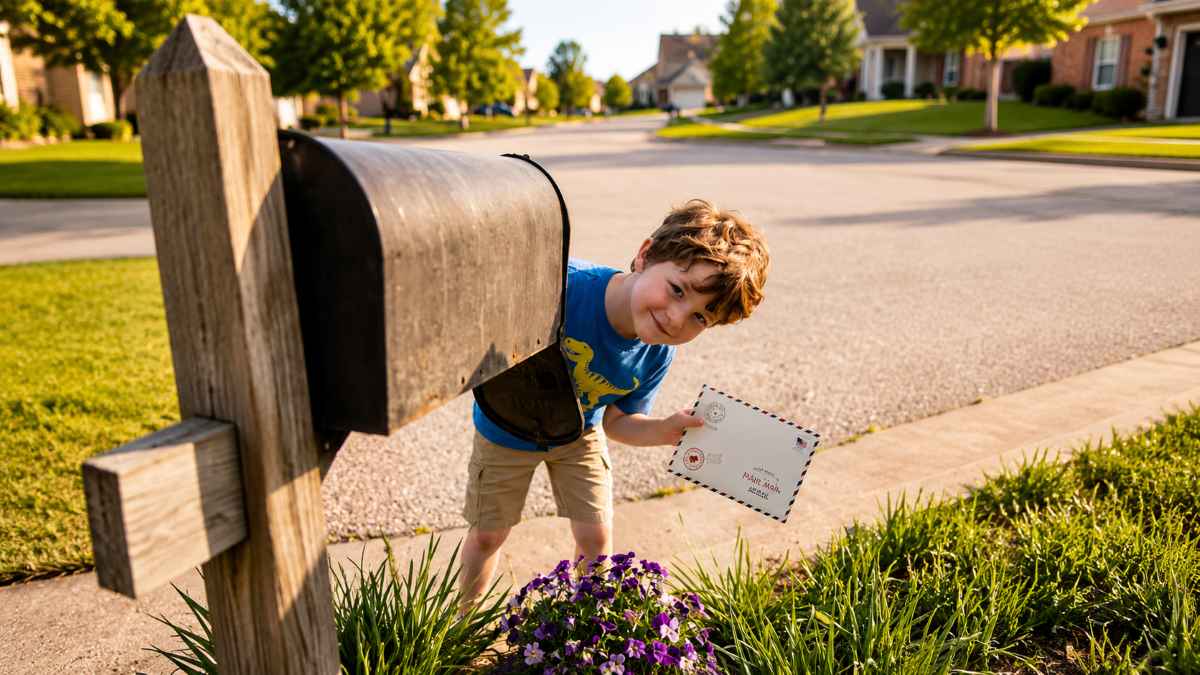

My grandmother kept a shoebox under her bed. After she passed, we found it stuffed with letters — birthday cards, notes scribbled on napkins, even a grocery list with “I love you, kiddo” written in the margin. None of it was fancy. All of it was priceless.
Here’s the thing about being a grandparent: the toys get outgrown, the gadgets get replaced, and honestly, most gifts get forgotten by next Christmas. But a letter? A letter written in your actual handwriting, saying something only you could say? That sticks around. That gets tucked into a drawer and pulled out decades later when your grandkid needs to hear your voice again.
You don’t need to be a writer. You don’t need perfect grammar or beautiful penmanship. You just need a few minutes and something true to say. Below are 12 simple letter ideas to get you started — the kind of letters your grandkids will hang onto long after they’ve forgotten where that birthday check went.
Why Letters Matter More Than Gifts
Think about it this way: a toy breaks. A gift card gets spent. But a letter doesn’t expire — it just sits there, waiting, getting more meaningful with time.
There’s also something a screen can’t replicate: your actual handwriting. The way your “y” loops, the pressure of your pen, maybe a coffee ring on the page because you were writing at the kitchen table. That’s you, physically present on paper, in a way a text message never will be. Kids today are drowning in digital noise — a handwritten letter cuts through all of it because it’s rare, and because it’s real.
And there’s a harder truth here too: someday, that letter might be one of the only things your grandkid has left of you. Not because that’s a sad thing to dwell on, but because it’s exactly why these letters matter so much. You’re not just writing a note — you’re leaving behind a piece of your voice, your values, your way of seeing them. That’s a gift no toy can match.
The 12 Unforgettable Little Letter Ideas
Okay, let’s get into it. Below are 12 letter ideas — some sentimental, some practical, some just plain fun — to help you get started. You don’t need to write them in order, and you definitely don’t need to write all 12 right away. Just pick whichever one speaks to you first, and go from there.
1. The “Day You Were Born” Letter
This one’s a classic for a reason — and it’s an easy place to start if you’re not sure where to begin.
Every grandkid, at some point, wants to know: what was it like when I was born? Were you nervous? Did you cry? What was the weather like, what were you doing when you got the call, what did you think the first time you saw them?
You don’t need to remember every detail perfectly. Just write what you do remember, even if it’s fuzzy or funny — like showing up at the hospital in mismatched socks, or how you couldn’t stop staring at their tiny fingers. Those small, specific details are what make it feel real, not generic.
A simple way to start: “I’ll never forget the day you were born. Here’s what I remember…” Then just let it flow from there. This is the letter that tells them: your arrival mattered, and someone was there to witness it.
2. The “Open When You’re Older” Letter
This is the one that feels a little like magic — write it now, seal it up, and let it wait.
Pick a milestone: their 18th birthday, high school graduation, their wedding day, whenever they have their first kid. Write the letter, put it in an envelope, and mark it clearly — something like “Open on your 18th birthday” — then hand it off to a parent or tuck it somewhere safe until the time comes.
The beauty of this letter is that you get to talk to a future version of your grandkid, one you may not even get to meet in that exact form. You can offer advice for a stage of life they haven’t hit yet, tell them how proud you are of the adult you imagine they’ll become, or just remind them you loved them long before that day arrived.
Try starting with: “If you’re reading this, it means you’ve reached [milestone] — and I couldn’t be prouder.” Then write like you’re talking directly to them on that exact day. It’s a letter that arrives right on time, even if you’re not around to hand it over yourself.
3. The Letter About Their Name
Every name has a story, even if it’s a small one — and most grandkids never actually hear it.
Maybe they’re named after a great-grandparent. Maybe you and your kid argued over it for months. Maybe it just “felt right” the second you heard it. Whatever the reason, write it down — because otherwise, that story tends to disappear with time.
This letter doesn’t have to be long. Just explain where the name came from, what it means (if it means anything), and maybe how you felt the first time you said it out loud to them. If they’re named after someone, this is also a chance to tell them a little about that person — what they were like, why they mattered.
A good starting line: “Did you know there’s a story behind your name?” It’s a small thing, but it gives your grandkid something powerful: a sense of where they come from, and proof that even their name was chosen with love.
Read Also: 35 Fun Things to Mail to Your Grandkids That Are Creative and Affordable
4. The “What I Wish for You” Letter
This one’s less about advice and more about hope — the kind of thing you’d say if you could sum up everything you want for their life in one letter.
The key here is to keep it about wishes, not expectations. This isn’t the place to say “I hope you become a doctor” or “I hope you settle down by 30.” It’s the place to say things like “I hope you find work that makes you feel alive” or “I hope you’re always brave enough to be exactly who you are.”
Think of it as the letter version of a warm hug — no pressure, just love and good intentions. It should feel like something they could read at 15 or 50 and still find comfort in.
Try opening with: “I don’t know exactly what your life will look like, but here’s what I hope for you…” Then let your heart do the writing. This is the letter that reminds them, no matter what path they take, that you’re rooting for them — not some version of them you had in mind.
Love Being a Grandma?

Join 33,762+ grandmas who wake up to a cheerful, uplifting email made just for you. It’s full of heart, sprinkled with fun, and always free. Start your mornings with a smile—sign up below! ❤️
5. The Family History Letter
Here’s a hard truth: once you’re gone, so are all the little stories that never made it into a photo album.
This letter is your chance to pass down a piece of family history before it disappears — a memory from your own childhood, a story about your parents or grandparents, or even just what life was like “back then.” Maybe it’s the house you grew up in, a family tradition that’s since faded, or a relative your grandkid never got to meet but should know about.
Don’t overthink which story to pick. Just choose one that stuck with you — something you still think about, or something that shaped who you became. The small, specific memories are usually more powerful than the big, general ones.
Try starting with: “Let me tell you about the house I grew up in…” or “You never met your great-grandfather, but let me tell you what he was like…” This letter gives your grandkid something priceless: a thread connecting them to people and places that came long before them.
Read Also: 17 Affordable Flat Things to Mail to Your Grandchildren for Memorable Surprises
6. The “First Time I Held You” Letter
This is the letter that puts your grandkid right there in the room with you — in that exact moment.
Think back to the first time you held them. What did the room smell like? Was it quiet or chaotic? What did their tiny hand feel like wrapped around your finger? Were you crying, laughing, holding your breath? These sensory details are what make a letter feel alive instead of just sentimental.
You don’t need fancy language here — just honesty. If you were terrified you’d drop them, say that. If you felt something shift in your chest the second you looked at their face, say that too. The imperfect, real moments are the ones that land hardest.
A simple way in: “I still remember the first time I held you like it was yesterday…” Then just close your eyes and put yourself back there. This letter tells your grandkid something simple but huge: the moment you existed, I was already completely yours.
7. The Advice-for-Hard-Times Letter
This is the letter you write now, so it’s there for them later — on a day you can’t predict, for a struggle you can’t foresee.
Think about the hardest moments in your own life. What got you through them? What do you wish someone had told you back then? This letter isn’t about giving generic advice like “stay positive” — it’s about being honest. Tell them it’s okay to fall apart sometimes. Tell them pain doesn’t last forever, even when it feels like it will. Tell them they’re allowed to ask for help.
The goal isn’t to fix their problem — you won’t even know what it is yet. The goal is to be a steady voice they can return to when things feel shaky, a reminder that someone who loved them has been through hard things too and come out the other side.
Try opening with: “If you’re reading this, things are probably hard right now — so let me tell you what I know…” Then speak from your own scars, not just your wisdom. This is the letter that becomes a lifeline on the days they need one most.
8. The Wedding Day / Milestone Letter
This one you write today, but it doesn’t get opened for years — maybe decades. That gap is exactly what makes it so powerful.
Pick a big life moment: their wedding day, the day they buy their first home, the day they become a parent themselves. Write the letter now, while they’re still little (or even before they’re born), and set it aside for that future day. You’re essentially sending a message forward in time to a version of them you may never meet in that stage of life.
Talk to them like they’re already there. Tell them what marriage or parenthood or that milestone means to you, what you hope it means to them, maybe a piece of advice you’ve picked up along the way. It doesn’t need to be profound — it just needs to be honest and specific to them.
Try starting with: “If you’re reading this on your wedding day, I want you to know…” This letter becomes something almost unbelievable to receive — proof that you were thinking of them, and believing in their future, long before it ever arrived.
Read Also: 8 Simple but Sweet Handwritten Letter Ideas (With Prompts) Your Grandkids Will Treasure Forever
9. The “Things I Love About You” Letter
Generic praise doesn’t stick. “You’re so smart” or “you’re so kind” — kids hear that all the time, and it kind of slides right off. What actually lands is specific.
This letter is about paying close attention. Maybe it’s the way they hum to themselves when they’re concentrating. Maybe it’s how they always share the last bite of whatever they’re eating, or how they ask a hundred questions about bugs, or how they hug you a little too tight and a little too long. Those are the details that tell a kid: I really see you.
Don’t just list traits — explain why they matter to you. Instead of “you’re funny,” try “you have this way of making everyone laugh right when we need it most, and I love that about you.” That’s the difference between a compliment and a letter someone keeps forever.
A good starting line: “I want to tell you some of the things I love most about you…” Then just get specific and let the list grow. This is the letter they’ll pull out on the days they’re doubting themselves.
10. The Recipe or Tradition Letter
Food and tradition carry memory in a way almost nothing else does — so this letter pairs the two on purpose.
Maybe it’s your famous holiday cookies, a soup your own mother used to make, or the weird little tradition your family does every Thanksgiving that nobody outside the family would understand. Write down the recipe or the tradition itself, but don’t stop there — tell the story behind it. Who taught it to you? What does it remind you of? Why does it matter?
This letter does double duty: it’s practical (an actual recipe they can use) and it’s sentimental (a memory attached to it). Years from now, they won’t just be making your cookies — they’ll be remembering exactly where the recipe came from, and maybe passing that story along to their own kids.
Try opening with: “This recipe has been in our family for…” or “Every year, we always…” This is the letter that turns something as simple as a Tuesday dinner into a thread connecting generations.
Love Being a Grandma?
Join 33,762+ grandmas who wake up to a cheerful, uplifting email made just for you. It’s full of heart, sprinkled with fun, and always free. Start your mornings with a smile—sign up below! ❤️
11. The “If I’m Not Here” Letter
This one takes a little more courage to write, but it might end up being the most treasured letter of all.
The idea isn’t to be morbid — it’s actually the opposite. It’s about making sure that even if you’re not physically there for something big someday, your love and your voice still are. This could be a general letter to be opened whenever the time comes, or one written for a specific moment, like their graduation or the birth of their own first child.
Keep the tone warm, not heavy. This isn’t about saying goodbye — it’s about saying “I’m still here, in this letter, cheering you on.” Tell them what you hope for their life, remind them how loved they are, maybe share a little wisdom you want them to carry. Let it feel like a hug, not a eulogy.
A gentle way to start: “If you’re reading this and I’m not there, I want you to know a few things…” Then write exactly what you’d want them to hear in that moment. This letter becomes something they hold onto not with sadness, but with comfort — a piece of you that never really leaves.
Read Also: 10 “Normal” Things Grandparents Do That Grandkids Secretly Find Weird
12. The Everyday Letter
Not every letter needs a big occasion. Sometimes the most meaningful ones are about absolutely nothing at all — and that’s the whole point.
This is the “just because” letter. Maybe you write about a random Tuesday — what the weather was like, what you had for lunch, a funny thing the dog did, or how you were just sitting there thinking about them. There’s no milestone, no big life lesson. It’s just presence. Just you, showing up on paper, for no reason other than they crossed your mind.
These letters are easy to underestimate, but they’re often the ones that mean the most — because they prove you were thinking of them even on the ordinary days, not just the big ones.
Try opening with: “I don’t have any big news, I just wanted to write and tell you I was thinking about you today…” Simple as that. This is the letter that says: you don’t need a special occasion for me to love you.
How to Actually Get Started
Reading through 12 ideas is one thing — actually sitting down to write is another. Here’s how to make it easy on yourself.
Don’t aim for perfect. Your handwriting doesn’t need to be neat. Your grammar doesn’t need to be flawless. Honestly, a crossed-out word or a coffee stain on the page just makes it feel more real, more you. Perfection isn’t the goal here — honesty is.
Figure out where these letters will live. A shoebox works. So does a nice keepsake box, a memory book, or even a folder in a filing cabinet. If you’re writing “open later” letters, a safe deposit box or a spot with a trusted family member works too. The important thing is just picking a place and sticking with it, so these letters don’t end up scattered or lost.
Set a rhythm that works for you. You don’t have to write one every week. Maybe you tackle one idea per birthday, one per holiday, or you just keep a stack of paper nearby and write whenever the mood strikes — including random Tuesdays for no reason at all. There’s no wrong pace here, just consistency over time.
Bring the rest of the family in on it. Encourage other grandparents, aunts, uncles, even older siblings to write their own letters too. It doesn’t have to be a solo project — the more voices in that box, the richer it becomes for your grandkid down the road.
Read Also: 14 Golden Habits That Should Be Part of Every Grandmother’s Daily Routine
Final Thoughts
Here’s what I keep coming back to: none of these letters cost you a dime. No fancy stationery required, no perfect words, no big grand gesture. Just a little bit of your time and whatever’s true in your heart. And yet, somehow, that’s exactly what makes them priceless — because time and honesty are the two things that can’t be bought, wrapped, or replaced with a gift card.
Your grandkids will get plenty of toys. They’ll get plenty of things that end up in a donation pile someday. But a letter in your handwriting? That’s going to outlive all of it. It’s going to sit in a drawer, waiting quietly, until one day — maybe when they’re struggling, maybe when they’re celebrating something big, maybe just on a random ordinary day — they’ll pull it out and hear your voice again.
So don’t let this turn into one of those things you mean to do “eventually.” Pick just one idea from this list — doesn’t matter which one — and write it this week. Not next month, not “when you have more time.” This week. Grab a pen, sit down for ten minutes, and start with whatever feels true.
You don’t have to write all 12. You just have to write the first one.
Love Being a Grandma?
Join 33,762+ grandmas who wake up to a cheerful, uplifting email made just for you. It’s full of heart, sprinkled with fun, and always free. Start your mornings with a smile—sign up below! ❤️
is there a printable format for this one? I would love to save in a “list” format & work on later 🙂
I love your newsletters!!
thanks!
MomMom Susan
Thank you so much! Glad to have amazing grandmas inside the mailing list. I might prepare a printable format soon so stay tuned!