
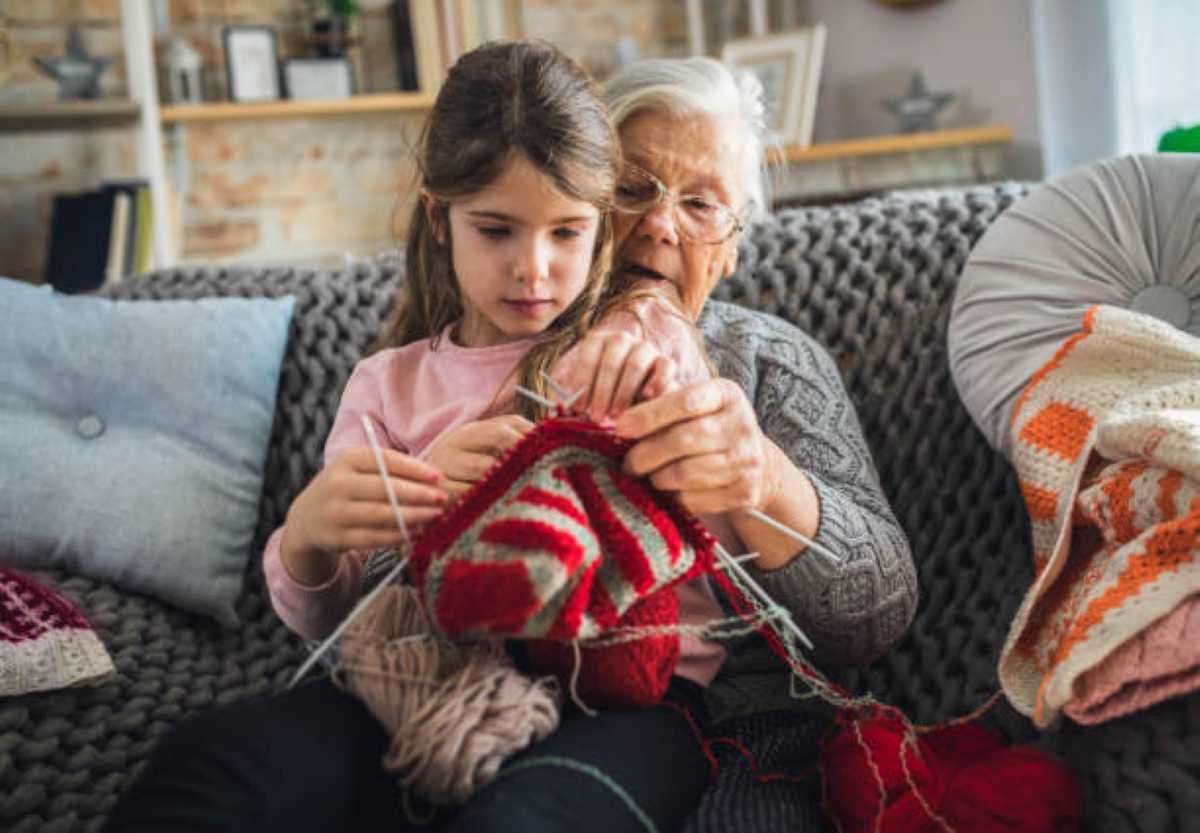

Picture two grandmothers.
The first one’s phone buzzes on a random Tuesday. It’s her 15-year-old grandson: “Grandma, you won’t believe what happened at practice today.” She smiles and settles in to hear the story.
The second grandmother loves her grandkids just as much. But she mostly hears from them on her birthday and at Christmas, and the calls are short. She can’t figure out why.
So what’s the difference?
It’s usually not money, fancy gifts, or even living close by. Plenty of grandmas who live far away are very close to their grandkids. And plenty who live down the street feel left out.
The difference is small habits, done over and over. That matters more than you might think. Researchers at Boston College found that when grandparents and grown grandkids are close, both sides tend to feel less down and lonely. Being close is good for everyone.
The good news? None of these habits are hard. Here are seven things close grandmothers do differently, and you can start any of them this week.
1. They Back the Parents Instead of Competing With Them
Let’s start with the one that surprises people most. The closest grandmothers aren’t always the “fun” ones who let the kids do whatever they want. They’re the ones who stay on the same team as Mom and Dad.
That means following the parents’ rules about screen time, snacks, and bedtime, even when you think the rules are a little silly. Maybe you raised three kids on Kool-Aid and they turned out fine. That’s fair. But it’s not your call this time around.
Other grandmothers sneak around the rules. You’ve probably heard it, or maybe said it: “What Mom doesn’t know won’t hurt her.” It feels harmless, like a little treat between you and the kids. But kids talk. And when the parents find out, they stop trusting you.
Here’s why this matters so much: your time with your grandkids mostly goes through their parents. They decide when you visit, how long the kids stay over, and whether you babysit. When the parents trust you, the door stays wide open. When they don’t, visits get shorter and further apart, and they may never say why.
Try this: Next time you’re together, ask the parents straight out, “What matters most to you when the kids are with me?” You might be surprised. Maybe they don’t care about cookies at all, but they really want you to skip the scary movies. Now you know exactly where the lines are.
When You Really Do Disagree
Sometimes you’ll have a real worry, not just a different opinion. Here’s how to bring it up without starting a fight:
- Pick your moment. Talk to the parents alone, not in front of the kids or at a family dinner.
- Start with something kind. “You’re doing a great job with them” makes the rest easier to hear.
- Ask, don’t tell. “Have you thought about…?” goes over better than “You should…”
- Say it once. Share your thoughts, then let it go. Bringing it up again and again feels like nagging.
- Remember who’s in charge. Even if they don’t take your advice, they’ll remember that you respected them. That respect goes a long way.
2. They Listen More Than They Advise
When a grandchild tells you about a problem, it’s natural to want to jump in and fix it. You’ve lived a long time. You’ve seen a lot. You probably do know what they should do.
But close grandmothers hold back. They ask questions, nod along, and let the kids do most of the talking.
Other grandmothers can’t help themselves. A grandchild mentions a fight with a friend, and out comes the advice. Or the correction. Or the dreaded “Well, in my day…” Each time, the kids learn something: Grandma has opinions about everything I say. So they start saying less.
Here’s why this matters: kids already have plenty of adults telling them what to do. Parents, teachers, and coaches are all giving instructions. You get to be something different: the person they can talk to without getting judged or lectured. That’s a big deal, especially for teenagers. A teen who won’t tell Mom about a breakup might tell Grandma, if Grandma has proven she just listens.
That doesn’t mean you can never share advice. It means you wait to be asked. Try saying, “Do you want my thoughts, or do you just need to vent?” Most of the time, they just need to vent. And when they do want your advice, they’ll actually listen to it.
Try this: Swap out “How was school?” It almost always gets the answer “Fine.” Try questions that are harder to answer with one word:
- “What made you laugh today?”
- “What’s something you’re looking forward to?”
- “Who’s the funniest kid in your class?”
- “If you could skip one thing this week, what would it be?”
- “What’s something you’re really good at right now?”
Then follow up with “Really? Tell me more.” Those three words keep a conversation going better than almost anything else.
Read Also: 8 Leading Questions That Make Your Grandchildren Open Up and Want to Tell You Everything
3. They Show Up Consistently, Not Just on Holidays
Some grandmothers go big. They plan the huge Christmas, the pile of birthday presents, and the once-a-year beach trip. Those memories are great. But if that’s the only time the kids see or hear from you, it’s hard to stay close.
Close grandmothers focus on being steady instead. They have a weekly phone call, a regular Sunday dinner, or a standing Friday afternoon pickup. Nothing fancy. It just happens, again and again, and the kids can count on it.
Think about your own friendships. The friend you feel closest to probably isn’t the one who sends the nicest gift. It’s the one who checks in regularly. Kids are the same way. Small, regular moments add up to a real relationship. A big visit twice a year can feel more like seeing a favorite aunt.
If You Live Far Away
Lots of American grandparents live hours, or even a whole country, away from their grandkids. If that’s you, you can still be close. You just have to get a little creative:
- Set up a regular video call. Same day, same time each week. Kids like knowing when it’s coming. Keep it short for little ones, since 10 minutes is plenty.
- Send real mail. Kids almost never get letters anymore, so a card or small care package feels special. Throw in a sticker, a funny comic, or a photo.
- Read a bedtime story over video. Get a copy of the same book they have, so they can follow along.
- Start a shared journal. Write a page, mail it to your grandchild, and let them write the next page and mail it back. Over time, it becomes a keepsake you’ll both treasure.
Try this: Pick just one regular habit and put it on your calendar like a doctor’s appointment. Don’t skip it unless you really have to. And if you do miss one, let them know you’re sorry you missed it. That shows them it matters to you.
4. They Step Into Their Grandkids’ World
Some grandmothers wait for the kids to come to them. They want the kids to play the card games they like, watch the shows they like, and talk about the things they care about. There’s nothing wrong with sharing your favorites. But if it only goes one way, kids get bored and drift off.
Close grandmothers flip it around. They get curious about what the kids love, even if it seems a little strange.
Maybe your granddaughter watches a YouTuber who plays video games all day. Maybe your grandson is obsessed with a cartoon you’ve never heard of. Close grandmothers learn the names. They ask questions. They give it a try.
That might look like:
- Playing Minecraft with your grandson, even if you spend the whole time falling into holes
- Learning to text with emojis so you can send a 😂 back
- Showing up to a Little League game and cheering like it’s the World Series
- Watching an episode of anime together and asking who the bad guy is
You don’t have to love it. You just have to care that they love it. When you show interest in their world, you’re telling them, “You matter to me, and so do the things you care about.”
Try this: Ask your grandchild to teach you something. It could be a game, a dance, a phone trick, or how a sport works. Kids spend most of their day being taught by grown-ups. Getting to be the expert feels great. And yes, they’ll probably laugh at you a little. Laugh along. That’s half the fun.
Love Being a Grandma?

Join 29,000+ grandmas who wake up to a cheerful, uplifting email made just for you. It’s full of heart, sprinkled with fun, and always free. Start your mornings with a smile—sign up below! ❤️
5. They Make One-on-One Time a Priority
When you have several grandkids, it’s easy to always see them as a group. Holidays, birthday parties, and Sunday dinners all come with a crowd. It’s loud, it’s busy, and someone always ends up hogging the attention.
Close grandmothers make time for each grandchild on their own, too.
Here’s why this matters: in a group, the loudest kid usually gets the most of you. The quiet one, the shy one, or the middle child can get lost in the shuffle. One-on-one time gives every child a relationship with you that’s just theirs. It’s not “Grandma and the kids.” It’s “Grandma and me.”
Kids also act differently when they’re alone with you. The child who barely says two words at family dinner might talk your ear off in the car. Without brothers, sisters, or cousins around, they can just be themselves.
One-on-one time doesn’t have to be a big outing. Simple works best:
- A “Grandma day” where one child picks the plan
- Baking together, like cookies, banana bread, or your famous pie
- A trip to the library to pick out books
- A lunch date at their favorite spot, even if it’s a fast-food place
- Running errands with one helper, because even the grocery store feels special when it’s just the two of you
Try this: Start a simple tradition and take turns. Maybe each grandchild gets one Saturday a month with you, or a special breakfast on their half-birthday. Keep it easy enough that you can stick with it. Kids will look forward to their turn, and they’ll remember it for years.
6. They Share Their Stories, Including the Imperfect Ones
You carry a lot of family history around in your head. You know how your parents met, what your hometown was like, and why there’s a chip in Great-Grandma’s gravy boat. If nobody hears those stories, they disappear.
Close grandmothers share them. They talk about where the family came from, the hard times and the good ones, and the lessons they learned along the way. And they don’t just share the highlights. They tell the messy parts too, like the time they got fired, failed a class, or felt scared and alone.
Other grandmothers keep things polished. They only show the “I always had it together” version of themselves. Or they never talk about the past at all, so the kids have no idea who Grandma was before she was Grandma.
Here’s why this matters: knowing their family’s story helps kids understand who they are. Researchers at Emory University found that kids who know more about their family’s history tend to feel more confident and handle tough times better. When they hear that Grandma made it through hard stuff, they start to believe they can too.
And the imperfect stories matter most. A kid who just bombed a test doesn’t need to hear that you were perfect. They need to hear that you messed up once too, and you were okay.
Here are some easy ways to start:
- Make a photo album together. Go through old pictures and tell the story behind each one. Kids love seeing their parents as babies.
- Record your stories. Use your phone’s video camera or a storytelling app. Your grandkids will be glad to have your voice someday.
- Write down family recipes. Add notes like “Your great-grandpa made this every Christmas Eve.” A recipe card with a story is a real treasure.
- Bring out the family heirlooms. That old quilt or pocket watch means a lot more once kids know whose it was.
Try this: Next time you’re together, tell your grandchild about a time you failed or felt really scared, and what you learned from it. Keep it short and honest. You might be surprised how closely they listen.
7. They Love Without Comparing or Criticizing
This one can sting a little, so let’s be gentle with ourselves. Most grandmothers who criticize don’t mean any harm. They think they’re being helpful, or “just honest.” But kids hear it differently.
Comments like these can push grandkids away:
- “You’ve put on a little weight, haven’t you?”
- “Why can’t you be more like your cousin?”
- “You’re not really going out wearing that, are you?”
- “When are you going to get a real job?”
Each comment might seem small. But they add up. After a while, visiting Grandma starts to feel like getting graded. And nobody wants to keep showing up for that.
Close grandmothers make their love feel safe. They don’t play favorites. They don’t compare brothers to sisters or one cousin to another. They don’t comment on bodies, clothes, or hair. Each grandchild gets to feel loved just as they are.
As They Grow Up
This gets trickier as grandkids become teenagers and young adults. They’ll start making choices you might not make. They’ll have new hobbies, new opinions, new friends, maybe a boyfriend or girlfriend you’re not sure about. Some may move far away, pick a different religion, or vote differently than you.
Close grandmothers roll with it. You don’t have to agree with every choice. But you can stay curious and kind, and keep the door open. The grandkids who feel accepted are the ones who keep calling, visiting, and bringing their own kids around someday.
Try this: Before you say something about how your grandchild looks or lives, ask yourself one question: Will this make them want to come back? If the answer is no, let it go. Say something kind instead, like “I’m so glad you’re here.”
The Bottom Line
If you read this list and thought, “Oh no, I’ve done some of the wrong things,” take a breath. Every grandmother has. And it’s never too late to change course. Even grandkids who have drifted away can come back when they feel welcome.
Here’s a quick recap of what close grandmothers do:
- Stay on the same team as the parents
- Listen more than they give advice
- Show up regularly, not just on holidays
- Get curious about what the kids love
- Make time for each grandchild alone
- Share their stories, even the messy ones
- Love without comparing or criticizing
You don’t have to do all seven at once. Pick just one to try this week. Maybe it’s a weekly call, or asking a better question than “How was school?”
Remember the grandmother whose phone buzzed with a text from her grandson? That didn’t happen by luck. It came from hundreds of small moments, like a game she tried, a story she shared, or a time she just listened.
You can start building those moments today.
Love Being a Grandma?
Join 29,000+ grandmas who wake up to a cheerful, uplifting email made just for you. It’s full of heart, sprinkled with fun, and always free. Start your mornings with a smile—sign up below! ❤️