
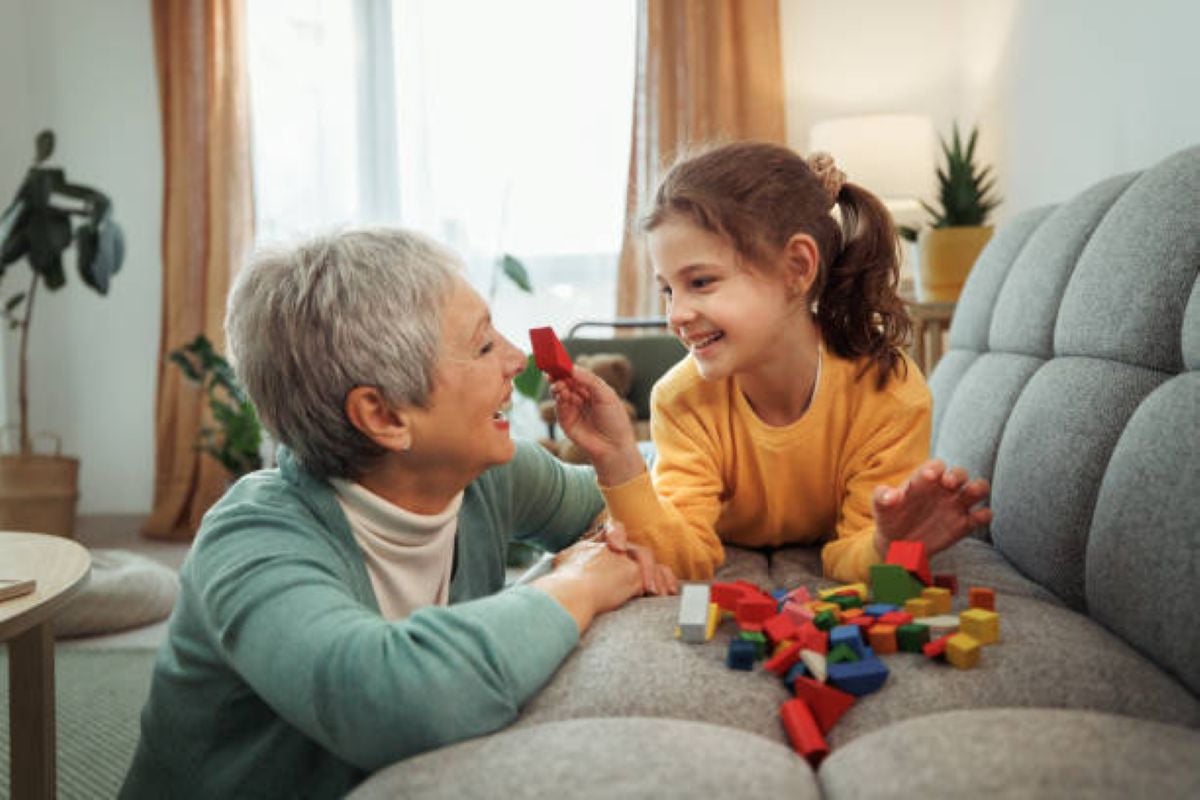

Grandma’s house has always been the fun place. It’s where the cookie jar is always full and bedtime is a little more flexible. But the games you play together do more than pass the time. They’re quietly teaching your grandkids some of the most important lessons they’ll ever learn.
Emotional intelligence sounds fancy, but it just means knowing how you feel, understanding how others feel, and handling those feelings in a healthy way. Kids who are good at this tend to make friends more easily, bounce back from hard days faster, and get along better with the people around them. And the best part? Kids learn it best through play.
That’s where you come in. Grandmas have something busy parents often don’t: time. You’re not rushing to get dinner on the table or racing to soccer practice. You can sit on the floor, be silly, and actually listen. Kids notice that. They often open up to Grandma in ways they don’t with anyone else.
You don’t need expensive toys or a big plan. Here are 12 simple, low-cost activities that help your grandkids grow kinder, calmer, and more connected, while you make memories together.
1. Dress-Up and Pretend Play
Remember how much fun it was to play pretend? Your grandkids feel the same way. Open up your closet and pull out old hats, scarves, purses, ties, and costume jewelry. That sparkly brooch you never wear anymore? It just became a queen’s treasure.
When kids pretend to be a doctor, a shopkeeper, or a teacher, they’re doing more than playing. They’re stepping into someone else’s shoes and imagining what that person thinks and feels. That’s how kindness and understanding start to grow. A child who pretends to be a nervous patient at the doctor’s office is learning what it’s like to be scared and how to comfort someone who is.
Here’s an easy way to make it count: every so often, ask a simple question like, “How do you think your character feels right now?” or “Why do you think the customer is upset?” You don’t have to turn it into a lesson. Just a quick question gets them thinking about feelings, then you can jump right back into the fun.
2. Puppet Shows
You don’t need a fancy puppet theater for this one. An old sock, a paper lunch bag, or even a wooden spoon can become a puppet in just a few minutes. Grab some markers, buttons, yarn, and glue, and let your grandkids give their puppets faces, hair, and names. Then drape a blanket over the back of the couch or kneel behind a table, and the show can begin.
Here’s why puppets are so special: kids will often say things through a puppet that they’d never say on their own. A shy child who won’t tell you they’re worried about school might have their puppet say, “I don’t like it when the other kids won’t play with me.” It feels safer because it’s the puppet talking, not them. So listen closely. You might learn a lot about what’s going on in your grandchild’s world.
Want to make it count? Have your puppet “have a problem” and ask your grandchild’s puppet for help. Maybe your puppet lost a friend, feels nervous about a sleepover, or got really mad at a brother. Then let your grandchild figure out what your puppet should do. Kids usually come up with sweet, thoughtful answers, and they’re practicing how to solve problems and comfort others. Plus, they get to be the helper for once, and that makes them feel pretty great.
3. Take-Turns Storytelling
This one costs nothing and works anywhere: on the couch, in the car, or snuggled up at bedtime. Here’s how it goes. You start a story with one sentence, like “Once upon a time, a little dog found a mysterious key.” Then your grandchild adds the next sentence. Then it’s your turn again. Back and forth you go, and before you know it, you’ve built a whole adventure together.
The fun part is that nobody knows where the story will end up. But while you’re laughing about the dog who unlocked a candy castle, your grandkid is learning to listen closely and build on what someone else said. They’re also picking up new words to describe feelings, which makes it easier for them to explain how they feel in real life.
Want to make it even better? Throw in a twist where a character feels sad, scared, or left out. Maybe the dog’s best friend wasn’t invited to the castle. Then see what your grandchild does with it. Kids often come up with sweet ways to fix the problem, and sometimes they’ll share something that’s been on their own mind.
4. Drawing Feelings
Grab some paper, crayons, or markers and invite your grandkid to draw different feelings. Start with faces: a happy face, a mad face, a worried face, a proud face. For older kids, try something more creative, like “What does a grumpy day look like?” or “What color is excited?” You might get a stormy cloud, a red scribble monster, or a bright yellow sun.
Little kids don’t always have the words for what they’re feeling. They just know something feels big or icky inside. Drawing gives them a way to show it. Over time, it helps them notice and name their feelings, which is the first step to handling them well.
When you’re done, hang the artwork on the fridge. It makes kids feel proud, and it gives you an easy way to bring up feelings later. Something as simple as “I see your worried face is still up there. Have you felt that way lately?” can start a real conversation, without it feeling like a big deal.
5. Emotion Charades
You probably played charades at family get-togethers. This version has a twist: instead of acting out movies or animals, you act out feelings. One person picks a feeling and shows it using only their face and body, no words allowed. The other person guesses. Then you switch.
It’s silly, and kids love watching Grandma stomp around pretending to be mad or flop on the couch pretending to be bored. But there’s real learning going on, too. To guess right, your grandchild has to pay close attention to faces, shoulders, hands, and how someone is standing. That’s the same skill they’ll use at school to tell when a friend is upset or when a teacher is losing patience. Kids who can read those clues get along better with others.
Match the feelings to your grandchild’s age. For little ones, stick with the basics: happy, sad, mad, scared, and surprised. For older kids, try trickier ones like embarrassed, jealous, nervous, or proud. Those are harder to act out and harder to guess, which makes the game more fun. After a round, you can ask, “When was the last time you felt that way?” You might be surprised by what they tell you.
6. Baking Together
There’s nothing quite like the smell of cookies baking in Grandma’s kitchen. And when your grandkids help make them, they’re learning a lot more than how to crack an egg.
Baking takes patience. You have to measure carefully, wait for the butter to soften, and sit tight while the timer ticks down. For a kid who wants cookies right now, that waiting is real practice in being patient. And let’s be honest, things will go wrong. Flour will end up on the floor. An egg will land shell and all in the bowl. Those little mishaps are perfect chances to show your grandchild how to stay calm. When you laugh and say, “Oops! Let’s fix it,” they learn that mistakes aren’t the end of the world.
To make it extra special, pull out a family recipe. Maybe it’s your mom’s banana bread or the pie you’ve made every Thanksgiving for 30 years. While you stir, tell the story behind it. Who taught you to make it? What do you remember about baking it as a kid? Your grandkids get a taste of family history, and they feel like part of something bigger than themselves.
Love Being a Grandma?

Join 33,762+ grandmas who wake up to a cheerful, uplifting email made just for you. It’s full of heart, sprinkled with fun, and always free. Start your mornings with a smile—sign up below! ❤️
7. Gardening
You don’t need a big backyard for this one. A few pots on the porch or a sunny windowsill works just fine. Pick something easy to grow, like sunflowers, beans, cherry tomatoes, or herbs, and plant the seeds together.
Then comes the hard part: waiting. Seeds don’t sprout overnight, and kids learn that some good things take time. They also learn that living things need care. If they forget to water their plant, it droops. If they take care of it, it grows. That’s a simple, real-life lesson in responsibility and looking after something other than themselves.
Here’s a tip that makes a big difference: give each grandchild their own plant. Let them pick the pot, decorate it, and maybe even give the plant a name. When it’s theirs, they’ll care about it a lot more. If they live far away, send a photo now and then so they can see how their plant is doing. And when that first tomato turns red or that sunflower finally blooms, they’ll be bursting with pride.
8. Music and Mood Dancing
Put on some music and clear a little space in the living room. Here’s the game: play different kinds of songs and move the way each one feels. A bouncy, upbeat tune might mean jumping and twirling. A slow, sad song might mean swaying gently or moving like a droopy flower. A loud, dramatic song? Time to stomp like a giant.
This is one of the easiest ways to help kids connect sounds to feelings. Without even realizing it, they start to notice that music can make them feel happy, calm, or pumped up. It’s also a great way to burn off energy. Kids have big feelings and lots of wiggles, and dancing gives all of that a healthy place to go. It’s much better than bouncing off the walls or melting down.
Here’s the secret: always end with a slow, quiet song. Turn the lights down a bit, take some deep breaths together, and move slowly. This teaches your grandkids how to calm their bodies after getting all wound up. That’s a skill they can use when they’re upset, too. And don’t worry about how you look. Your grandkids will love seeing Grandma bust a move, and they’ll remember it for years.
Read Also: Emotionally Intelligent Grandkids Have Grandmas Who Teach Them These 12 Unexpected Life Lessons
9. Board Games and Card Games
Sometimes the old classics really are the best. Candy Land, Chutes and Ladders, Uno, Go Fish, and Old Maid have been around forever for a good reason. They’re simple, fun, and great for teaching kids how to get along with others.
Games come with rules, and kids have to follow them even when they don’t want to. They have to wait their turn, which isn’t easy when you’re seven and really want to go next. And the biggest lesson of all? Learning how to lose without throwing a fit, and how to win without bragging. Those skills matter a lot on the playground, in the classroom, and later in life.
The best way to teach this is to show it. When you lose, be a good sport about it. Say something like, “Aw, I really wanted to win that one! Good game, though. Want to play again?” Your grandkids are watching how you handle disappointment, and they’ll copy you. It’s also okay to let them lose sometimes. Gently helping them through that frustration with you by their side is a lot easier than learning it the hard way with friends.
10. Fort Building
Remember draping blankets over the kitchen table as a kid? Your grandkids will love it just as much. Grab some blankets, sheets, couch cushions, chairs, and clothespins, and turn your living room into a castle, a secret cave, or a camping tent.
Building a fort takes teamwork. Someone has to hold the blanket while someone else clips it in place. And when the roof keeps caving in, you have to put your heads together and figure out a fix. Kids learn to share ideas, listen to each other, and give a little when they don’t agree. If there are siblings or cousins involved, even better. They’ll have to work out whose idea to try first, and that’s great practice in getting along.
Here’s a tip: let your grandchild be the “lead builder.” Ask them where the door should go and how big the fort should be, then follow their plan, even if you know a better way. When kids are in charge, they feel capable and proud. And once the fort is done, crawl inside with a flashlight and a book or a snack. Some of the best talks happen in a cozy fort.
11. Family Scrapbooking
Dig out that box of old photos you’ve been meaning to sort through. This is the perfect excuse. Spread them out on the table, grab some paper, glue sticks, stickers, and markers, and make scrapbook pages together.
Kids love seeing old pictures, especially ones of their parents as babies or Grandma in her younger days. (“Is that really you?!”) As they look through the photos, they start to understand where they come from and that they’re part of a family that loves them. That feeling of belonging gives kids a strong, steady place to stand when life gets bumpy.
The magic really happens when you share stories. And don’t just tell the happy ones. Talk about a time you felt scared on your first day of school, nervous before a big game, or sad when you moved to a new town. When your grandkids hear that Grandma had big feelings, too, and made it through, it helps them feel less alone with their own. It also shows them it’s okay to talk about feelings, which might just open the door for them to share theirs.
12. Kindness Crafts
This activity is all about making something for someone else. Grab some paper, markers, and whatever craft supplies you have on hand, and decide together who could use a little cheering up. Maybe it’s a neighbor who lives alone, a friend who’s been sick, or the mail carrier who comes by every day. Make a card, bake some treats, or put together a small care package with things like tea, a cozy pair of socks, or a homemade bookmark.
Kids don’t always realize how much their actions can affect other people. This activity shows them. When they see a neighbor’s face light up or hear that their card made someone smile, they learn that being kind really matters. They also start to notice when other people might be lonely, sad, or having a hard time, and they begin to think about how they can help.
The most important part comes afterward. Ask your grandchild, “How did it feel to do something nice for someone?” Most kids will say it felt good, and that’s exactly the point. When they connect that warm feeling with being kind, they’re more likely to do it again on their own. Before you know it, kindness becomes a habit.
Read Also: 8 Rules Grandparents Should Never Break When There’s a New Baby
Final Thoughts
When you play with your grandkids, you’re giving them so much more than a fun afternoon. Every game, craft, and silly dance party is helping them understand their feelings, care about others, and handle life’s ups and downs. Those are lessons that will stick with them long after they’ve outgrown dress-up clothes and blanket forts.
And here’s the good news: you don’t need fancy supplies, a perfect plan, or tons of energy. What matters most is that you’re there, paying attention, and talking with them. A simple question like “How did that make you feel?” can mean the world to a child who’s still figuring things out.
So pick one activity from this list and try it the next time your grandkids visit. If they live far away, many of these work over a video call, too. You can tell stories, play charades, or show off your garden. You might be surprised by what your grandchild shares with you. And you’ll both walk away with a memory worth keeping.
Love Being a Grandma?
Join 33,762+ grandmas who wake up to a cheerful, uplifting email made just for you. It’s full of heart, sprinkled with fun, and always free. Start your mornings with a smile—sign up below! ❤️