
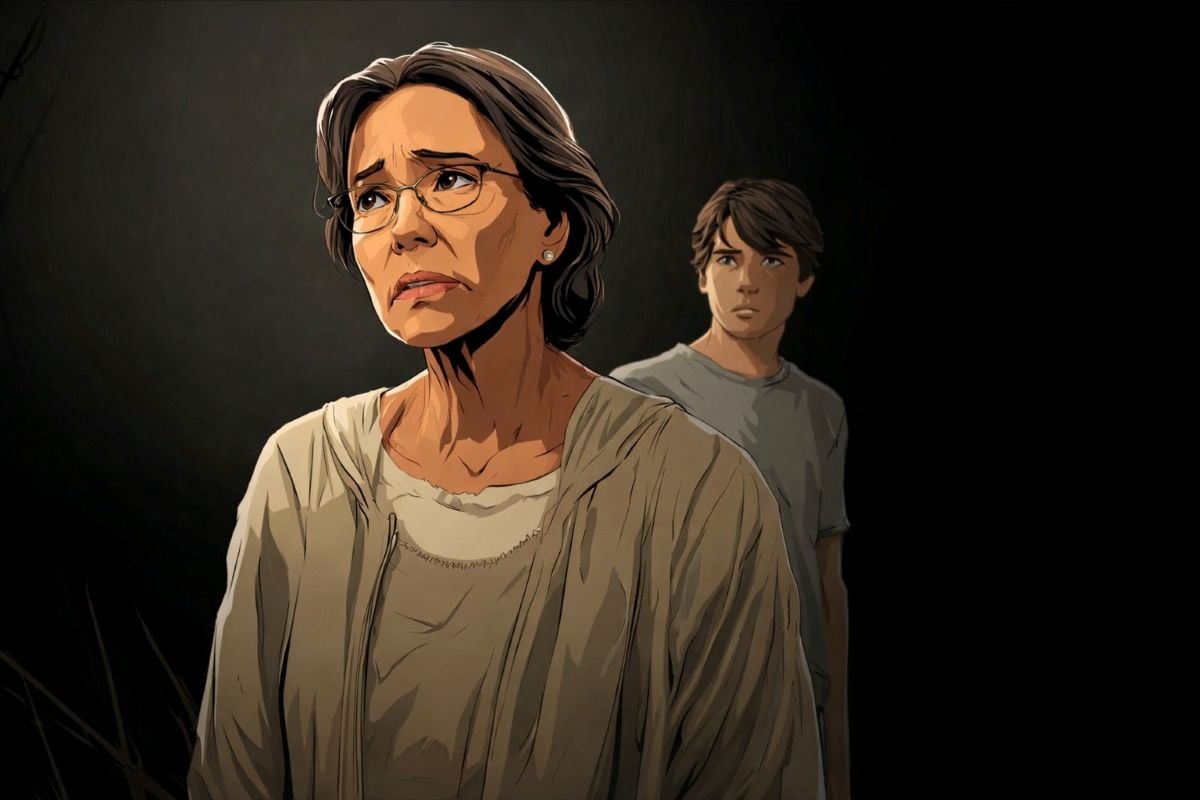

Maybe it was something they said. Or maybe it was what they didn’t say.
You hung up the phone and just sat there for a while… staring at nothing. The house felt quieter than usual. Heavier. You replay the conversation in your mind, wondering where it went wrong—or if it was always heading this way.
No one really prepares you for this kind of pain—the kind that comes from your own child. The one you carried, raised, worried about, prayed over. The one you would still do anything for… even now.
And if you’re being honest, it doesn’t just hurt. It aches in a way that’s hard to explain to anyone who hasn’t lived it. There’s confusion. Sadness. Maybe even a quiet kind of guilt that sneaks in when you least expect it.
But here’s something you need to hear: you are not overreacting. You are not weak for feeling this deeply. This kind of heartbreak is real—and it matters.
And even if things feel broken right now… healing is still possible. Maybe not all at once. Maybe not in the way you imagined. But your heart can find peace again, one small step at a time.
Why this hurts so much and why it feels different
This isn’t just another disagreement. It’s not like a falling out with a friend or a misunderstanding with a neighbor. This cuts deeper—because it’s tied to who you are.
You didn’t just know this person… you raised them.
You remember their first steps. The way they used to reach for your hand. The little voice that called out “Mom” without hesitation, without distance, without walls. Back then, love felt simple. Natural. Unbreakable.
And now… something feels different.
That’s what makes this so painful. It’s not just about what’s happening today—it’s about everything that came before it. All the years, all the memories, all the love that seemed so certain. When there’s distance now, it doesn’t just feel like space… it feels like loss.
You might find yourself grieving not just the relationship as it is, but the relationship as it used to be. The closeness. The ease. The feeling of being needed and wanted in their life.
And when they pull away—or speak in ways that feel cold or hurtful—it’s hard not to take it personally. Because how could you not? This is your child. Your heart doesn’t know how to separate them from yourself.
That’s why this hurts the way it does. Not because you’re too sensitive… but because you loved them deeply. And you still do.
Step 1: Let yourself grieve what you’ve lost
This part is hard… but it’s also where healing begins.
Because what you’re feeling right now? It’s not just hurt. It’s grief.
And I know—people don’t always talk about it that way. But when your relationship with your child changes, especially in a painful way, you are grieving something very real. You’re grieving the closeness you used to have. The conversations that came easily. The feeling that no matter what, you were okay with each other.
So let’s say this clearly: you are not overreacting.
You’re responding to a loss that matters deeply to you.
You might find yourself thinking things like, “Maybe I’m being too sensitive,” or “I should just let this go.” But pushing your feelings down doesn’t make them disappear—it just makes them heavier.
Instead, give yourself permission to feel what you feel.
Some days it might be sadness. Other days it might be anger. And sometimes, it’s just confusion… wondering how things got here in the first place. All of that is normal. All of that is part of the process.
You’re also grieving the relationship you thought you’d always have. The one where you’d be close, where they’d call just to talk, where you’d feel like a steady part of their everyday life. Letting go of that picture—even a little—is painful.
But here’s the truth most people don’t say out loud: healing doesn’t start when everything is fixed. It starts when you stop pretending you’re not hurting.
So be gentle with yourself. Cry if you need to. Talk it out with someone you trust. Sit with your feelings without judging them.
You’re not falling apart… you’re processing something that mattered—and still matters—very deeply.
Step 2: Stop chasing and give them space (without giving up love)
If you’re like most parents, your first instinct is to fix it.
To call. To text. To explain. To smooth things over as quickly as possible so things can go back to normal. Because that’s what you’ve always done, right? When something was wrong, you showed up. You made it better.
But here’s the painful part: what worked when they were younger doesn’t always work now.
Sometimes, the more you reach out… the more they pull away. And it’s not because your love is wrong. It’s because they may need space in a way that’s hard for you to understand.
Chasing often comes from a place of love—but it can feel like pressure on the other side. And pressure, even when it’s well-meaning, can create more distance.
This doesn’t mean you stop loving them. Not even close. It just means you begin to release the need to control the outcome.
There’s a difference between withdrawing love and letting go of control. Withdrawing love says, “Fine, if you don’t care, I won’t either.” But that’s not who you are.
Letting go of control says, “I love you… but I’m going to give this space to breathe.”
That kind of love is quiet. It’s steady. It doesn’t force conversations or demand closeness—but it doesn’t disappear either.
It might look like sending a simple message without expecting a reply. Or choosing not to argue your side one more time. Or stepping back just enough so things can settle.
And yes… it can feel uncomfortable. Even unnatural at first.
But sometimes, space is what allows hearts to soften again. You’re not giving up on the relationship. You’re just giving it room to heal—without pushing it further away.
Step 3: Protect your heart without hardening it
This step is a delicate one… because your heart wants to stay open, but it also needs protection.
When your child hurts you—whether through words, distance, or silence—it’s natural to want to either pull closer or shut down completely. But neither extreme really brings peace. One leaves you feeling drained, the other leaves you feeling disconnected from who you truly are.
So the goal isn’t to become cold. It’s to become wise with your heart.
You can still love them deeply… without allowing yourself to be hurt over and over again in the same way. That might mean setting quiet boundaries. Not harsh ones. Not dramatic ones. Just small, steady limits that protect your emotional well-being.
For example, if conversations tend to turn hurtful, you can gently step away instead of staying and absorbing it. If certain topics always lead to conflict, it’s okay to not go there—for now. You’re not avoiding… you’re protecting.
And here’s something important: staying connected does not mean accepting behavior that breaks your heart.
You are allowed to say, even if only to yourself, “I love them, but this part isn’t okay for me.”
That’s not rejection. That’s self-respect.
The real balance is learning how to stay soft without staying exposed to repeated pain. You don’t have to build a wall—but you can put up a gentle fence.
Healthy distance might look like fewer conversations, but more peaceful ones. It might mean choosing calm over closeness for a season. It might even mean letting things be quiet for a while without rushing in to fix it.
And yes… that can feel unfamiliar.
But protecting your heart doesn’t make you a bad parent. It makes you a human being who deserves peace, too.
Step 4: Focus on what you can still control
One of the hardest parts of this kind of heartbreak is realizing how much is out of your hands.
You can’t control what they say.
You can’t control how often they call.
You can’t control how they see things right now.
And that can leave you feeling stuck… like your happiness is tied to something you no longer have power over.
But here’s where things begin to shift: you can control how you respond.
You get to decide how much space this takes up in your day. You get to choose whether your thoughts spiral… or gently come back to the present. You get to care for your own heart in ways that maybe you’ve been putting off.
Instead of pouring all your energy into waiting—waiting for a text, waiting for things to go back to normal—you can begin to pour that energy back into your own life.
Into the things that bring you peace.
Into the people who show up for you.
Into the small routines that make your days feel steady again.
This isn’t about forgetting your child. It’s about not losing yourself in the process.
Because when everything feels uncertain, your own life can become your anchor.
It might start small. A walk in the morning. Calling a friend. Picking up something you used to enjoy but haven’t made time for in years. Little things that remind you that your life is still full… still meaningful… still yours.
And over time, those small choices begin to rebuild something inside you.
Strength.
Calm.
A quiet kind of peace that doesn’t depend on anyone else changing.
You may not be able to control the relationship right now—but you can create a life that still feels whole, even as you wait and hope.
Step 5: Leave the door open (but stop standing in it)
There’s a quiet kind of strength in this step… but it doesn’t come easily.
Because part of you wants to keep the door wide open and just wait—waiting for the phone call, the apology, the moment everything feels normal again. And before you know it, days… even months… can start to revolve around that waiting.
But here’s the gentle shift: you can leave the door open without standing in it all day.
You can still love them. Still care. Still hope.
But you don’t have to put your life on hold in the process.
Leaving the door open might look like this: they know you’re there. They know they can reach out. There’s no harsh goodbye, no slammed door, no final words you can’t take back.
But you’re also not chasing them down the hallway, trying to pull them back inside.
You’re allowing space… while keeping love steady.
That might mean sending a simple message once in a while—“Thinking of you”—without expecting anything in return. It might mean choosing peace over one more attempt to explain your side. It might mean letting silence be… without filling it with worry or fear.
And here’s something many parents discover, often when they least expect it: relationships can soften over time.
Sometimes slowly. Sometimes unexpectedly.
A small message. A holiday text. A moment that opens the door just a little again.
Not always in the way you imagined—but in a way that still matters.
And through it all, you hold onto this truth: love doesn’t disappear just because things are quiet. It doesn’t vanish just because there’s distance.
It’s still there… even in the silence.
So leave the door open. But step back enough to live your life again.
What if they never come back the same?
This is the question that lingers in the quiet moments.
What if things never go back to the way they were?
It’s a painful thought… because part of your heart is still holding onto that picture of how it used to be. The closeness. The ease. The feeling that everything was okay between you.
But sometimes, healing doesn’t mean going backward.
Sometimes, it means learning how to move forward… even if the relationship looks different.
And that’s not something you have to force yourself to accept overnight. It’s something that unfolds slowly, as you begin to make peace with what is—not just what you wish it could be.
You may still have a relationship… just not the same one.
You may still hear from them… just not as often.
You may still love each other… just in a quieter, more complicated way.
And while that’s not the ending you hoped for, it doesn’t mean the story is over.
It just means it’s changed.
There’s also a kind of peace that can grow when you stop waiting for the “perfect ending.” The moment where everything is resolved, every word is understood, every hurt is erased.
Because life doesn’t always wrap things up that neatly.
But peace? Peace can still exist—even without full closure.
It comes from knowing you did your best.
That you loved deeply.
That you showed up in the ways you knew how.
And maybe most importantly… it comes from choosing to keep your heart open.
Not in a way that keeps you stuck—but in a way that keeps you you.
Because even if the relationship never returns to what it once was, you can still choose love.
Love for them… in whatever way is possible now.
And love for yourself… in a way you may have forgotten for a while.
And that kind of love? It heals more than you think.
Read Also: 8 Things Older Parents Do That Make Adult Children Enjoy Visiting Them, According to Experts
Love Being a Grandma?

Join 19,570+ grandmas who wake up to a cheerful, uplifting email made just for you. It’s full of heart, sprinkled with fun, and always free. Start your mornings with a smile—sign up below! ❤️