

One day they’re holding your hand so tight at the grocery store you can barely reach the cart.
The next?
They’re taller than you. Their voice is deeper. And they’re sitting across the room scrolling on a phone like you don’t even exist.
It happens so fast it almost feels unfair.
And if we’re being honest, there’s often a quiet little question that creeps into a grandmother’s heart:
Did I lose them?
They don’t run to hug you the same way. They don’t tell you every little thing. Sometimes they seem distant. Distracted. Moody. Private.
It can feel personal.
But psychologists say something very comforting about this stage: teen distance is usually developmental, not emotional.
They’re not pulling away because they don’t love you.
They’re stretching. Growing. Figuring out who they are.
And here’s the part many grandparents don’t realize…
Child psychologists consistently say grandparents can be one of the most stabilizing, grounding forces in a teenager’s life — especially during these emotionally messy years.
But the relationship has to evolve.
You can’t love a teenager the exact same way you loved a five-year-old.
The good news?
You don’t have to compete with parents.
You don’t have to understand every app.
You don’t have to be “cool.”
You just have to show up in the right way.
Here are 6 things psychologists say matter more than you think.
1. Listen Without Correcting, Fixing, or Lecturing
This one is hard.
Because we love them.
And when we love someone, we want to help.
So when a teen grandchild says, “School is stupid,” or “Nobody understands me,” or “I hate how I look,” our instinct kicks in.
We want to correct.
We want to teach.
We want to fix.
“Well, school is important.”
“You shouldn’t talk like that.”
“When I was your age…”
And just like that, they shut down.
Psychologists call this emotional safety. Teenagers open up only when they feel they won’t be judged, corrected, or dismissed. The moment they sense a lecture coming, their guard goes up.
What they actually need isn’t a solution.
They need space.
Instead of fixing, try:
“Tell me more.”
“That sounds hard.”
“Wow, that must’ve hurt.”
Those small phrases do something powerful. They tell your grandchild, You are safe here. I’m not here to control you. I’m here to understand you.
And when a teenager feels understood, they come back.
I once heard about a grandmother who realized her grandson stopped sharing things with her. Every time he mentioned a problem, she jumped in with advice. So she made a decision: for one month, she would not give advice unless he directly asked for it.
The first week was awkward. She bit her tongue more than once.
But by week three? He was telling her things he wasn’t even telling his parents.
Nothing magical changed — except this: he felt heard instead of corrected.
That’s the quiet superpower grandparents have.
You don’t have to be the rule-enforcer.
You don’t have to be the disciplinarian.
You get to be the calm harbor.
And in a teenager’s stormy world, that kind of steady presence is priceless.
2. Ask About Their World (Even If You Don’t Understand It)
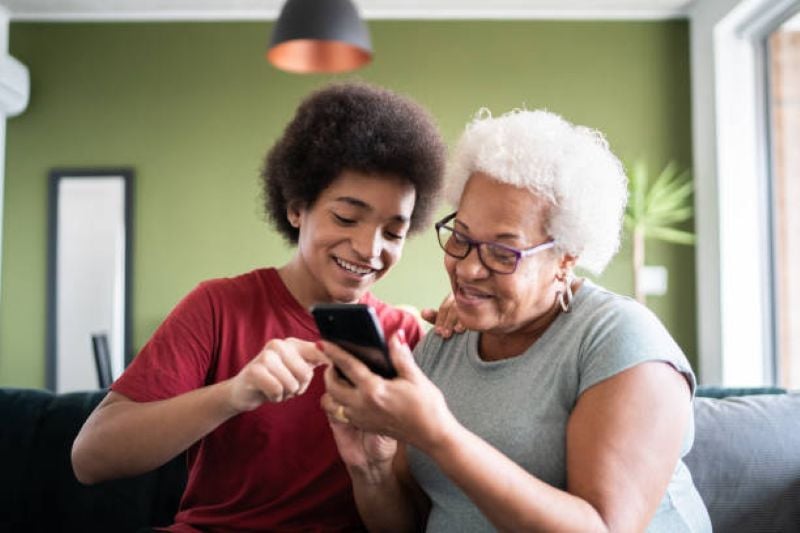
Let’s be honest.
Half the time our teen grandkids are talking about things that sound like a different language.
Apps we’ve never heard of.
Music that doesn’t quite sound like music to us.
Games where people build entire worlds inside a screen.
It’s easy to roll our eyes and say, “You’re on that phone again?”
But psychologists say curiosity — not criticism — is what keeps the door open.
Here’s the truth: social media, gaming, group chats, music playlists… those aren’t just distractions to them. They’re their social lives. Their culture. Their gathering place.
It’s their world.
And when you show interest in someone’s world, you show interest in them.
Instead of saying, “You spend too much time on that thing,” try this:
“Show me your favorite song.”
“What’s that game about?”
“Why do you like this creator?”
“Who’s your favorite person to follow?”
You don’t have to understand it.
You don’t even have to like it.
You just have to care.
Psychologists call this validation. When a teen feels that something important to them is respected instead of mocked, their walls lower. Bonding increases. Trust deepens.
And here’s something beautiful: teenagers actually love teaching adults things.
When you say, “You’ll have to explain that to me,” you’re giving them competence. You’re saying, “You know something I don’t.”
That’s powerful for a young person still figuring out who they are.
You may not care about the app.
But you care about them.
And when they feel that? They remember it.
Read Also: The 3 Pieces of Advice Grandkids Usually Only Prefer to Seek From Their Grandmothers
3. Share Stories — But Not as Sermons
Grandmothers are natural storytellers.
We’ve lived.
We’ve struggled.
We’ve learned things the hard way.
And sometimes, when we see our teen grandkids making mistakes, we want to hand them the lesson wrapped in a neat little bow so they don’t have to suffer the same way.
So we say, “Back in my day…”
And just like that — disconnect.
It’s not that your story isn’t valuable. It’s that teenagers can smell a sermon from a mile away.
Psychologists say storytelling connects generations — but only when it feels human, not instructional.
There’s a big difference between:
“Back in my day, we respected our elders.”
and
“When I was your age, I remember feeling misunderstood too.”
See the shift?
The second one says, I’ve been where you are.
The first one says, You’re doing it wrong.
Teens don’t need perfection from us.
They need relatability.
Tell them about the time you failed a test.
The boy who broke your heart.
The friendship you messed up.
The mistake you wish you could redo.
Vulnerability builds credibility.
When you share a story where you struggled — not just where you triumphed — you give them permission to be imperfect too.
And here’s something many grandparents don’t realize:
When you tell a story gently, without attaching a moral at the end, they often draw the lesson themselves.
That’s when it sticks.
You’re not preaching from a podium.
You’re sitting beside them on the couch, saying, “Life can be messy. I’ve been there.”
And that quiet companionship?
It means more than any lecture ever could.
4. Respect Their Growing Independence
This one can sting a little.
Because the same child who once begged you to tie their shoes now wants to make decisions without anyone’s input. The same grandchild who used to curl up beside you now closes their bedroom door.
It can feel like rejection.
But psychologists say something important: teenagers aren’t pushing you away — they’re pulling themselves forward.
Teens crave autonomy. It’s not rebellion for the sake of rebellion. It’s their brain’s way of practicing adulthood. They’re figuring out who they are separate from everyone else.
And here’s where grandparents have to tread gently.
When we overstep — even with good intentions — it can quietly strain the relationship. Giving advice their parents didn’t ask for. Questioning household rules. Interrogating them about decisions. Even small comments like, “Your mother shouldn’t be so strict,” can create tension.
Psychologists often describe the healthiest grandparent role during the teen years as a safe harbor, not a second parent.
You’re not there to enforce.
You’re not there to override.
You’re there to steady the waters.
What does that actually look like?
It looks like not peppering them with questions the second they walk in the door. Instead of, “Where were you? Who were you with? What time did you get home?” try something softer: “Good to see you. I’m glad you’re here.”
It looks like not undermining mom and dad — even if you disagree privately. Teens feel safer when the adults in their lives aren’t competing.
It looks like staying calm when they say something dramatic or shocking. Remember, teens often test ideas out loud. You don’t have to react to every sentence.
Your calmness becomes their regulation.
And something beautiful happens when they know you respect their growing independence: they come to you voluntarily.
Not because they have to.
Because they want to.
And that kind of relationship? It lasts far beyond the teenage years.
Read Also: 7 Loving Ways to Say No to Your Grandchild’s Request Without Hurting Their Feelings
5. Show Up Consistently — Even If They Act Unimpressed

If you’ve ever tried to connect with a teenager, you know the look.
The half-smile.
The one-word answers.
The “Yeah, sure, Grandma.”
It’s easy to walk away thinking, They don’t care.
But psychologists say that’s one of the biggest myths about teens.
They may not show excitement the way little kids do. They may not squeal or run into your arms. But they notice consistency more than enthusiasm.
They are watching who shows up.
And even if they act unimpressed in the moment, the pattern matters more than the reaction.
That weekly “Thinking of you” text?
It matters.
The birthday call every single year, no matter what?
It matters.
The standing Saturday lunch date, even if they mostly talk about their friends?
It matters.
Small rituals create stability. And stability creates security.
Research consistently shows that having at least one steady adult in their life — someone predictable, calm, and emotionally available — reduces teen anxiety and risky behavior.
You don’t have to be dramatic.
You don’t have to be exciting.
You just have to be reliable.
And here’s the quiet truth many grandparents only realize later:
They may roll their eyes at 16.
They may be busy at 17.
They may seem distant at 18.
But at 25?
They remember who kept showing up.
They remember who texted.
Who called.
Who never gave up on them.
And one day, when life gets hard — and it will — they often come back to the person who was steady all along.
So don’t mistake quiet for indifference.
Keep showing up.
Even if they act unimpressed.
Especially then.
6. Say the Words They Secretly Need to Hear
Teenagers act tough.
They shrug.
They roll their eyes.
They say, “I know,” before you even finish your sentence.
But psychologists say something that surprises a lot of grandparents:
Teens still crave reassurance — sometimes more than they did as children.
The difference is… they won’t ask for it.
Underneath that independence is a young person quietly wondering:
Am I good enough?
Am I disappointing everyone?
Do I matter?
And while parents often carry the weight of rules and expectations, grandparents have a unique gift.
You get to speak love without pressure.
Simple words can shape them more than you realize:
“I’m proud of you.”
And not just for grades or trophies — but for who they are.
“I’m proud of how kind you are.”
“I’m proud of how hard you’re trying.”
“I’m proud of the way you handled that.”
“You don’t have to be perfect.”
In a world that constantly compares and criticizes, that sentence feels like oxygen.
And maybe most powerful of all:
“I love who you are becoming.”
Not who they were.
Not who you wish they’d be.
Who they are becoming.
Psychologists often talk about identity formation in the teen years. They’re building a sense of self brick by brick. And when a grandparent affirms them during that fragile process, it strengthens the foundation.
They may shrug when you say it.
They may mutter, “Thanks.”
But those words sink in.
And years later, when life tests them, that inner voice often sounds like you.
Closing Section: You’re More Important Than You Think
If you’ve felt a little distance lately, take heart.
Teenage space is often developmental — not personal.
They aren’t drifting away because you failed. They’re learning to stand on their own feet. And sometimes standing requires stepping back.
But here’s what psychologists consistently observe:
Grandparents often become emotional anchors during turbulent years.
When parents feel like authority…
When friends feel unpredictable…
When school feels overwhelming…
A grandparent can feel steady.
Safe.
Calm.
Non-judging.
You may not see the impact day to day. Teenagers rarely announce, “Grandma, you are shaping my emotional stability.”
But your presence matters.
Your patience matters.
Your consistency matters.
And your love — especially the kind that doesn’t demand anything in return — matters more than you know.
So be patient.
Keep listening.
Keep showing up.
Keep saying the words.
They may not sit in your lap anymore…
But they still need your heart.
And chances are, they’re holding onto it more tightly than you realize.
Love Being a Grandma?

Join 12,570+ grandmas who wake up to a cheerful, uplifting email made just for you. It’s full of heart, sprinkled with fun, and always free. Start your mornings with a smile—sign up below! ❤️