
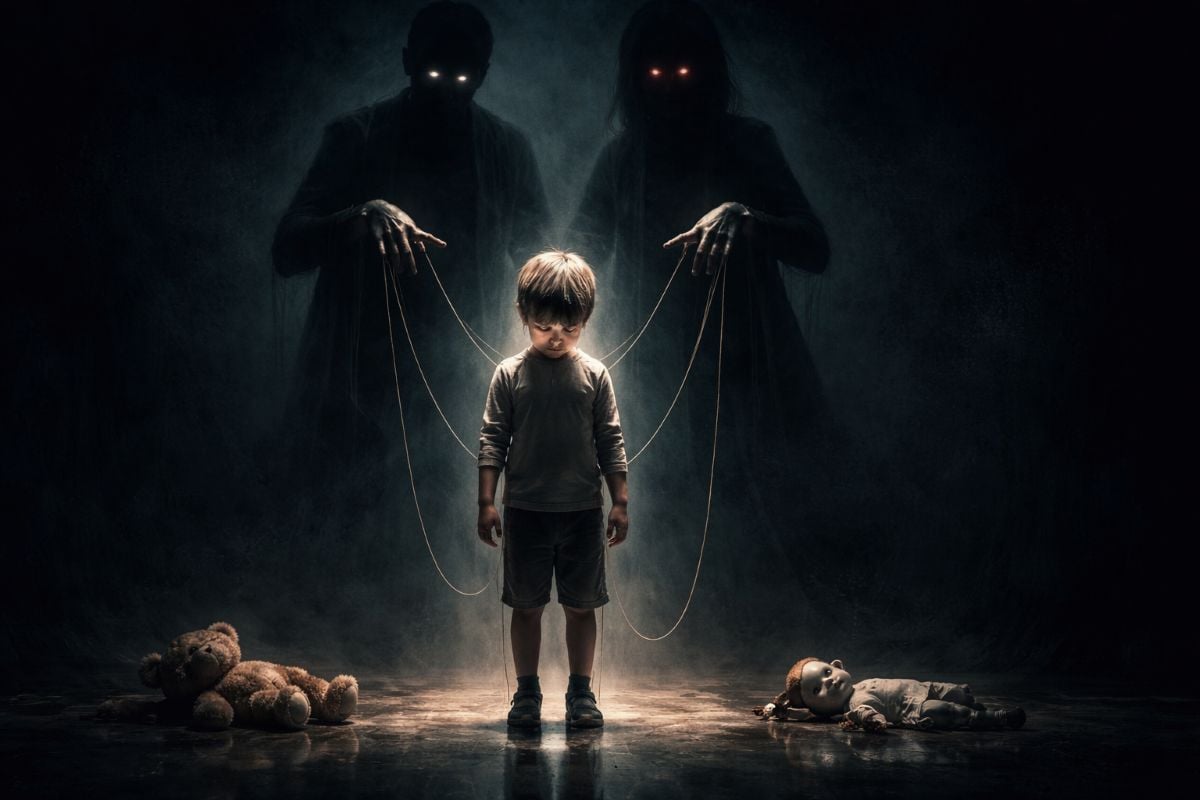
You love your grandchild more than words can say. But lately, every interaction with their parents leaves you feeling uneasy. Conversations feel tense. You second-guess yourself. Somehow, you walk away feeling confused, dismissed… or even blamed. You can’t quite put your finger on it — but something just feels off.
Let’s be clear: this isn’t about diagnosing anyone from afar or throwing around labels. Narcissistic traits exist on a spectrum, and many stressed or overwhelmed parents can display difficult behaviors from time to time. We’re not talking about one bad day. We’re talking about patterns.
Sometimes what looks like “strict parenting” or “being protective” may actually be something deeper — especially if it consistently centers control, image, or ego over a child’s emotional well-being. This article is about understanding those patterns so you can better support your grandchild — not attack their parents.
1. They Constantly Make Everything About Themselves
Have you noticed that every conversation somehow circles back to them? Your grandchild wins an award — and it becomes a story about how hard they worked as a parent. Your grandchild struggles — and suddenly it’s about how this reflects on their reputation. The spotlight rarely stays on the child for long.
Psychologists often note that parents with strong narcissistic traits may see their children as extensions of themselves rather than separate individuals. In other words, the child’s success boosts their ego. The child’s mistakes threaten it. It’s less about who the child is… and more about what the child represents.
Even your relationship with your grandchild can feel filtered through this lens. Compliments you give might be redirected. Special moments may be subtly minimized. When everything becomes about protecting the parent’s image, the child’s emotional world can quietly shrink.
2. They Use the Grandchild as a Tool for Image Management
On the outside, everything may look picture-perfect. Smiling family photos. Glowing social media posts. Carefully curated moments that make it seem like life couldn’t be better. But behind closed doors, the atmosphere may feel very different.
Children in these situations can feel enormous pressure to perform — to behave “just right,” look “just right,” achieve “just right.” Public praise might be abundant, but private criticism can be sharp. The message becomes clear: “You make me look good… or you embarrass me.”
When appearances matter more than emotional health, children learn to hide their struggles. They may become anxious, perfectionistic, or fearful of disappointing their parent. And as a grandparent, you might be one of the few safe places where they can finally exhale.
3. They Undermine You in Front of the Child
It may sound small at first. “Grandma spoils you too much.” “That’s not how we do things anymore.” Little comments said with a smile — but delivered in front of your grandchild. Over time, those subtle jabs can chip away at your authority and closeness.
Sometimes they’ll correct you publicly, contradict your harmless decisions, or imply you’re outdated or out of touch. The message to the child becomes confusing: Can I trust Grandma? Or is she doing something wrong? That tension doesn’t just affect you — it affects the child’s sense of stability too.
Psychologists often refer to this as triangulation — when one person pulls a third person into tension to maintain control. Instead of addressing disagreements privately, they create quiet competition or division. And sadly, children can feel caught in the middle without fully understanding why.
4. The Rules Change Constantly — And You’re Always Wrong
Have you ever followed the exact instructions you were given… only to be told later you did it incorrectly? One week it’s “Don’t give them sugar.” The next week you’re criticized for not being flexible. It can feel like you’re trying to hit a moving target.
When boundaries constantly shift, it creates confusion and anxiety. Healthy boundaries are consistent and rooted in protection. But when rules feel unpredictable — or like they’re designed to catch you in a mistake — it may be more about control than parenting.
Psychologists explain that “shifting goalposts” are a common control tactic. If you’re always wrong, you’re always on the defensive. And when you’re on the defensive, you’re easier to manage. That dynamic can leave grandparents feeling exhausted and doubting themselves — even when they’ve done nothing wrong.
5. They Show Little Empathy Toward the Child’s Feelings
Children have big emotions. Tears over small disappointments. Fears that seem dramatic. Excitement that bubbles over. In healthy homes, those emotions are guided — not shamed. But when a parent regularly says, “You’re too sensitive,” or “Stop crying, it’s nothing,” something important gets lost.
Empathy teaches a child that their feelings are real and manageable. Without it, they may learn to suppress emotions or feel embarrassed for having them at all. Instead of being coached through frustration or sadness, they may be punished or mocked for it.
Over time, that lack of emotional validation can create anxiety and people-pleasing behavior. A child who doesn’t feel heard at home may become hyper-aware of everyone else’s moods — constantly adjusting, constantly trying to stay safe. And sometimes, Grandma becomes the one person who truly listens.
6. They React With Rage to Small Criticism
Maybe you gently suggest, “Have you tried letting him calm down first?” — and suddenly the temperature in the room changes. What felt like a mild comment triggers a defensive, explosive response. Voices rise. Accusations fly. You’re left stunned, wondering how things escalated so quickly.
Psychologists often describe something called a “narcissistic injury.” In simple terms, it means even small feedback feels like a deep personal attack. Instead of hearing a suggestion, they hear, “You’re a bad parent.” And the reaction isn’t proportionate — it’s protective. Sometimes aggressive.
Over time, you may find yourself walking on eggshells. You rehearse your words. You avoid harmless topics. You keep the peace at your own expense. And when long grudges form over tiny disagreements, it can make family relationships feel fragile and exhausting.
7. They Isolate the Child From Extended Family
At first, visits become less frequent. Then they become conditional. Then suddenly, they stop altogether — often after what seemed like a minor disagreement. Access to your grandchild starts to feel like something that can be granted… or taken away.
In some situations, grandparents notice the child repeating things that don’t quite sound like them. Stories that paint relatives in a distorted light. Comments that feel rehearsed. When a parent controls the narrative, they also control how the child views the rest of the family.
Isolation is powerful. The fewer outside influences a child has, the more dependent they become on the parent’s version of reality. Psychologists note that cutting off support systems can be a control strategy — and sadly, children lose the stability and perspective that extended family can provide.
8. They Compete With Their Own Child
It can be subtle. Your grandchild shares exciting news — and instead of celebrating, the parent shifts attention back to themselves. Or they downplay the achievement. Or they remind everyone of something they did “even better” at that age.
Healthy parents feel proud when their child shines. But when envy creeps in, the dynamic changes. Psychologists recognize jealousy as a key trait in narcissistic patterns. A child’s independence, talent, or attention can feel threatening instead of joyful.
You might notice hobbies being dismissed if they don’t align with the parent’s image. Or achievements being celebrated only when they reflect well on the parent. When competition replaces encouragement, children may shrink themselves — simply to keep the peace. And that’s something no grandparent wants to see.
9. They Demand Loyalty Over Truth
In healthy families, children are allowed to think for themselves. They can disagree respectfully. They can love both parents and grandparents without feeling torn. But when loyalty becomes more important than honesty, things shift. The child may be expected to “take sides” — even in adult conflicts.
Disagreement can be treated like betrayal. If a child says, “Grandma didn’t mean it that way,” or expresses a different opinion, they may be accused of being disloyal. Everything becomes black-and-white: you’re either with me or against me. There’s no room for nuance.
That kind of pressure creates anxiety. Children start monitoring their words. They learn that keeping peace means agreeing — even when it doesn’t feel true. And over time, they may lose confidence in their own voice because speaking honestly feels unsafe.
10. They Weaponize Guilt
You might hear phrases like, “After everything I’ve done for you…” or “You’re breaking my heart.” Guilt becomes a parenting tool. Instead of guiding behavior, the parent pulls on the child’s sense of responsibility for the parent’s emotions.
This can lead to something psychologists call emotional parentification — when a child feels responsible for managing a parent’s feelings. Instead of being free to grow, explore, and even make mistakes, the child becomes the caretaker. They worry about upsetting Mom or Dad. They tiptoe around moods.
Long term, this can impact confidence and boundaries. Children raised in guilt-heavy environments often grow into adults who struggle to say no. They feel responsible for everyone’s happiness. And as a grandparent, you may notice your grandchild apologizing far more than necessary — even for things that aren’t their fault.
11. They Lack Consistent Warmth
All parents have tired days. But when affection feels unpredictable — warm one moment, cold the next — it can leave a child emotionally unsettled. Love may feel conditional. Praise comes when the child performs well… distance comes when they disappoint.
Sometimes the silent treatment becomes punishment. Instead of healthy conversations, there’s withdrawal. The child is left guessing: What did I do? How do I fix this? That unpredictability creates a quiet tension inside them.
Children thrive on steady love. Not perfect love — steady love. When warmth is inconsistent, kids often become hyper-aware of moods and signals. They scan the room. They adjust themselves. They try to stay on the “safe” side of affection. And that emotional tightrope can be exhausting for a young heart.
12. The Child Seems Anxious, Hyper-Vigilant, or Eager to Please
Sometimes the biggest clue isn’t the parent — it’s the child. You may notice your grandchild seems overly mature for their age. They worry about adult problems. They apologize constantly. They freeze up when they think they’ve made even a tiny mistake.
You might see them “reading the room” the moment they walk in — scanning faces, adjusting their tone, trying to keep everyone calm. That kind of hyper-awareness doesn’t usually come from nowhere. Psychologists explain that children adapt to survive emotional instability. If the environment feels unpredictable, they become predictable.
They may become extreme people-pleasers. Straight-A students who panic over a B. The child who says, “It’s okay, I don’t mind,” even when they clearly do. Underneath that good behavior can be a quiet fear of disappointing someone. And that’s something no child should have to carry alone.
Important Section: Before You Jump to Conclusions
It’s important to pause here. Not every difficult or defensive parent is narcissistic. Parenting is exhausting. Stress, financial pressure, unresolved trauma, and even lack of sleep can make people act in ways they normally wouldn’t.
What separates a rough season from a deeper pattern is consistency. Is this behavior occasional — or ongoing? Is there room for accountability and growth — or only blame and defensiveness? Patterns matter more than isolated incidents.
Avoid diagnosing. That’s not your role. Focus instead on what you’re observing and how it affects the child. You can hold compassion and boundaries at the same time. You can understand someone’s struggles without excusing harmful behavior.
What You Can Do as a Grandparent
You may not be able to change their parents. But you can become a steady, safe presence. A place where feelings are welcomed. Where mistakes don’t threaten love. Where your grandchild can exhale.
Model empathy. Say things like, “That sounds really hard,” or “I’m proud of you for trying.” You don’t need to criticize their parents to make a difference. In fact, speaking badly about them can make the child feel more torn. Instead, focus on strengthening your bond quietly and consistently.
And don’t forget about your own heart. These situations can be painful and confusing. Talk to someone you trust. Protect your peace where you can. The steadier you are, the more stability you bring into your grandchild’s world — even in small moments that may mean more than you realize.
Closing: You May Not Be Able to Change Them — But You Can Change What Your Grandchild Experiences With You
You may not be able to fix their parents. You may not be able to change the household rules. And that can feel heartbreaking. But here’s something powerful: you can control what your grandchild experiences when they’re with you.
Grandparents often become emotional anchors. You can be the calm in their storm. The place where they don’t have to perform. The lap they can sit in without earning it. The voice that says, “You are loved exactly as you are.” Even small, steady moments — baking cookies, quiet talks in the car, a reassuring squeeze of the hand — can build lifelong security.
Never underestimate the impact of consistent love. Children remember who made them feel safe. Who listened. Who didn’t make them choose sides. You may not be able to change everything around them — but you can help shape what love feels like in their life. And that matters more than you know.
Read Also: 8 Signs You’re a Helicopter Grandparent That No One Will Tell You
Love Being a Grandma?

Join 12,570+ grandmas who wake up to a cheerful, uplifting email made just for you. It’s full of heart, sprinkled with fun, and always free. Start your mornings with a smile—sign up below! ❤️