
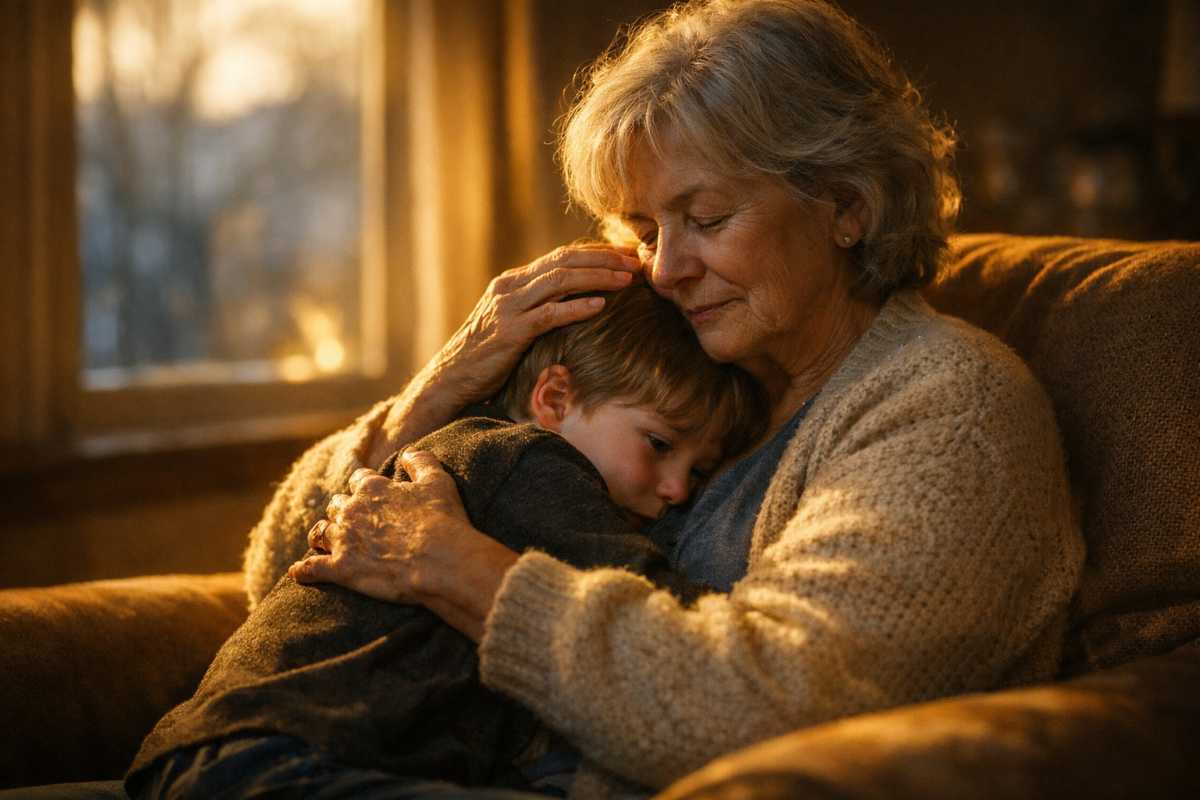
Picture this: your grandchild climbs into your lap, still smelling like sunshine and playground dust. They start talking — about a friend who wouldn’t share, about a spelling test they’re worried about, about something that felt unfair but they can’t quite explain.
In that moment, something powerful is happening.
According to child psychologists, every child needs at least one emotionally safe adult in their life — someone who provides stability, warmth, and acceptance without pressure. Research consistently shows that children who feel secure with even one steady adult develop stronger emotional regulation, higher self-esteem, and greater resilience later in life.
Parents, of course, carry enormous responsibility. They’re managing rules, schedules, discipline, homework, meals, and the daily logistics of raising a child. But grandparents? You often get to step into a slightly different role.
You bring less pressure — and more space.
You’re not usually the one enforcing bedtime or negotiating screen time. You’re the one who has time to listen. The one who can pause. The one who can sit quietly and let a child’s feelings unfold without immediately having to fix or correct.
That unique position makes grandparents incredibly powerful emotional anchors.
This isn’t about being perfect. It’s about being intentional. In the sections ahead, we’ll explore simple, heart-centered behaviors that “naturally-nurturing” grandparents tend to practice — often without even realizing how impactful they are. As you read, you may find yourself smiling and thinking, “I already do that.” And that’s exactly the point.
1. They Make Children Feel Emotionally Safe — Not Judged
Child psychologists emphasize that children thrive in environments where they feel accepted exactly as they are. Emotional safety doesn’t mean a lack of guidance — it means a lack of shame.
Naturally-nurturing grandparents understand this instinctively.
When a child spills juice, struggles with reading, or admits they were scared at school, the response matters. A quick correction or a dismissive “Oh, that’s nothing” may seem harmless, but children are incredibly sensitive to tone. They’re constantly asking themselves, “Am I safe here? Am I still loved?”
Nurturing grandparents answer those questions without words.
Instead of overcorrecting small flaws, they lean into reassurance. Instead of criticizing awkward phases or emotional outbursts, they offer steadiness. They might say, “That happens sometimes,” or “I’m glad you told me.” Those simple responses create a powerful internal message for the child: I can be myself here.
Emotional safety allows children to open up. It encourages honesty. It builds trust. And when children feel safe enough to share their mistakes and fears, they’re far more receptive to gentle guidance later.
You don’t have to agree with everything your grandchild says. You don’t have to avoid teaching moments. But naturally-nurturing grandparents understand that connection comes before correction.
A child who feels accepted will grow. A child who feels judged will hide.
2. They Listen More Than They Lecture
It’s tempting to jump in with advice. After all, you’ve lived through decades of experience. You’ve learned hard lessons. You want to help your grandchildren avoid unnecessary pain.
But psychologists consistently highlight one truth: listening builds trust far more effectively than lecturing.
Naturally-nurturing grandparents know how to slow down.
They let the story unfold — even if it takes a while. Even if it includes unnecessary details about recess or a classmate’s new shoes. They understand that when a child talks, they aren’t just sharing information; they’re practicing emotional processing.
Active listening is powerful. It looks simple, but it’s transformative. Making eye contact. Nodding. Saying, “Tell me more about that.” Sitting still instead of multitasking.
When a grandparent truly listens, the child feels valued. And when children feel valued, their confidence strengthens.
Listening also teaches emotional intelligence. It models patience. It shows children that their thoughts are worth time and attention. And in a world full of distractions — phones buzzing, televisions playing, schedules packed tight — undivided listening becomes even more meaningful.
There will be moments when advice is needed. Of course. But nurturing grandparents understand that sometimes the greatest gift isn’t wisdom spoken — it’s space given.
When children feel heard, they grow into adults who know how to listen to others.
And that lesson may be one of the greatest legacies you leave behind.
3. They Validate Feelings (Even When They Don’t Fully Agree)
One of the most powerful things a grandparent can say is surprisingly simple:
“That sounds really hard.”
Notice what that sentence does. It doesn’t judge. It doesn’t correct. It doesn’t minimize. It simply acknowledges.
Child psychologists consistently explain that emotional validation is one of the strongest foundations of resilience. When children feel understood, their nervous system settles. They feel less alone. They learn that emotions are safe to experience — not something to suppress or feel ashamed of.
And here’s the key: validation doesn’t mean agreement.
Your grandchild might be devastated over something that seems small from an adult perspective — a broken crayon, a missed invitation, a classmate who didn’t sit next to them. It may be tempting to say, “Oh, that’s not a big deal,” or “You’ll get over it.”
But to a child, it is a big deal.
Naturally-nurturing grandparents understand that big feelings in little bodies are still big feelings. Instead of dismissing them as dramatic or overly sensitive, they lean in with empathy.
“I can see why that upset you.”
“That must have felt embarrassing.”
“I’m glad you told me.”
These responses teach children that emotions are manageable — not dangerous. Over time, that emotional safety builds resilience. Children who feel heard are more likely to develop healthy coping skills. They become adults who can process feelings rather than bury them.
And perhaps most importantly, when you validate a child’s emotions, you strengthen the bond between you. You become someone they turn to — not someone they hide from.
Read Also: Psychologists Are Begging Grandparents To Do These 6 Things With Their Teen Grandchildren
4. They Create Predictable Rituals
There’s something magical about knowing exactly what to expect.
Maybe it’s Saturday morning pancakes. Maybe it’s a special bedtime story voice. Maybe it’s a secret handshake, a movie night tradition, or a simple walk around the block after dinner.
These rituals may seem small, but psychologists emphasize that predictability builds emotional security. When children know certain moments are steady and reliable, it creates a deep sense of safety.
In a world that often feels rushed and unpredictable, consistency becomes comforting.
Naturally-nurturing grandparents understand this instinctively. They don’t need elaborate plans or expensive outings. The power isn’t in the complexity — it’s in the repetition.
The same cookie recipe every December.
The same chair you sit in when you read together.
The same goodbye hug ritual at the door.
Over time, these small traditions become emotional anchors. They create memories that children carry into adulthood. And beyond nostalgia, they foster attachment — the secure bond that helps children feel grounded and supported.
Years later, your grandchild may not remember every conversation. But they will remember how it felt to know that Grandma’s house meant warmth, predictability, and comfort.
That kind of consistency becomes part of their internal sense of safety.
5. They Encourage Independence Without Hovering
It’s natural to want to step in and help. You’ve raised children. You’ve solved countless problems. You can see the solution before your grandchild even realizes there’s an issue.
But naturally-nurturing grandparents understand something important: confidence grows through effort.
Child psychologists often talk about the value of “scaffolding” — offering support while still allowing the child to do the work. It means standing nearby, ready to guide, but resisting the urge to take over.
Let them tie their own shoes — even if it takes longer.
Let them pour the milk — even if a little spills.
Let them try the puzzle before you point out where the piece fits.
These moments may seem small, but they send a powerful message: I believe you can do this.
And when children succeed — even in tiny ways — their self-confidence strengthens.
Naturally-nurturing grandparents also focus on praising effort rather than just outcomes. Instead of saying, “You’re so smart,” they might say, “You worked really hard on that.” That subtle shift teaches children that growth comes from persistence, not perfection.
And when help is needed? They offer it gently.
“Would you like a hint?”
“I’m right here if you need me.”
Encouraging independence doesn’t mean withholding support. It means trusting the child enough to try — and being steady enough to catch them if they stumble.
Over time, this balance creates capable, resilient young people who know they are supported — but also strong enough to stand on their own.
6. They Speak Words That Build Identity
The words we speak to children don’t just float away. They settle.
Over time, they become part of how a child sees themselves.
Child psychologists often talk about “identity-based praise” — the idea that the language adults use can shape a child’s internal narrative. When a grandparent says, “You’re so kind,” or “You’re the kind of person who keeps trying,” those statements begin to form a child’s sense of who they are.
And children live up — or down — to the identities they believe about themselves.
Naturally-nurturing grandparents are intentional with their words. They don’t only praise achievements. They highlight character.
Instead of focusing solely on grades, they might say, “I love how patient you were with your little sister.” Instead of celebrating only the winning goal, they might notice, “You didn’t give up, even when it was hard.”
These kinds of statements go deeper than momentary praise. They attach positive qualities to the child’s identity.
Psychologists note that when children repeatedly hear identity-based affirmations, those traits become internalized. A child who hears “You’re thoughtful” begins to see themselves as thoughtful — and behaves accordingly. A child who hears “You work hard” starts to believe effort is part of who they are.
This doesn’t mean empty flattery. Children can sense that. It means noticing genuine strengths and naming them out loud.
And here’s the beautiful part: grandparents often have the emotional distance to see qualities that even parents, caught in daily routines, might overlook.
Your words may echo longer than you realize.
Read Also: 30 Common Demoralizing Statements Grandmas Say That Quietly Crush a Grandchild’s Confidence
7. They Model Calm Emotional Regulation
Children don’t just listen to what we say. They watch how we react.
When emotions run high — a toddler’s meltdown, a slammed teenage door, an unexpected disappointment — naturally-nurturing grandparents understand that their own steadiness becomes the lesson.
Psychologists explain that emotional regulation is largely learned through observation. Children “borrow” patterns from the adults around them. If adults escalate quickly, children often mirror that intensity. But when adults remain calm and grounded, children gradually learn to do the same.
This doesn’t mean you never feel frustrated. It means you choose how to respond.
A nurturing grandparent might take a slow breath before answering. They might lower their voice instead of raising it. They might say, “Let’s pause for a minute,” rather than reacting immediately.
That calm presence sends a powerful message: Big feelings can be handled.
Especially during teenage years, when emotions can swing wildly, having one steady adult who doesn’t panic or overreact can feel incredibly stabilizing. It becomes a safe harbor.
And sometimes, modeling regulation is as simple as narrating your own process: “I’m feeling a little stressed right now, so I’m going to take a breath.”
That small moment teaches children that emotions aren’t something to fear — they’re something to manage.
Over time, your composure becomes part of their toolkit.
8. They Protect the Parent-Child Relationship
Perhaps one of the most overlooked — yet most important — roles of a nurturing grandparent is this: protecting the bond between parent and child.
It can be tempting to step in. To correct. To disagree. To subtly criticize parenting choices in front of a grandchild. But psychologists consistently warn that triangulating a child between adults can create confusion and insecurity.
Naturally-nurturing grandparents understand their unique position.
They avoid speaking negatively about parents in front of children. Even if they don’t agree with every decision, they recognize that reinforcing respect strengthens the child’s emotional stability.
When a grandchild complains, instead of saying, “Your mom is too strict,” a nurturing grandparent might respond with, “Your mom loves you very much, even when she sets rules.”
That small shift preserves trust on all sides.
This doesn’t mean ignoring serious issues. It means being thoughtful about how and where concerns are addressed. Conversations about parenting differences happen privately — adult to adult — not in front of a child.
In many families, grandparents act as bridges. They offer empathy without undermining authority. They provide comfort without creating division.
And when children see the adults in their lives supporting one another, it reinforces security.
The goal isn’t to compete for closeness. It’s to contribute to a stable emotional environment.
And when grandparents choose to be bridges instead of wedges, the entire family benefits.
9. They Share Stories That Pass Down Wisdom
Children don’t just inherit eye color or curly hair — they inherit stories.
And those stories matter more than we often realize.
Child psychologists talk about something called narrative identity — the idea that the stories children hear about their family help shape how they see themselves. When kids understand where they come from, they feel rooted. They feel like they belong to something bigger than the present moment.
Naturally-nurturing grandparents are storytellers.
They tell stories about how things “used to be.” About walking to school. About their first job. About mistakes they made. About hard seasons they survived. About funny mishaps that still make them laugh decades later.
And here’s what makes this powerful: it’s not just the polished success stories that matter. It’s the honest ones.
When a grandparent says, “I failed that test too,” or “I remember being nervous just like you,” they normalize struggle. They teach resilience without preaching it. They show that setbacks are part of life — not the end of the story.
Family history builds belonging. Belonging builds stability.
When children know that their family has weathered storms before, they begin to believe they can weather their own. When they hear, “Our family has always been strong,” or “We’ve always helped each other,” that message settles deep inside.
Stories don’t feel like lectures. They feel like connection.
And years from now, your grandchild may not remember every detail — but they will remember the feeling of sitting with you, hearing where they came from, and realizing they’re part of something steady and enduring.
Read Also: The 3 Pieces of Advice Grandkids Usually Only Prefer to Seek From Their Grandmothers
10. They Give Undivided Attention (Even in Small Moments)
In today’s world, attention is rare.
Phones buzz. Notifications flash. The television hums in the background. Even adults struggle to stay fully present.
That’s why undivided attention feels almost sacred to a child.
Naturally-nurturing grandparents understand that connection doesn’t always require grand gestures. Often, it’s built in small, quiet moments.
It’s putting the phone down.
It’s turning your body toward them when they speak.
It’s kneeling to eye level instead of responding from across the room.
Psychologists consistently emphasize that consistent, focused attention builds emotional security. When a child feels truly seen and heard — even for a few minutes — it reinforces their sense of worth.
You don’t have to entertain constantly. You don’t have to plan elaborate outings. Sometimes, one-on-one time is as simple as sitting beside them while they color. Or listening carefully while they explain a drawing that doesn’t quite make sense to anyone else.
What matters is presence.
When you offer undivided attention, you send a clear message: You matter enough for me to pause.
Over time, these small deposits of attention accumulate. They strengthen attachment. They deepen trust. They create a safe emotional base that children carry with them into friendships, classrooms, and eventually their own adult relationships.
It may only take five focused minutes — but to a child, it can feel like the world.
11. They Offer Comfort Before Correction
Every child will make mistakes. They’ll say something unkind. They’ll forget instructions. They’ll test boundaries. That’s part of growing up.
But how adults respond in those moments can shape how a child processes failure.
Naturally-nurturing grandparents understand a simple but powerful principle: connection before correction.
When a child is upset, embarrassed, or overwhelmed, the first need is often comfort — not a lecture.
It might be a hug.
A hand on their shoulder.
A calm, steady tone that says, “It’s okay. We’ll figure this out.”
Psychologists explain that when a child’s nervous system is activated — when they’re angry, ashamed, or scared — their brain isn’t ready for instruction. Safety has to come first. Once they feel secure, they can actually hear guidance.
That doesn’t mean ignoring poor behavior. It means sequencing the response.
Comfort first.
Correction second.
For example, instead of immediately saying, “You shouldn’t have done that,” a nurturing grandparent might begin with, “I can see you’re really upset.” After the child settles, guidance becomes more effective — and far less threatening.
This approach protects the relationship. It teaches accountability without attaching shame. It allows children to learn while still feeling loved.
And that’s the balance naturally-nurturing grandparents tend to strike so beautifully: firm when needed, but never withholding affection.
Because at the end of the day, children don’t grow best under fear. They grow best under love that feels steady — even when they stumble.
12. They Love Without Conditions
At the heart of everything we’ve discussed is one powerful truth: naturally-nurturing grandparents love in a way that feels steady.
Not performance-based love.
Not achievement-based approval.
Not affection that grows or shrinks depending on behavior.
Just love.
Child psychologists consistently emphasize that children flourish when they experience unconditional positive regard — the deep, steady assurance that they are valued simply because they exist. When love feels predictable, children don’t have to perform for it. They don’t have to earn it. They don’t have to wonder if they’ve lost it after a mistake.
Naturally-nurturing grandparents communicate this kind of love in subtle but powerful ways.
They hug even after a hard conversation.
They say “I love you” regularly — not just when something goes well.
They show up consistently, even during awkward teenage years.
When a grandchild fails a test, they don’t withdraw warmth. When a grandchild makes a poor choice, they correct behavior without questioning worth.
There’s a quiet message woven into their presence: Nothing you do can make you unlovable to me.
That kind of security becomes part of a child’s emotional foundation. It reduces anxiety. It builds confidence. It teaches them that relationships can be safe and stable.
And perhaps most importantly, unconditional love becomes the model they carry into adulthood — influencing how they love their future partners, friends, and even their own children.
You may not always get every word right. You may not handle every situation perfectly. But when your love is steady and dependable, you give your grandchild something that lasts far beyond childhood.
Read Also: 8 Reasons Why Grandkids Feel the Need to Lie to Their Grandparents (And How to Avoid Them)
Conclusion: You Don’t Have to Be Perfect — Just Present
Reading through this list, you may have noticed something comforting: none of these behaviors require perfection.
They don’t require fancy vacations.
They don’t require expensive gifts.
They don’t require being available every single moment.
They require presence.
Child psychologists remind us that nurturing isn’t built through grand gestures — it’s built through small, consistent behaviors repeated over time. A calm response. A listening ear. A steady hug. A predictable tradition. A gentle word of encouragement.
It’s the accumulation of those moments that shapes a child’s sense of safety and belonging.
And if you’re honest with yourself, you’re probably already doing more of this than you realize.
Maybe you’re the grandparent who always answers the phone.
Maybe you’re the one who remembers their favorite snack.
Maybe you’re the one who notices when something feels “off” and quietly checks in.
That matters.
Before you move on, pause for a moment and reflect:
Which of these nurturing habits already come naturally to you?
Where might you lean in just a little more intentionally?
Grandparenting is one of the most beautiful, powerful roles you’ll ever hold. You don’t have to be flawless. You don’t have to compete. You don’t have to prove anything.
You just have to be there.
And if this resonated with you, consider sharing it with another grandmother who leads with love. Sometimes, a gentle reminder of the difference we make is exactly what someone needs to keep going.
Love Being a Grandma?

Join 12,570+ grandmas who wake up to a cheerful, uplifting email made just for you. It’s full of heart, sprinkled with fun, and always free. Start your mornings with a smile—sign up below! ❤️