
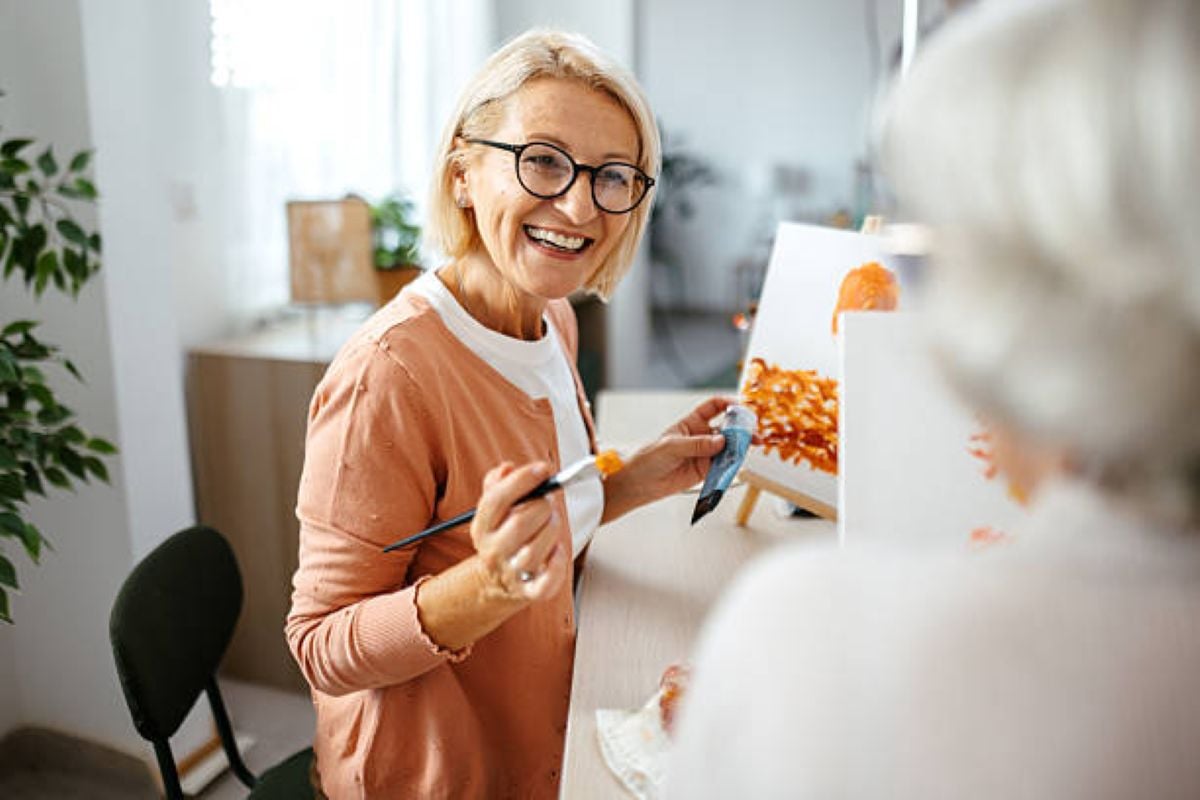

Do you remember that box?
It had a bright picture on the lid and a flat board inside covered in faint blue lines and tiny numbers. Next to it sat a row of little plastic paint pots with snap-on lids. You’d pop one open, and that strong oil paint smell would fill the kitchen.
Maybe you painted at the table after supper. Maybe your mom set you up on a rainy Saturday to keep you out of her hair. Or maybe you painted one yourself years later, side by side with your own kids.
So tell me, what did you paint? A galloping horse? A sailboat at sunset? A puppy with big sad eyes? Or the Last Supper, which seemed to hang in half the living rooms in America?
Here’s the fun part. Paint-by-numbers never really went away. It just grew up, and you might not recognize it today.
How Paint-by-Numbers Took Over America
It all started in Detroit around 1950.
A man named Max Klein ran the Palmer Paint Company, and he wanted to sell more paint. He asked one of his artists, Dan Robbins, for an idea. Robbins remembered that the famous painter Leonardo da Vinci used to number parts of his paintings so his helpers knew which colors went where. Robbins thought regular people could do the same thing at home.
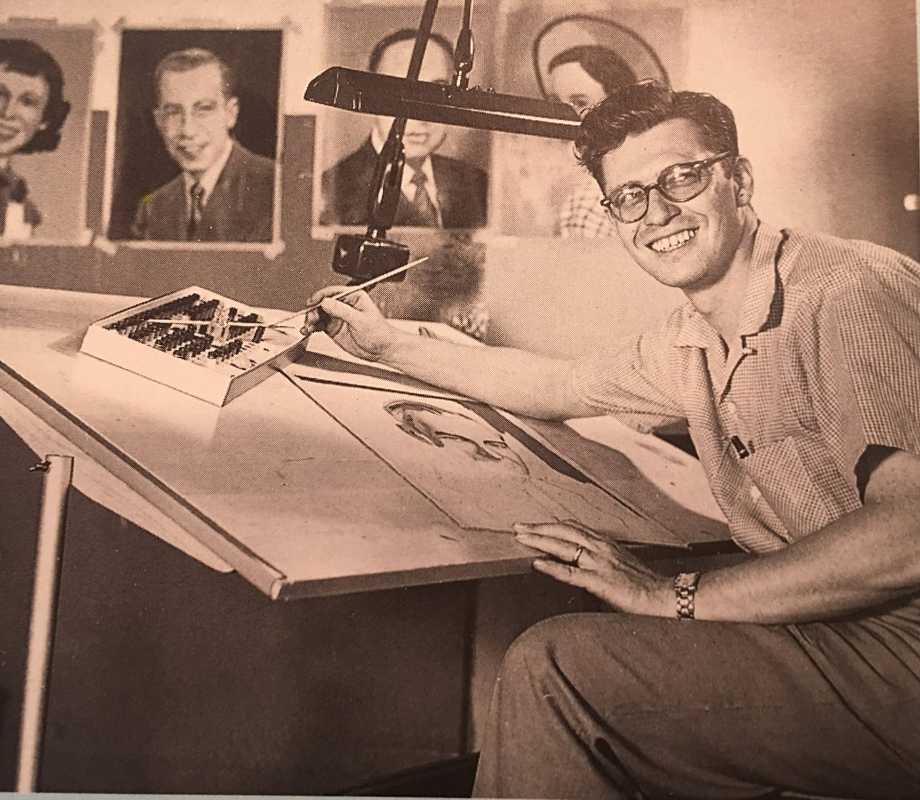
The kits came out under the name “Craft Master,” and they flew off the shelves. By the mid-1950s, millions of kits had been sold. The ads promised that anyone could be a great artist, with the slogan “Every man a Rembrandt!”
The craze went all the way to the White House. In the 1950s, President Eisenhower’s staff painted kits, and their finished pictures were hung in a hallway for visitors to see. Years later, in 2001, the Smithsonian in Washington gave paint-by-numbers its own museum show.
Not everyone was a fan, though. Some art experts said it wasn’t real art. They thought it was too easy and too much like copying.
Families didn’t care one bit. They hung their paintings over the couch and the fireplace with pride, and plenty of those pictures are still hanging today.
What We Loved and What Drove Us Crazy
Let’s be honest. We loved those kits, but they weren’t perfect.
The good part was easy to love. You didn’t need any talent. You just matched the numbers, one little patch at a time, and you could spend a whole quiet evening that way. At the end, you had a real picture you’d made with your own hands.
The bad part? You probably remember that too. The paint dried out in those little pots before you were halfway done. The colors sometimes came out muddy. The cardboard was stiff and plain. Some of the spaces were so tiny you needed a magnifying glass. And no matter how many coats you used, those numbers kept peeking through the paint.
Well, good news. Somebody finally fixed all that.
What Paint-by-Numbers Looks Like Today
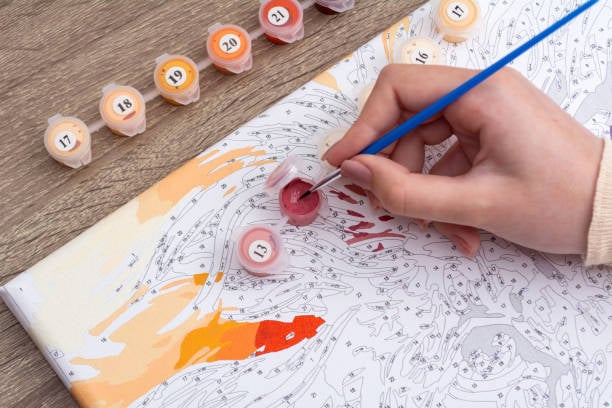
Today’s kits look so different you might do a double take.
You paint on real canvas now. The old cardboard is gone. Today’s kits come on the same kind of cloth canvas that real artists use. You can get it without a frame, with a frame you put together yourself, or already stretched on a wooden frame and ready to hang.
The paint is easier, too. Most kits now use acrylic paint instead of oil. It’s water-based, so it cleans up with soap and water, and it dries faster. That smelly old oil paint is a thing of the past.
The pictures look like they belong in a gallery. Forget the sad-eyed puppies. Now you can paint soft, dreamy ocean sunsets, big blue hydrangeas, old steam trains winding through autumn hills, and cherry blossoms in spring. There are also faith-inspired paintings, like a cross with lilies done in a stained-glass look.
You can make things you’ll actually use. Some kits aren’t just pictures. You can paint a wall clock that really keeps time, a wooden sign for your front door, a set of coasters, or a calendar.
Mandalas are a calm option. These are circle patterns with shapes that repeat. You fill them in one color or one ring at a time. Lots of people find that steady rhythm very relaxing.
And here’s the best part: you can paint your own photo. Pick a picture of your grandbaby, your wedding day, or a favorite family trip. The company turns it into a numbered canvas made just for you, and you paint it yourself.
Imagine handing that to someone you love.
Why So Many Grandmothers Are Picking Up the Brush Again
Life gets busy, even after the kids are grown. There’s always a call to return, a show to catch up on, or a phone buzzing on the counter.
Painting gives you a break from all that. For an hour or so, your hands are busy and your mind can slow down. Many people find it very relaxing, a little like knitting or working a puzzle.
It’s also a wonderful thing to do with your grandkids. Some kits come in small sets of a few matching pictures, so everyone can paint their own at the same table. You’ll talk, laugh, and end up with something to show for it.
And if you’re stuck on a gift idea, a painting you made yourself means a lot more than anything from the store. Hang one in your daughter’s kitchen and see how fast she smiles.
The best part is that nobody’s rushing you. There’s no deadline and no wrong way to do it. Paint a few shapes, snap the lids back on, and pick it up again tomorrow or next week. The picture will wait for you.
Tips for Getting Started (and Going Easy on Your Eyes and Hands)
Here are a few simple tricks to make your first painting a happy one.
Look at the size of the spaces, not just the size of the canvas. A small painting isn’t always easier. If it’s packed with tiny spaces, it can be harder on your eyes than a big one. Zoom in on the picture before you buy so you can see how big the numbered spaces are.
Start simple. Pick a design with big, bold shapes for your first try. Once you get the hang of it, you can move on to pictures with more detail.
Get good light. Sit near a window or under a bright lamp so you can see the numbers clearly.
Stand your canvas up. A small tabletop easel holds your painting upright so you don’t have to hunch over it. Your neck and back will thank you.
Make your brush easier to hold. If your hands get stiff or sore, wrap the brush handle with soft, stretchy wrap. It makes the handle thicker and easier to grip.
Don’t worry about mistakes. Painted outside the lines? Just let it dry, then paint over it with the right color. Nobody will ever know.
Where to Find Kits Made With Grandparents in Mind
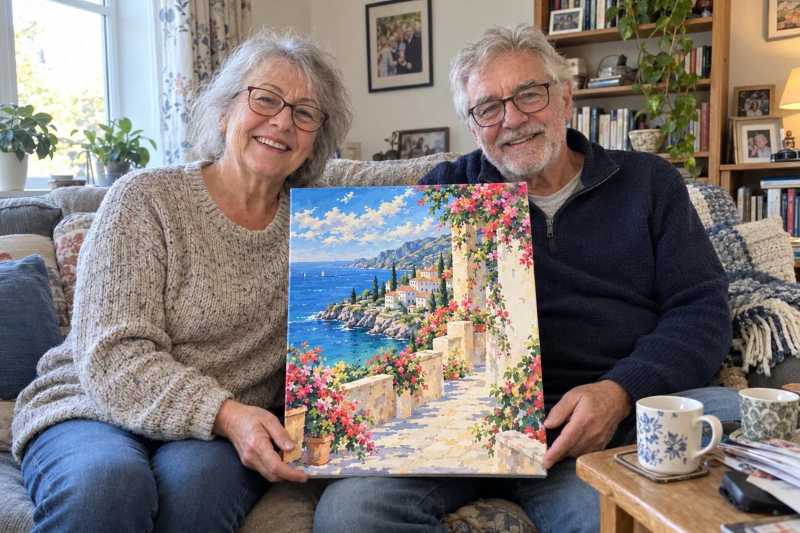
If you’d like to see how far the old hobby has come, PaintEasy has put together a collection of paint-by-number kits chosen with grandparents in mind. Pretty much everything we’ve talked about is there in one place.
Everything comes in the box. Each canvas kit includes the numbered canvas, paints already matched to your picture, and three brushes. You don’t need to make a trip to the craft store.
The page is easy to use. There’s a button at the top that makes the words bigger. You can also sort the kits by how hard they are, or by color if you know you want something blue for the bedroom.
There are extras to make painting comfier. You’ll find a tabletop easel and soft brush wraps for tired hands.
You can paint your own photo. Send in a favorite picture, and they’ll email you the numbered outline to look over before anything ships. Nothing gets sent until you’ve seen it.
There’s help if you need it. If you run low on paint, you can email them for a free extra set that matches your kit. If you can’t decide which picture to paint, they’ll help you choose.
Most kits start at about $25, which is a lot less than a framed picture from the store.
Same Joy, Better Kit
Picture that kitchen table again. The little pots of paint are there, and so is a picture full of tiny numbers.
This time, though, there’s a grandchild sitting next to you. You’re showing them how to find the number, match the color, and fill in one small space at a time, just like you did all those years ago.
The kits have changed a lot, but the good feeling hasn’t changed one bit.
If you’re ready to give it another try, take a look at the PaintEasy kits made for grandparents. Your first numbered patch of blue is waiting.
Now it’s your turn. What was the first paint-by-number you ever finished? Tell us in the comments!
Read Also: 7 Easy Hobbies the Happiest Women Over 60 Are Falling in Love With
Love Being a Grandma?

Join 33,762+ grandmas who wake up to a cheerful, uplifting email made just for you. It’s full of heart, sprinkled with fun, and always free. Start your mornings with a smile—sign up below! ❤️