
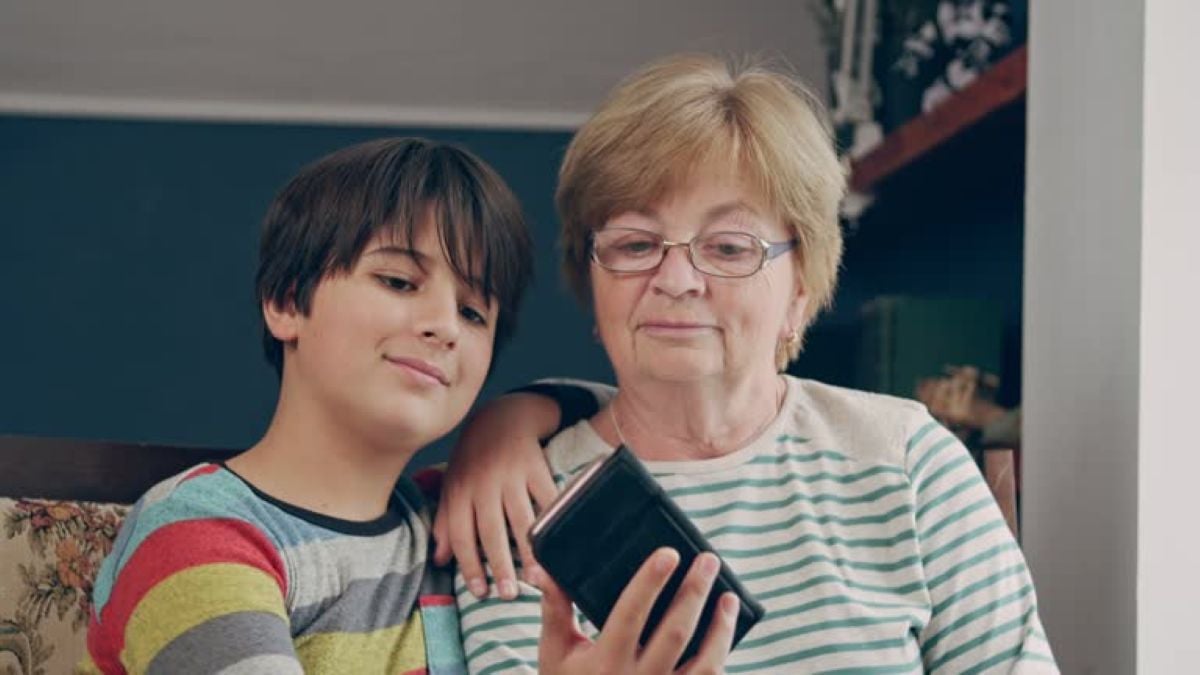

You know how it goes. Your grandson climbs into the car after school, and you ask, “How was school?”
“Fine.”
“What did you do today?”
“Nothing.”
And that’s the end of that.
If this sounds familiar, you’re not alone. Just about every grandparent has been there. And it can sting a little. You love this kid. You want to know what’s going on in their life. So why won’t they tell you?
Here’s the good news: they probably do want to talk. The problem is the question. “How was school?” is easy to answer with one word, so that’s what kids give you. It’s not rude. It’s just quick.
The right question is different. It works like a key. Instead of a one-word answer, it opens the door to a story.
Below, you’ll find 8 questions that do just that, plus a few simple tips on listening. Try them on car rides, at Sunday dinner, or over FaceTime, and get ready for the kind of talks you’ve been hoping for.
Why Some Questions Work and Others Fall Flat
So what makes one question work when another one flops? It comes down to a few simple things.
Small and clear beats big and vague. “How was your day?” is so big that kids don’t know where to start, so they just say “fine.” But “Who made you laugh today?” is small and clear. Their mind jumps right to a moment, and a story comes with it.
No right or wrong answers. Kids get quizzed all day at school. If your question feels like a test, they’ll clam up. Ask things where any answer is a good answer, and they’ll relax.
Make it about them. Ask what they think, what they like, and what they know. Kids don’t get asked for their opinion very often. When you ask, they feel like they matter, and they’ll want to keep talking.
Pick the right moment. Sitting face to face can feel like a job interview. Kids often open up more when you’re side by side, doing something else, like driving, baking cookies, fishing, or walking the dog. Less eye contact means less pressure.
You have a secret advantage. You’re not the one checking homework or setting curfews. That’s Mom and Dad’s job. Because of that, kids often tell grandparents things they won’t tell their parents. That’s a special place to be, so treat it with care.
The 8 Questions
1. “What was the best part of your day, and what was the hardest part?”
This one is a classic for a reason. It tells your grandchild that it’s okay to share the good stuff and the not-so-good stuff. You’re not just looking for happy news. You want the whole picture.
It also gives them something clear to think about. Instead of trying to sum up a whole day, they just have to pick two moments. That’s much easier.
For little ones, keep it simple: “What was your happy part today? What was your sad part?”
For teens, try “What was your high and your low?” It sounds less like a grown-up question, and many teens already know it.
Keep it going: If they share something hard, ask, “What do you think made it so hard?” Then just listen.
Here’s the trick: Answer the question yourself, too. Tell them your best part and your hardest part. When it feels like a two-way talk instead of a quiz, kids open up a lot more.
2. “Who did you sit with at lunch today?”
Lunch is a big deal for kids. It’s one of the few times in the school day when they get to choose who they’re with. So this simple question tells you a lot.
It’s also easy to answer. There’s no feeling to explain, just a name or two. But those names open the door to bigger things: who their friends are, who’s new, and sometimes who’s being left out.
For teens, lunch talk can feel a little too personal. Try this instead: “Who’s the funniest person in your group right now?” It gets at the same thing in a lighter way.
Keep it going: When they say a name, ask, “What’s she like?” or “What do you two talk about?” Kids love talking about their friends when someone’s truly curious.
Pay attention over time: If the names start to change, or they say “nobody,” don’t panic. But do take note. It might mean a friendship has shifted, and it may be worth gently asking about later.
3. “What’s something you know a lot about that I probably don’t?”
Most of the time, grown-ups are the ones with the answers. This question flips that around. Now your grandchild is the expert, and you’re the student. Kids love that.
And they know more than you might think. It could be a video game, Pokémon cards, a YouTuber they watch, a sport, a social media trend, or every dinosaur that ever lived. Whatever it is, they’ve probably spent hours on it.
This works great with tweens and teens. Kids this age often feel “too old” for the usual questions. But asking them to teach you something? That feels like respect.
Keep it going: Ask, “Can you show me?” Then really let them. Sit next to them while they play the game or pull up the video. Ask questions, even simple ones. You don’t have to love it. You just have to be interested in them.
4. “What made you laugh this week?”
Not every talk has to be deep. This question is light and fun, and it puts kids in a good mood right away. There’s no pressure and nothing to explain.
It also makes a great warm-up. Once you’ve laughed together, kids tend to relax, and the bigger stuff often comes out on its own.
For little ones, expect a joke. It might not make much sense, and they may tell it three times. Laugh anyway.
For teens, they may grab their phone to show you a video or a meme. Go with it, even if you don’t fully get the joke.
Keep it going: Laugh with them, then share something that made you laugh this week. It shows you’re both in this together, and it gives them a peek into your life too.
Love Being a Grandma?

Join 29,000+ grandmas who wake up to a cheerful, uplifting email made just for you. It’s full of heart, sprinkled with fun, and always free. Start your mornings with a smile—sign up below! ❤️
5. “If you could change one rule, at home or at school, what would it be?”
Kids live with a lot of rules they didn’t make. This question gives them a chance to say what they really think about them. And most kids have an answer ready to go.
It’s also a sneaky way to find out what’s bugging them. If you ask, “Is anything wrong?” you’ll probably hear “No.” But ask what rule they’d change, and you might learn a lot.
For little ones, expect silly answers like “ice cream for breakfast” or “no bedtime ever.” Enjoy it. That’s part of the fun.
For older kids, the answers often get more real. They might talk about too much homework, phone limits, or a teacher who feels unfair. That’s where the good stuff is.
Keep it going: Ask, “Why that one?” Their reason usually tells you more than the rule does.
One word of caution: Don’t rush to defend the rule. And don’t run straight to Mom and Dad with what they said. If kids feel like they’ll get a lecture or get in trouble, they’ll stop sharing. Just listen.
6. “What do you think I was like when I was your age?”
To most kids, Grandma and Grandpa have always been, well, Grandma and Grandpa. It’s hard for them to picture you as a kid who rode bikes, got bad grades, or had a crush. This question gets them wondering.
Their guesses might crack you up. But more importantly, it opens the door for you to share stories about your life and your family.
Bring a prop: Have an old photo of yourself at their age ready to go. Kids love seeing the clothes, the hair, and the old cars. A picture makes your stories feel real.
Keep it going: Tell a short, honest story. The best ones are about a time you messed up, got in trouble, or had a hard time. Kids feel better knowing that you struggled too, and that you turned out okay.
The fun part: Kids are often surprised to learn that you were once a kid just like them. That “Wait, really?” moment can bring you closer than you might expect.
7. “If you were in charge of the whole world for one day, what would you do?”
This is a fun one. Kids get to dream big, and there’s no wrong answer. But don’t let the silly side fool you. What they’d do with all that power can tell you a lot about what they care about, what worries them, and what they hope for.
Maybe they’d make every day a snow day. Maybe they’d feed every hungry dog. Maybe they’d make sure nobody ever got picked last in gym class. Each answer is a little window into their heart.
For little ones, the whole world can be too big to picture. Shrink it down: “If you were in charge of the house for a day, what would you do?”
For teens, make it feel more real: “If you were president for a day, what’s the first thing you’d change?” You might be surprised how much thought they’ve already put into it.
Keep it going: Ask, “What would be the hardest part of being in charge?” It gets them thinking a little deeper, and their answer may surprise you.
8. “What’s something you wish grown-ups understood about kids your age?”
This might be the most powerful question on the list. It tells your grandchild, loud and clear, “I want to understand your world.” Kids don’t hear that very often, and it means a lot.
That’s what builds trust. And trust is what makes them come to you when something big happens.
Save this one for older kids, around 9 and up. Younger kids may not know how to answer it yet.
Timing matters: Don’t ask this in a rush or in front of a crowd. Wait for a quiet, calm moment, like a long drive or a slow evening on the porch.
Keep it going: When they answer, simply say, “Thank you for telling me that.” Then stop there. Don’t argue, explain, or turn it into a lesson, even if you don’t agree. If they feel heard, they’ll tell you more next time.
How to Listen So They Keep Talking
Asking a great question is only half the job. The other half is how you listen. Get this part right, and your grandkids will keep coming back to talk.
Put the phone down. Kids notice when you’re only half paying attention. Set your phone aside, turn off the TV, and look at them. It shows them that what they’re saying matters to you.
Hold back the advice. When a grandchild tells you about a problem, it’s tempting to jump in and fix it. But most of the time, kids just want someone to hear them out. If they want your advice, they’ll ask. Or you can ask them: “Do you want my help, or do you just need to vent?”
Keep a calm face. Sometimes kids will say something that surprises you, or even worries you. Try not to gasp, frown, or freak out. If you overreact, they’ll learn to stop telling you things. Stay calm, and the door stays open.
Get okay with quiet. After you ask a question, give them a few seconds to think. It might feel awkward, but don’t rush to fill the silence. Often the best answers come right after a pause.
Remember the little things. If they told you about a new friend or a big test, ask about it next time. “Hey, how did that math test go?” shows you were really listening. That means more to kids than you might think.
Keep their secrets, when it’s safe. Kids need to know they can trust you. So don’t share what they tell you without asking first. But be clear about one thing: if they’re ever in danger, you’ll speak up, because you love them.
Read Also: 10 Things Grandkids Are Always Observing and Learning From Their Grandparents
Start Small, Start This Week
Here’s the thing: you don’t need the perfect question. You don’t need to say everything just right. What matters most is that your grandchild can tell you really want to hear what they have to say.
So don’t try all 8 questions at once. Pick one or two that feel right for your grandkids, and try them this week. Maybe on the drive to soccer practice, over a plate of cookies, or during your next FaceTime call. If one falls flat, no big deal. Try another one next time.
These little talks add up. The stories you share now will become memories they hold onto for years. And the trust you build today is what makes them call you first when life gets hard.
Now it’s your turn: What’s your favorite question to get your grandkids talking? Share it in the comments below. We’d love to hear what works for you!
Love Being a Grandma?
Join 29,000+ grandmas who wake up to a cheerful, uplifting email made just for you. It’s full of heart, sprinkled with fun, and always free. Start your mornings with a smile—sign up below! ❤️