

You know that feeling when you try to remember something from your own childhood, and it’s never the trip to Disneyland that comes back clearest? It’s some random Tuesday. The smell of your grandma’s kitchen. The way your grandpa hummed while he fixed something in the garage. That’s how memory works, especially for kids — it skips right past the big, planned stuff and holds onto the small, repeated stuff instead.
That’s actually good news if you’re a grandparent, because it means you don’t need a bigger budget or a fancier vacation to leave a mark. You need consistency in the tiny moments nobody’s even thinking about in the moment. The good news is these are things you can start doing today, no planning required. Here are eight of them.
1. How You Greet Them
Think about the last time someone lit up when they saw you walk in a room. Really lit up — stopped what they were doing, looked you in the eye, maybe even got up. You remember that feeling, right? Now think about the opposite: someone glancing up from their phone, tossing out a “hey” without really looking at you. Both are technically a greeting. They land completely differently.
Kids are especially tuned into this because they haven’t learned to fake-read social cues yet — they just feel them. A big smile, crouching down to their eye level, actually pausing whatever you’re doing when they walk in — that says “you matter enough to interrupt my day for.” A distracted “hi sweetie” while you keep scrolling or keep chopping vegetables says something else, even if you don’t mean it to.
The nice part is this costs you nothing. It’s ten seconds. But those ten seconds, repeated over years, start to add up to a feeling: when I walk into a room, people are happy I’m there. That’s a feeling kids carry for life, long after they’ve forgotten what you actually talked about that day.
2. Whether You Really Listen
There’s listening, and then there’s listening. You know the difference because you’ve been on both ends of it. Someone who’s just waiting for their turn to talk, nodding along while their eyes drift to their phone — versus someone who actually stops and asks, “wait, what happened after that?” One of those makes you feel heard. The other makes you feel like background noise.
Kids notice this way more than we give them credit for. When your grandkid launches into a five-minute story about a dream they had, or some drama that happened at recess, it can feel pretty low-stakes to you. But to them, it’s not about the content — it’s about whether you cared enough to follow along. A genuine follow-up question (“wait, so what did you say back?”) tells them their inner world is interesting to you. Half-listening while you check your email tells them the opposite, even if you can technically repeat back what they said.
This is one of those things that’s easy to get right and easy to get wrong without noticing. You don’t need to drop everything every single time — that’s not realistic. But when you do sit down to listen, actually listen. Kids remember who made their stories feel like they mattered, and they remember who made them feel like they were talking to a wall.
Read Also: Grandkids With Unshakable Self-Worth Usually Have Grandmas Who Do These 8 Surprising Things
3. The Small Rituals You Build Together
Every family has one of these, even if nobody planned it. A specific way you say goodnight. A snack only grandma makes. A silly handshake you two invented one random afternoon that somehow became “your thing.” These little rituals seem so minor in the moment that you’d never think to write them down — but they end up being some of the most durable memories a kid holds onto.
Here’s why: rituals give kids something specific to point to. “I remember Grandma” is vague. “I remember Grandma always let me lick the spoon after we made brownies” is a whole scene, complete with smell and sound and feeling. The specificity is what makes it stick. It’s not the brownies that matter — it’s that this was your thing, something that belonged just to the two of you.
The good news here is you don’t need to engineer this. You can’t really force a ritual into existence anyway — the best ones just happen because you did something together more than once and it stuck. Your job is really just to notice when one’s forming and keep doing it. Consistency is what turns a random moment into a memory. Do the same silly high-five every time they leave, tell the same joke every time you tuck them in — the repetition is the whole point.
4. How You Talk About Their Parents
This one’s a little trickier, because let’s be honest — you’re not always going to agree with how your kid is raising your grandkid. Maybe you think they’re too strict, or not strict enough, or you’d have handled that tantrum differently. That’s normal. But how you handle that disagreement in front of your grandchild matters more than you’d think.
Kids are like little emotional sponges when it comes to family tension. Even if you never say a bad word about mom or dad directly, they pick up on the eye roll, the sigh, the “well, when I was raising kids…” comment. And it puts them in a weird spot — because now they’re caught between two people they love, sensing friction they don’t know what to do with. It can even feel like they have to pick a side, which is a lot to put on a kid.
The flip side is powerful too: when grandkids see you speak about their parents with respect and warmth, even when you disagree privately, it reinforces something really valuable — that their family is solid. That the adults in their life are on the same team. You don’t have to pretend you agree with every parenting choice. You just have to keep those disagreements between the adults, and let your grandkid keep their sense that everyone around them is united in loving them.
Love Being a Grandma?

Join 33,762+ grandmas who wake up to a cheerful, uplifting email made just for you. It’s full of heart, sprinkled with fun, and always free. Start your mornings with a smile—sign up below! ❤️
5. Physical Warmth and Affection
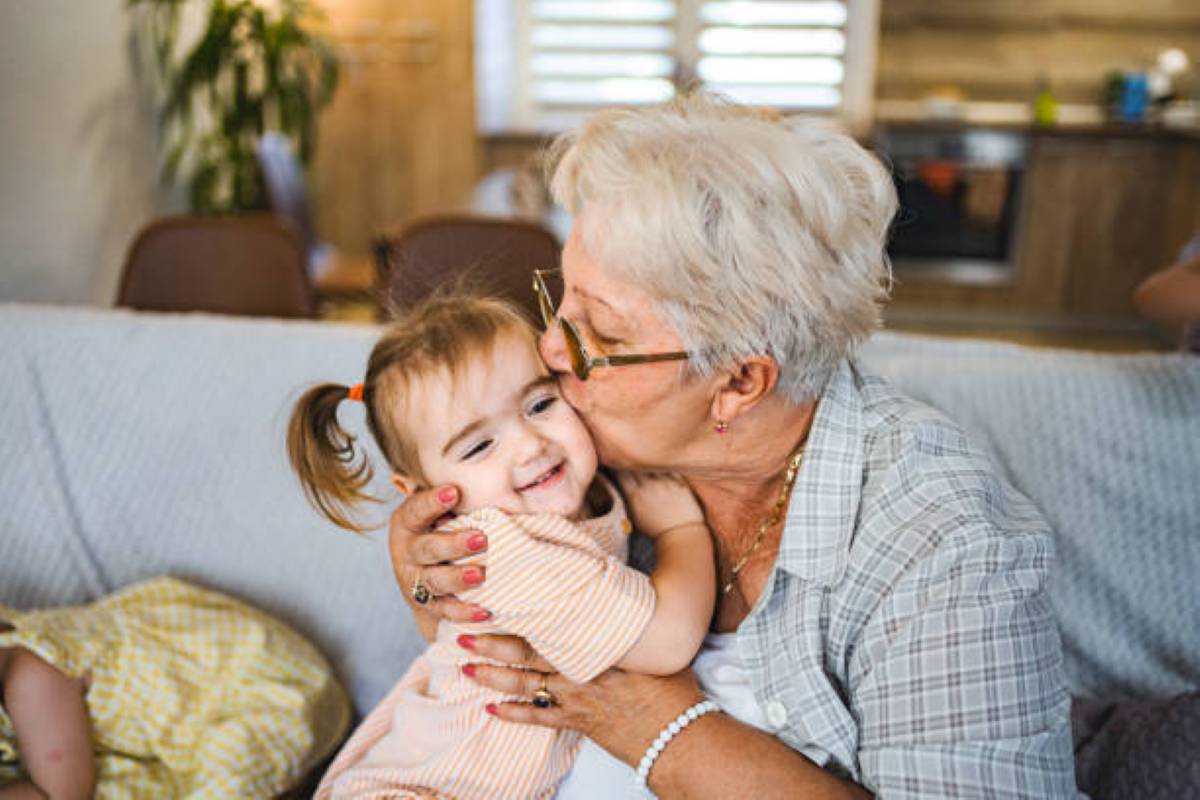
There’s something about a hug from a grandparent that just hits different. Maybe it’s the lack of rush, or the fact that it doesn’t come with an agenda — it’s not “okay, hug, now let’s go.” It’s just… a hug because they’re happy you’re there. Kids feel that, even if they can’t articulate why it feels different from other affection in their life.
This is one of those things that communicates without any words at all. Holding their hand while you walk, tucking them in and lingering an extra minute, a hug that lasts a beat longer than expected — all of it sends the same message: you’re wanted here, exactly as you are. That’s a powerful thing for a kid to feel, especially at ages when they’re still figuring out where they fit in the world.
And here’s the flip side worth knowing: if affection feels stiff or rushed or awkward — even if that’s just your personality, not a reflection of how you feel — kids can read that as distance. Not because you don’t love them, but because kids aren’t great at separating “grandpa’s just not a hugger” from “grandpa doesn’t want to hug me.” If physical affection doesn’t come naturally to you, that’s okay — but it might be worth pushing yourself a little here, because this is one area where the small gesture really does carry outsized weight.
6. The Stories You Share About Your Own Life
Kids have this funny blind spot where they can’t quite picture their grandparents as anything other than, well, grandparents. It’s almost impossible for them to imagine you as a kid yourself, sneaking out past curfew or getting your heart broken or making a total fool of yourself at your first job. Which is exactly why telling them those stories matters so much — you’re handing them a version of you they’d never get otherwise.
When you share the “when I was your age” stuff — the mischief you got into, what your own parents were like, the family history that came before you — you’re doing more than just entertaining them for ten minutes. You’re giving them a sense of where they come from. Kids who know their family stories tend to have a stronger sense of who they are, almost like it gives them roots to stand on. You become less of an abstract authority figure and more of a real person who was once awkward and unsure and figuring life out too, just like they are now.
And honestly, these are usually the stories kids ask to hear over and over. Not because the plot is thrilling, but because it’s you — a version of you they get to know a little better each time. That’s a gift most grandkids don’t even realize they’re getting until they’re older and wishing they’d asked more questions.
7. How You Respond to Their Mistakes
Here’s a scenario every grandparent knows: a full cup of juice, tipped over, spreading across the table in slow motion. In that split second, your reaction says more to your grandkid than almost anything else you’ll do that day. Do you sigh, snap, or make a big deal out of it? Or do you shrug, grab a towel, and say “happens to everyone, bud”?
Kids don’t remember the spill. They remember how you reacted to the spill. A calm response teaches them that mistakes are just… normal. Not something to panic over, not something that makes them “bad.” A frustrated or sharp response — even a small one, even one you don’t think twice about — can make a kid feel small, embarrassed, or scared to mess up in front of you again. And that feeling tends to stick around a lot longer than the actual mess did.
This isn’t about letting misbehavior slide or never correcting anything — kids need boundaries, and it’s okay to redirect them when they’re out of line. The difference is in how. You can absolutely say “hey, we don’t throw toys” without making them feel like a bad kid for doing it. Calm correction teaches the lesson. Visible frustration just teaches them to be afraid of getting it wrong — and that’s not the memory you want to leave behind.
8. How You Say Goodbye
There’s a weird psychological thing where the ending of an experience colors how we remember the whole thing — and goodbyes with grandkids work the same way. A visit can be full of great moments, but if the goodbye is rushed or distracted, that’s often the part that lingers, coloring the whole memory a little gray.
You know the difference between a goodbye that’s just logistics (“okay, get your shoes, we gotta go”) and one that actually makes a kid feel missed before they’ve even left. The second kind might be a specific wave you always do, a “see you soon, alligator” kind of line, or getting down to their level for one more real hug instead of a pat on the head from standing up. It doesn’t need to be long. It just needs to be present — you, actually there for those last thirty seconds, instead of already mentally on to the next thing.
The other trick is planting a seed for next time. “Next time you’re here, we’re doing the treehouse” or “I’m already excited for our next brownie day” gives them something to look forward to, and it tells them this isn’t a one-off — there’s more coming. That little bit of anticipation is often what makes a goodbye feel warm instead of final.
Final Thoughts
If there’s one thing to take from all this, it’s that none of it requires money, planning, or some big gesture. Nobody’s grandkid grows up treasuring a trip to a theme park more than the feeling of being truly seen by someone who loved them. It’s the small, repeated stuff — the greeting, the listening, the inside jokes, the hugs, the calm reaction to a mess, the goodbye that lingers a beat longer — that actually builds the memory.
And that’s honestly good news. You don’t need to overhaul anything. You just need to start noticing these tiny moments and leaning into them a little more, starting with the very next visit.
Because here’s the thing about how kids remember people: they don’t remember facts. They remember feelings. Years from now, your grandkid probably won’t recall what you talked about on a random Tuesday afternoon. But they’ll remember how being with you made them feel. And that’s the whole ballgame.
Love Being a Grandma?
Join 33,762+ grandmas who wake up to a cheerful, uplifting email made just for you. It’s full of heart, sprinkled with fun, and always free. Start your mornings with a smile—sign up below! ❤️