
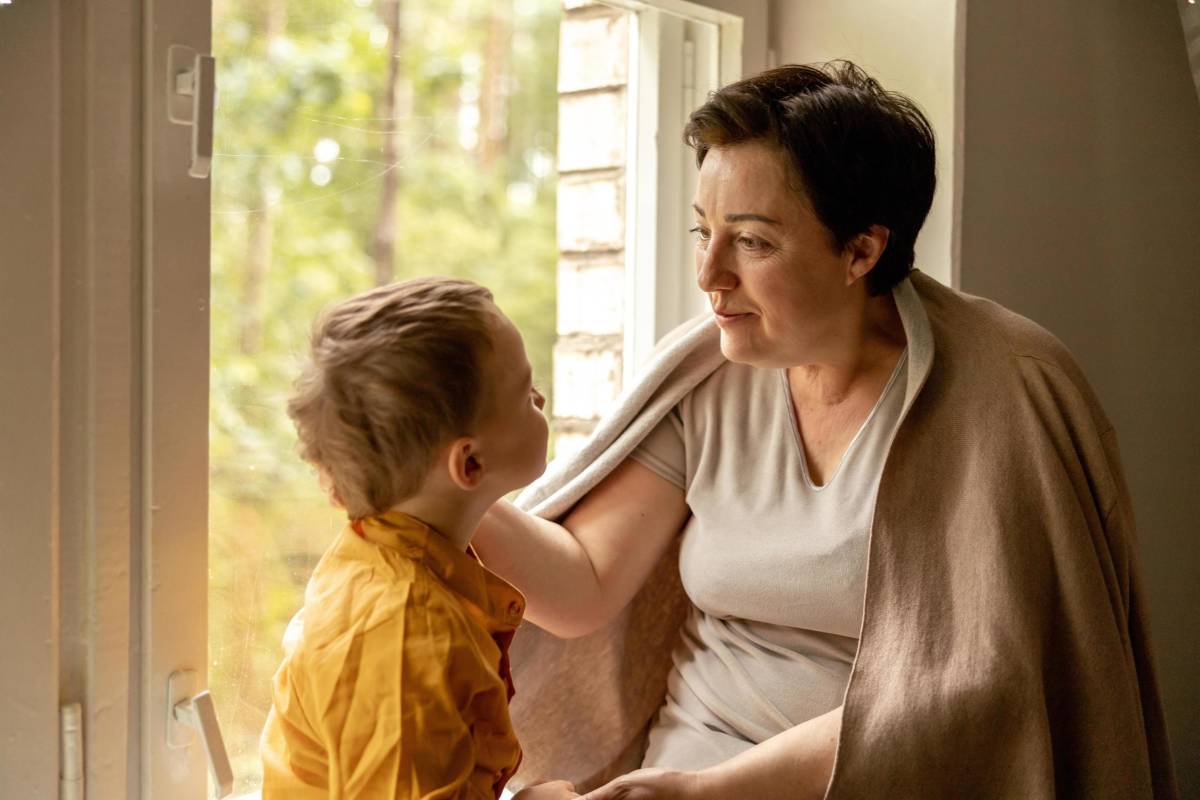

If you’re a grandparent, you probably can’t help yourself — the second those grandkids walk in the door, the compliments just start flowing. “You’re so smart!” “Look how pretty you are!” “You’re the best artist ever!” It’s not a bad instinct. You love them, you’re proud of them, and telling them so feels like the most natural thing in the world.
But here’s the thing child psychologists have been saying for years, and it might surprise you: some of the sweetest-sounding things we say to kids can actually backfire. Not because the love behind them is wrong, but because of what those specific words quietly teach a kid about themselves.
The good news? You don’t have to stop complimenting your grandkids (please don’t — they need that love). You just might want to tweak how you say it. Here are six phrases that sound perfectly sweet but that psychologists say could use a little rewording — plus what to say instead.
1. “You’re so smart”
Okay, hear us out on this one, because it trips up basically every loving adult at some point. Telling a kid they’re smart feels like the ultimate compliment — you’re basically saying “you’re amazing, full stop.” What could be wrong with that?
Well, according to psychologist Carol Dweck’s research on mindset, praising a kid’s intelligence rather than their effort can quietly teach them that being smart is just something you either are or aren’t. So when they hit something hard — a tricky math problem, a new sport, learning to read — they might get scared to try, because failing would mean they’re not smart after all. Kids who hear “you’re so smart” a lot can actually become more afraid to take risks, not less.
The fix is easy, though. Instead of praising the trait, praise the process: “Wow, you really worked hard on that” or “I love how you figured out a totally new way to solve it.” Same warmth, way better message.
2. “You’re the best/most talented one”
This one comes from such a good place — you watch your grandkid do literally anything, from drawing a stick figure to scoring a soccer goal, and your heart just bursts. “You’re the best artist in the whole world!” “Nobody plays like you!” It feels like you’re handing them the biggest compliment you possibly can.
But here’s the catch: “best” is a comparison word. It only means something if there’s a “worst” or a “not as good” standing next to it. So without meaning to, you’re teaching your grandkid that their worth is tied to being ahead of someone else. And that’s a shaky place to build confidence, because there will always, always be another kid who draws better, runs faster, or scores higher. What happens to how they feel about themselves the day they meet that kid?
The swap here is simple and honestly just as sweet: skip the superlative and get specific instead. “I loved how you mixed those colors together” or “The way you handled that tough play was awesome” tells them you noticed them — not how they stack up against everyone else. It’s praise that can’t be taken away by someone else’s talent.
3. “You’re so pretty/handsome”
Let’s be honest — this one just slips out. Your grandkid gets dressed up, or you catch them smiling in the sunlight, and “you’re so beautiful” is basically a reflex at that point. It’s instinctive, it’s affectionate, and it comes from pure grandparent adoration.
The catch is that when appearance compliments become the main thing a kid hears, they can start to internalize that how they look is one of the most important things about them. Psychologists point to research linking heavy appearance-based praise with kids — especially girls — placing more of their self-worth on their looks, which can set the stage for body image struggles down the road. Nobody wants that for their grandkid, especially not from something said with so much love.
The good news is this swap is easy and honestly more meaningful anyway. Try complimenting the stuff that’s actually them — their character, their humor, their imagination. “You’re so much fun to be around” or “You have the kindest heart” or “You always make me laugh” lands so much deeper than a comment on their outfit, and it’s the kind of compliment that sticks with a kid for life.
Read Also: 12 Unique Compliments That Will Instantly Boost Your Grandchild’s Confidence
4. “Good job!” (as a blanket response to everything)
This one is basically the default setting for grandparents. Kid stacks a block? “Good job!” Kid takes a bite of broccoli? “Good job!” Kid breathes in and out like a normal human? “Good job, sweetie!” It’s quick, it’s easy, and it feels like you’re cheering them on constantly, which, hey, isn’t that the whole point of being a grandparent?
The problem is that when “good job” gets slapped onto everything, it stops meaning anything at all. Kids are smart — they can tell the difference between praise that’s really about them and praise that’s just… background noise, the verbal equivalent of a pat on the head. Say it enough times about enough random things, and it either starts going in one ear and out the other, or worse, kids start needing that constant stream of “good job” just to feel okay about what they’re doing.
The fix doesn’t take any extra effort, it just takes a few more words. Instead of the generic “good job,” try describing what you actually saw: “You stacked those all the way to the top without them falling — that took a lot of patience!” or “You tried the broccoli even though you weren’t sure about it, that’s brave.” It shows them you were really watching, really paying attention — and that’s what kids are actually hungry for anyway.
Love Being a Grandma?

Join 33,762+ grandmas who wake up to a cheerful, uplifting email made just for you. It’s full of heart, sprinkled with fun, and always free. Start your mornings with a smile—sign up below! ❤️
5. “You’re such a good boy/girl”
Oh, this phrase is just dripping with love, isn’t it? It rolls off the tongue so naturally when your grandkid shares their toy or gives you a hug out of nowhere. “You’re such a good girl!” It feels like the warmest, most wholesome thing you could possibly say.
Here’s the sneaky catch, though: when “good” gets attached to who they are instead of what they did, it quietly sets up a flip side. If sharing a toy makes them a “good girl,” then what does it mean when they refuse to share, or throw a tantrum, or slam a door? Kids’ brains can go there fast — if good behavior makes me good, does that mean bad behavior makes me bad? That’s a heavy thing for a little kid to carry, especially since misbehaving is just… a normal part of being a kid.
The swap here keeps all the warmth but takes the pressure off their identity: praise the action instead of labeling the child. “That was such a kind thing to do, sharing your truck with your sister” tells them exactly what was great, without making their whole sense of self ride on it. Their character stays solid and secure, even on the days they act more like a tiny tornado than an angel — which, let’s be real, is most days.
6. “You never make mistakes” / “You’re perfect”
This one usually comes out during those melt-your-heart moments — your grandkid nails their piano recital, or acts them like a champ during a rough day, and you just want to scoop them up and say “you’re perfect, you never do anything wrong!” It feels like the ultimate declaration of love, like you’re saying “there’s nothing about you I’d change.”
But think about what that actually sets up. If a kid grows up hearing they’re perfect, mistakes stop feeling like a normal, everyday part of learning — they start feeling like proof that something’s wrong with them. The first time they mess up (and they will, because everyone does), it’s not just “oops, I got that wrong,” it’s “wait, I thought I was supposed to be perfect… what happened?” That’s a lot of pressure to hang on one compliment, especially for a little kid still figuring out how the world works.
The swap here is really just about giving mistakes a normal, safe place to exist. Something like “Everyone messes up sometimes — that’s how we grow” tells them just as much love, but it also gives them permission to not be perfect. And honestly? That permission might be one of the most protective things you can hand a kid.
Wrapping it up
So here’s the thread running through all six of these: the compliments that actually help a kid stick around longer are the ones that are specific, tied to effort, and don’t come with any strings attached — not the ones that are broad, trait-based, or secretly comparing them to somebody else.
And look, none of this means you need to bite your tongue or stop showering your grandkids with love — please don’t do that. This isn’t about praising less, it’s just about praising a little smarter. A few small tweaks to your wording, and you get to keep doing exactly what you love — cheering your grandkid on — while giving them something even better than a compliment: a solid, secure sense of who they are.
Next time you’re not sure what to say, just keep this cheat sheet in your back pocket:
- Instead of “smart” → praise the effort
- Instead of “the best” → get specific
- Instead of “pretty” → praise their character
- Instead of “good job” → describe what you saw
- Instead of “good girl/boy” → praise the action
- Instead of “perfect” → normalize the mess-ups
Small swaps, same love. Your grandkids won’t remember the exact words — but they’ll absolutely carry how those words made them feel.
Love Being a Grandma?
Join 33,762+ grandmas who wake up to a cheerful, uplifting email made just for you. It’s full of heart, sprinkled with fun, and always free. Start your mornings with a smile—sign up below! ❤️
I really enjoy reading these articles but I think many times you stereotype grandmas as baking pies, cooking , quilting etc. I am not that type of grandmother. I am 71, active and am the type of grandmother that takes them hiking, I taught my grandson golf, I play tennis with my granddaughter, I explore nature with them, etc. it would be great if you appeal to the modern grandmother where we are more active in general. Thank you.
Appreciate the input Jan! I’ve been publishing articles inside the Wellness category as well. 🙂