
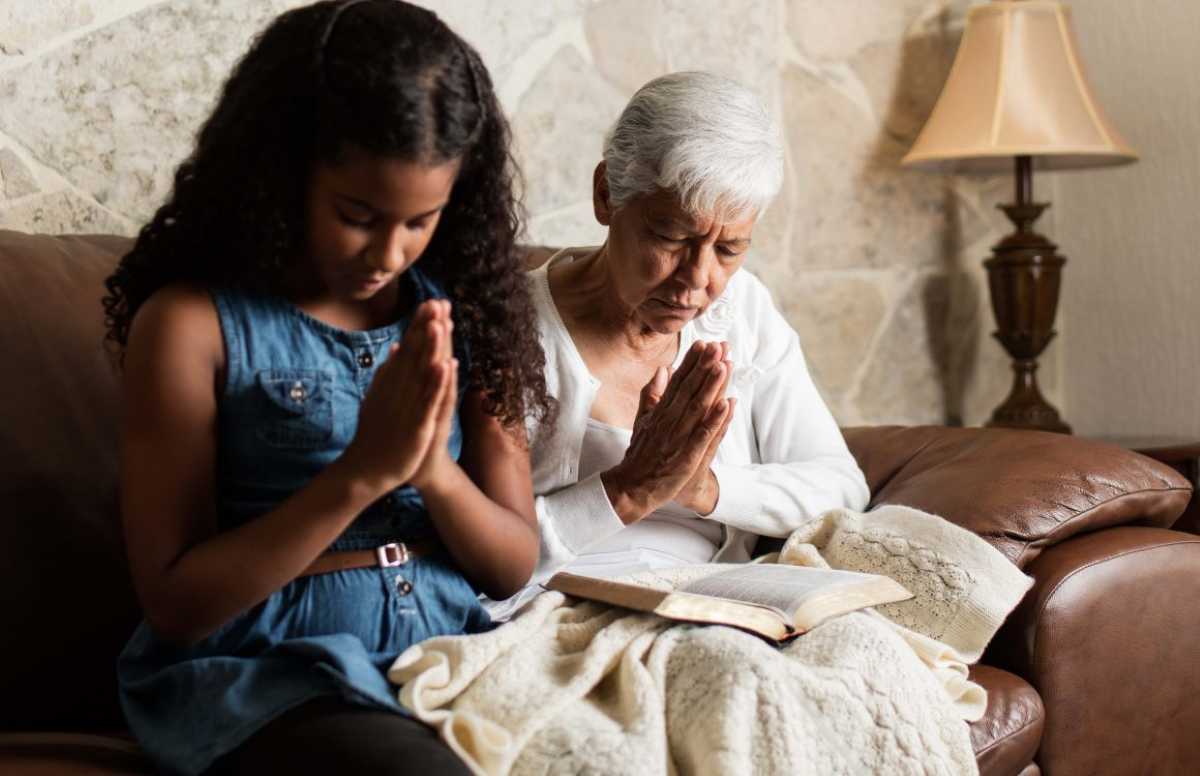

You know that feeling when your grandchild walks through your door and their whole body relaxes? That’s not by accident. A grandmother’s home has a way of becoming a safe place—a place where love feels steady and everything slows down just a little.
The Bible paints this kind of picture beautifully in Proverbs 24:3-4: “By wisdom a house is built… through knowledge its rooms are filled with rare and beautiful treasures.” And those “treasures” aren’t things—they’re the feelings you create: peace, warmth, and love.
When your home feels like a place of acceptance and peace, your grandchildren carry that with them. It shapes their confidence, their sense of belonging, and even how they give love to others one day.
The good news? You don’t need a complete overhaul. Just a gentle awareness. When you begin to notice what doesn’t bring peace, you can slowly replace it with what does—and that’s where real change begins.
Here are 4 things a Christian grandmother should never have in her home:
1. A Spirit of Constant Criticism
Why harsh words linger longer than we think
Most correction comes from love—but to a child, it doesn’t always feel that way. A quick “not like that” or “you should know better” can land heavier than we expect. Children don’t just hear our words… they feel them. And over time, those small moments can shape how they see themselves.
The Bible gently reminds us in Proverbs 15:1, “A gentle answer turns away wrath, but a harsh word stirs up anger.” Even when we’re trying to guide, our tone matters more than we realize. Harshness can quietly create distance instead of connection.
When criticism becomes the norm, grandchildren may begin to feel like they have to “get it right” just to be close to you. And that’s the opposite of what your heart truly wants—to be a place where they feel safe, not judged.
What to replace it with instead
Here’s what this can look like in real life. Let’s say your grandchild spills something or struggles to do a simple task. Instead of jumping in with, “Be careful!” or “That’s not how you do it,” you pause and say, “That’s okay, let’s figure it out together.” Or if they show you something they made, instead of pointing out what’s wrong, you start with, “I love how hard you worked on this.” Those small shifts change everything.
The Bible gives us such a clear guide in Ephesians 4:29: “Do not let any unwholesome talk come out of your mouths, but only what is helpful for building others up.” In everyday moments, that might mean biting your tongue when you’re tempted to correct immediately, or choosing to encourage first before offering gentle guidance.
Over time, your grandkids begin to relax around you. They’re not worried about getting everything perfect—they just feel safe being themselves. And that’s when they start opening up more, coming to you more, and trusting you more. Your words become a place they want to return to.
2. Unforgiveness That Never Lets Go
How holding onto past hurts changes the atmosphere
Can I be honest with you? We all carry things that hurt us. Words that stuck. Moments that didn’t sit right. And sometimes, without even realizing it, those hurts settle into our hearts and quietly shape how we show up.
The Bible gently warns us about this in Hebrews 12:15: “See to it… that no bitter root grows up to cause trouble and defile many.” Bitterness doesn’t stay contained—it spills into our tone, our reactions, even the way we talk about others. And your grandchildren? They can feel it, even if they don’t understand it.
Over time, that heaviness can change the atmosphere of your home. Instead of feeling light and peaceful, it can feel tense or guarded. Not because you intended it—but because unresolved hurt has a quiet way of making itself known.
The quiet power of modeling forgiveness
Here’s where this becomes real life—not just something we believe, but something our grandchildren actually see. Maybe it’s how you respond when a family member disappoints you. Instead of speaking harshly or bringing it up over and over, you choose to say, “I was hurt, but I’m choosing to let it go.” That moment teaches more than a hundred lectures ever could.
The Bible reminds us in Colossians 3:13: “Bear with each other and forgive one another… Forgive as the Lord forgave you.” In everyday life, that might look like not speaking negatively about someone in front of your grandkids, or choosing peace instead of revisiting old arguments during family gatherings.
And here’s the part that sticks—your grandchildren are watching how you handle hurt. When they see you choose grace over grudges, they learn what love really looks like. One day, when someone hurts them, they may remember, “This is how Grandma handled it.” And that becomes their example moving forward.
3. Entertainment That Conflicts With Your Values
What we allow in our home speaks loudly
Can I share something gently? The things playing in the background of your home matter more than we think. A show, a song, even casual conversations—they all set a tone. And your grandchildren may not say anything… but they notice.
The Bible reminds us in 1 Corinthians 10:23, “I have the right to do anything,” you say—but not everything is beneficial. Just because something is common or popular doesn’t mean it’s helpful for the kind of atmosphere you want to create. Little by little, what we allow becomes what feels “normal.”
And here’s the part that really matters—kids are incredibly good at spotting mixed messages. If they hear about kindness and respect, but see the opposite on screen, it can quietly confuse them. Your home speaks, even when you’re not saying a word.
Creating a home that reflects what you believe
The good news? You don’t have to overhaul your whole home—you just need a few small, intentional shifts. Think about everyday moments. What’s playing on the TV while you cook? What music is on in the car? What kind of conversations are happening at the dinner table? Even something as simple as switching off a show that feels a little “off” and putting on something uplifting sends a quiet message: this home is different.
The Bible gives us a simple filter in Philippians 4:8: “Whatever is true, whatever is noble, whatever is right… think about such things.” In real life, that might look like choosing a wholesome family movie for movie night, playing worship or calming music in the background, or gently redirecting a conversation that turns negative.
These small choices add up. Over time, your home starts to feel peaceful without you having to say a word. Your grandchildren may not notice each decision—but they’ll feel the difference. And that feeling is what keeps them coming back.
4. Fear That Overshadows Faith
When worry becomes the loudest voice in the room
Let’s be real for a moment—worry often comes from love. You care deeply about your grandchildren, so of course you want them safe, protected, and okay. But sometimes, that worry can quietly take over the atmosphere without us even noticing.
The Bible speaks right into this in 2 Timothy 1:7: “For God has not given us a spirit of fear, but of power, love, and a sound mind.” When fear becomes the loudest voice, it can shape how your grandchildren see the world—less like a place to step into, and more like something to be afraid of.
And the truth is, children don’t just hear your words—they absorb your outlook. If worry fills the room, they carry that feeling with them. Not because you meant to… but because they’re always watching, always learning.
Replacing fear with visible trust
Here’s where this becomes really real in everyday life. It’s not about never feeling worried—it’s about what your grandchildren see you do next. For example, when something stressful comes up—maybe a health concern, bad news, or even just a tough day—instead of spiraling, you pause and say, “Let’s pray about it.” That simple moment speaks volumes.
The Bible reminds us in Isaiah 41:10, “Do not fear, for I am with you… I will strengthen you and help you.” Living this out might look like turning off the news when it gets overwhelming, speaking calmly instead of anxiously, or telling your grandchild, “We don’t have to have all the answers—we trust God with this.”
These small, everyday choices are what stick. They see you choosing peace over panic. And over time, that becomes their blueprint. In uncertain moments, they’ll remember how Grandma handled it—and feel a little steadier because of you.
Creating a home filled with peace, love, and faith
If your heart is to create a home your grandchildren are drawn to, it starts with intention—not perfection. Small, everyday choices shape the kind of space you’re building.
Joshua 24:15 says, “As for me and my house, we will serve the Lord.” That doesn’t mean your home has to be perfect—it just means your heart is pointed in the right direction.
When love is felt, when peace is present, and when faith is lived out naturally, your home becomes something special. Not just a place they visit… but a place they carry with them, wherever they go.
Read Also: 38 Beautiful Bible Verses and Quotes About Grandchildren
Love Being a Grandma?

Join 33,762+ grandmas who wake up to a cheerful, uplifting email made just for you. It’s full of heart, sprinkled with fun, and always free. Start your mornings with a smile—sign up below! ❤️