
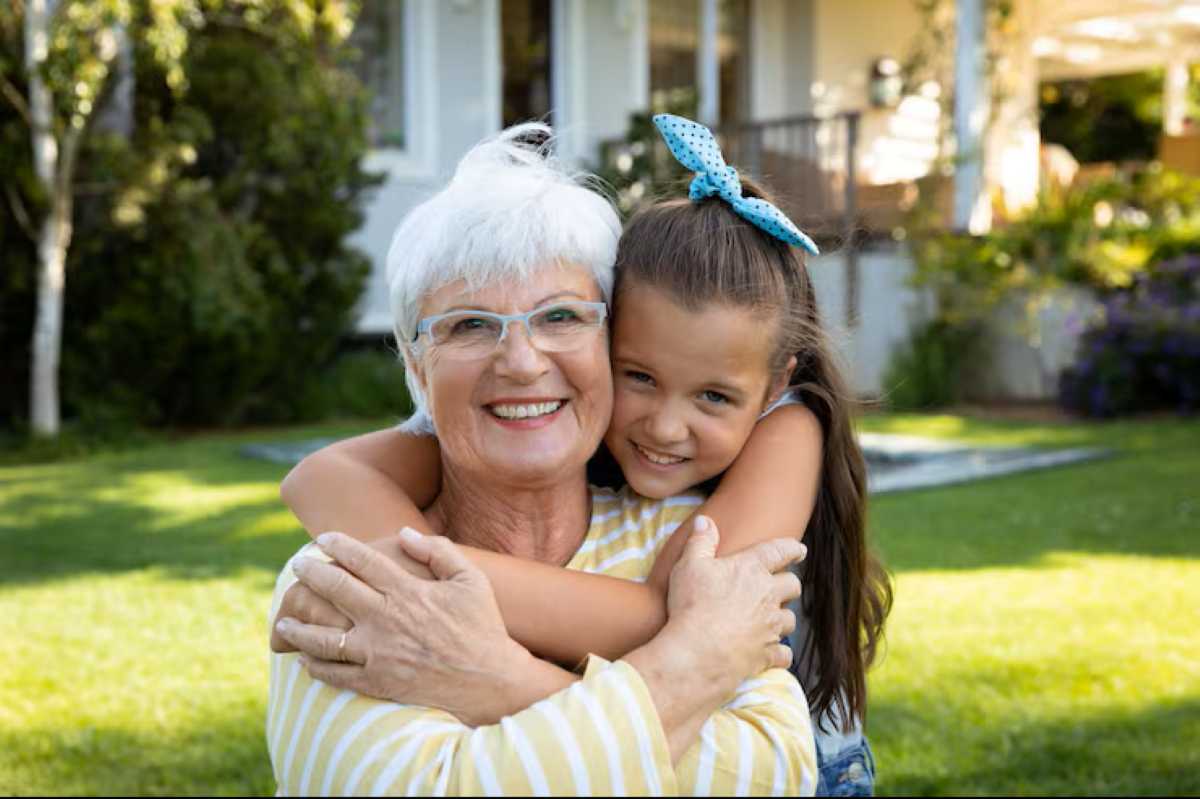

Somewhere between scraped knees, big feelings, and questions they’re not quite ready to ask mom or dad… there’s grandma.
There are certain things grandkids just feel safer talking about with their grandmothers—the kind of advice wrapped in patience, unconditional love, and a lifetime of quiet wisdom. If you’ve ever noticed your grandchild leaning in closer when they talk to you, this is why.
In this article, we’ll explore the three pieces of advice grandkids most often seek from their grandmothers—and why your words carry so much weight.
Even better, you’ll also get to read real-life stories shared by fellow grandmas from my email community, straight from their hearts. Grab a cup of coffee… this one feels like a warm conversation at the kitchen table.
1. Matters of the Heart (Love, Crushes, and Heartbreaks)
When it comes to matters of the heart, grandkids often skip everyone else and come straight to Grandma. And honestly, it makes sense. Love — especially young love — feels big, confusing, exciting, and sometimes downright painful. Grandkids know that when they come to you, you won’t laugh it off, tease them, or tell them it’s “just a phase.”
Grandmas have a beautiful way of taking feelings seriously. You don’t roll your eyes at a crush or brush off heartbreak as “puppy love.” You remember what it felt like to care deeply for the first time — the butterflies, the nerves, the joy, and the sting when things didn’t work out. That understanding makes all the difference. To a grandchild, being taken seriously is everything.
Instead of panicking or jumping into fix-it mode, grandmas usually offer something much better: reassurance. A calm voice that says, “It’s okay to feel this way.” No threats, no lectures, no embarrassment. Just a reminder that feelings are normal and that love, in all its forms, is part of growing up.
There’s also something comforting about the way grandmas share wisdom. It’s gentle. It comes wrapped in stories instead of rules. You don’t shame them for caring too much or getting hurt — you remind them that loving deeply is a strength, not a weakness. And that kind of advice sticks.
“I’m glad I told you, Grandma.”
“I didn’t expect it. It was late, the house was quiet, and I thought my granddaughter had already fallen asleep.”

She was staying the night with me, and I had just finished turning off the lights when she quietly called my name from the bedroom. When I sat on the edge of the bed, I could tell something was heavy on her heart. She stared at her hands for a long moment before finally whispering, “Grandma… I think my heart hurts.”

She told me about a boy she liked. How she thought he liked her too. How things didn’t turn out the way she hoped. Her voice cracked halfway through, and that’s when the tears came. Not the dramatic kind — the quiet ones you try to hide because you don’t want to feel silly for caring so much.

I didn’t rush her. I didn’t tell her she was too young or that she’d forget all about it. I didn’t say, “You’ll be fine.” Instead, I just listened. I held her hand. I let her talk until the words slowed down and the tears stopped on their own.

After a while, I told her the truth — that loving someone always feels risky, no matter how old you are. That having your heart hurt means it was open in the first place. And that’s nothing to be ashamed of.

She leaned her head against my shoulder and let out a long breath, like she’d been holding it in all evening. Before she fell asleep, she looked up at me and said, “I’m glad I told you, Grandma.”

That moment stayed with me. Not because I gave perfect advice — I didn’t — but because she trusted me with something tender. Years from now, she may not remember the boy’s name. But I hope she remembers this: that when her heart felt heavy, Grandma was a safe place to set it down.

Submitted by Margaret from Ohio
Love Being a Grandma?

Join 33,762+ grandmas who wake up to a cheerful, uplifting email made just for you. It’s full of heart, sprinkled with fun, and always free. Start your mornings with a smile—sign up below! ❤️
2. When Life Feels Overwhelming or Confusing
When life starts to feel overwhelming, grandkids often don’t want answers — they want space to breathe. And for many of them, Grandma is the one person who gives that without pressure. School stress, friendship drama, social media comparisons, fear of failing, or just that uneasy feeling of not knowing where they fit in… it can all pile up quickly.
Grandmas understand overwhelm in a way that feels comforting instead of intimidating. You don’t minimize their worries or tell them they’re overthinking. You’ve lived enough life to know that confusion isn’t a flaw — it’s part of growing. And that understanding comes through in the way you listen.
Rather than jumping straight into problem-solving, grandmas usually slow things down. You ask gentle questions. You let them talk in circles if they need to. You sit quietly when words are hard to find. That calm presence tells a grandchild, “You’re not behind. You’re not broken. You’re just human.”
There’s also something powerful about a grandma’s perspective. When you share your own stories — times you felt lost, scared, or unsure — it doesn’t feel like a lecture. It feels like a hand reaching back through time saying, “I’ve stood where you’re standing.” That kind of reassurance sticks.
Grandmas don’t rush grandkids through hard seasons. You help them see that not every problem needs an immediate solution and not every feeling needs to be fixed. Sometimes the lesson is simply learning how to sit with uncertainty and trust that clarity will come.
“I’ve been there too.”
“It was one of those quiet afternoons where you can tell something’s wrong, even though no one has said a word.”

My grandson was sitting at the kitchen table, shoulders slumped, pushing his homework around without really looking at it. I asked him if he was hungry, if he wanted a snack — all the usual grandma questions — but he just shrugged. Finally, I poured myself a cup of tea, poured one for him too, and sat down across from him.

After a long pause, he sighed and said, “Grandma… I feel like everyone else knows what they’re doing. And I don’t.”

That stopped me in my tracks.

I didn’t rush to fix it. I didn’t tell him he was smart or that everything would work out — not yet. I just sat there with him for a moment. Then I smiled a little and said, “You know something? I felt that way more times than I can count.”

He looked up at me, surprised.

So I told him about being his age and feeling lost. About times in my life when I thought everyone else had a plan and I was the only one guessing. I told him that confusion doesn’t mean you’re failing — it usually means you’re growing.

I could see his shoulders relax as I talked. Not because I had answers for his future, but because he realized he wasn’t alone in feeling that way.

Before he got up from the table, he said, “I’m glad I told you, Grandma. You didn’t make me feel dumb.”

That’s when it hit me. He didn’t come to me for advice. He came to me for understanding. And in that moment, all he needed was someone to remind him that he doesn’t have to have life figured out yet.

Sometimes the greatest thing a grandma can say is simply, “I’ve been there too.”

Submitted by Linda from Arizona
3. Family Conflicts and “Things I Can’t Say to My Parents”
When family tensions come up — and they always do — grandkids often find themselves stuck in the middle of big emotions and bigger misunderstandings. They love their parents, but sometimes they don’t feel safe saying everything out loud. They worry about hurting feelings, getting in trouble, or being misunderstood. That’s usually when they quietly turn to Grandma.
Grandma feels like neutral ground.
You’re not the disciplinarian in that moment. You’re not the one enforcing rules or expectations. You’re the listener. The calm one. The person who can hear the full story without reacting too quickly or choosing sides. And grandkids feel that difference right away.
Grandmas have a special way of letting kids talk freely. You don’t interrupt. You don’t rush to correct them. You don’t immediately defend the parent — even when you understand the parent completely. Instead, you let your grandchild finish. You let them say the messy, emotional things they don’t know how to say anywhere else.
And that matters more than we realize.
Grandmas also know how to walk a delicate line. You offer wisdom without undermining mom or dad. You don’t fuel resentment or encourage rebellion. You help your grandchild see another perspective — gently, kindly — without making them feel wrong for how they feel. That balance takes love, patience, and a whole lot of life experience.
Often, the advice isn’t dramatic. It’s simple. It’s grounding. It sounds like, “I understand why that hurt,” or “Your feelings make sense,” or “Your parents love you, even when things feel hard.” Those words don’t fix everything — but they steady the heart.
“Thanks for listening, Grandma.”
“She didn’t say hello when she walked in. She just climbed onto the couch and leaned into me.”

My granddaughter had come over after school, and I could tell right away something had happened at home. She kicked off her shoes, curled up beside me, and stared straight ahead at the TV without really watching it. After a few minutes, the words started spilling out.

She was upset about an argument with her parents. Voices were raised. Feelings were hurt. She felt misunderstood and angry, and she didn’t know how to say what she wanted to say without making things worse. Halfway through her story, her voice cracked and she said, “I shouldn’t have said that… but I was so mad.”

I didn’t interrupt her. I didn’t correct her version of events. I didn’t rush to defend anyone. I just listened. I nodded. I let her talk herself tired.

When she finally stopped, I wrapped an arm around her and said, “It sounds like everyone was hurting in that moment — including you.” She let out a deep breath, like she’d been holding it in the whole time.

Then I told her something I’ve learned the hard way: that arguments don’t mean love disappears. That families can disagree, even hurt each other’s feelings, and still love each other deeply. That tough conversations don’t break relationships — they’re often part of them.

She leaned her head against my shoulder and said quietly, “I was afraid they’d be mad forever.”

I kissed the top of her head and told her, “Love doesn’t disappear that easily.”

Later, when her parents came to pick her up, she hugged me a little tighter than usual. As she walked out the door, she turned back and said, “Thanks for listening, Grandma.”

That’s when I realized something. She didn’t come to me for answers or sides. She came to me for safety. For a place where she could unload the feelings without being judged.

And sometimes, that’s the most important role a grandma can play — not fixing the problem, but holding the heart until it feels steady again.

Submitted by Carolyn from Pennsylvania
Gentle Closing Thought
Grandmothers don’t replace parents—and they’re not meant to. But they hold a very special place in a child’s life. A place filled with patience, understanding, and unconditional love.
And sometimes, the advice grandkids seek from grandma isn’t really advice at all. It’s reassurance. It’s safety. It’s knowing that no matter what happens, there’s someone who believes in them—always.
Love Being a Grandma?
Join 33,762+ grandmas who wake up to a cheerful, uplifting email made just for you. It’s full of heart, sprinkled with fun, and always free. Start your mornings with a smile—sign up below! ❤️
Im sure im gòiñg to love this webite
Thank you so much, I put my heart and soul into each article so I appreciate it. ❤️
This was such a great reminder about how important I am to my granddaughter. Thank you for your wisdom!
You’re most welcome! ❤️